Argentina’s Messi Magic Keeps Finding FIFA’s Convenient Blind Spots Again
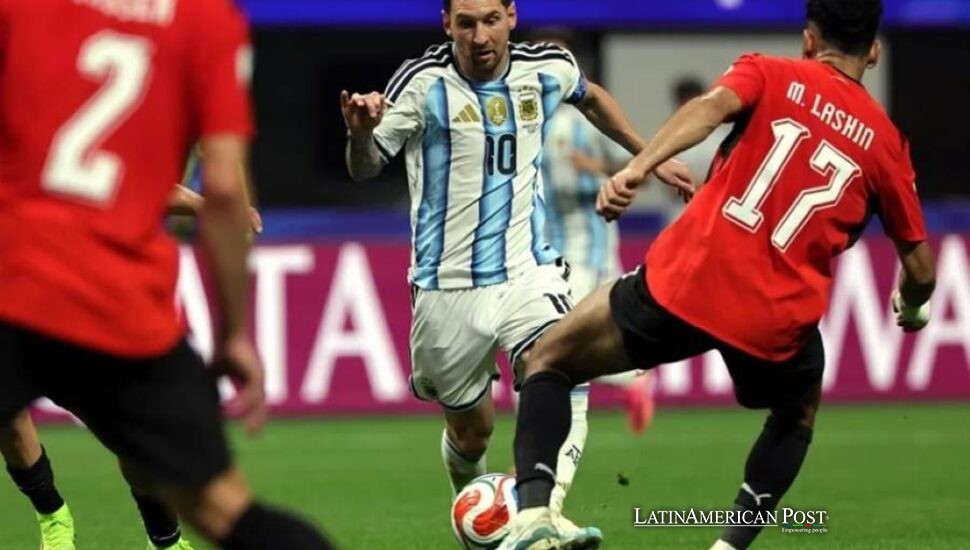
From Algeria to Egypt, Argentina’s disputed World Cup decisions keep bending toward Lionel Messi, while FIFA insists coincidence explains the pattern. Pierluigi Collina’s defense sounds authoritative, but the numbers, comparisons, and institutional incentives tell a darker story for global football.
The Whistle Keeps Leaning One Way
Football suspicion is born in a frozen frame. A boot lands high. A referee reaches for his pocket, or does not. The replay loops until anger hardens into memory.
Argentina’s case is different. The frames keep accumulating.
Against Algeria, Messi reportedly planted his studs into Aïssa Mandi’s calf and Achilles. A foul was called, but no card followed. Messi stayed on, scored three times, and Algeria complained to FIFA. Elsewhere, Folarin Balogun saw red after VAR reviewed a step onto an opponent’s heel. Yet they were close enough that unequal punishment became the story.
That matters more than Collina’s assurance that officials are honest. Integrity is neither disproved by one tackle nor proved by a FIFA executive defending FIFA. Collina is the organization’s chief refereeing officer, not an independent investigator. His employer trains the referees, selects them, and explains their decisions.
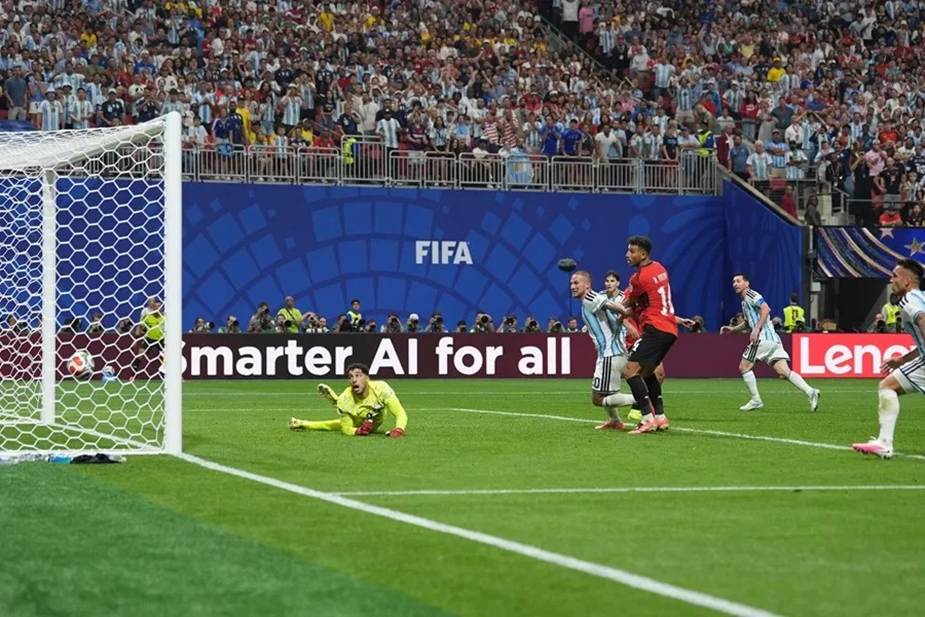
Then came Egypt. Mostafa Ziko appeared to put his team two goals ahead, but VAR reviewed the attacking phase and found that Marwan Attia had stepped on Lisandro Martínez. The goal vanished. In stoppage time, Mohamed Salah went down under contact with Julián Álvarez; play continued, and Enzo Fernández scored Argentina’s winner.
Collina called the first incident a foul and the second normal contact. This pattern can make fans feel uncertain about fairness, undermining trust in the game’s integrity.
Numbers Do Not Whisper Forever
The strongest bias argument is not that every controversial call was wrong. Some were likely correct. The Cape Verde treatment dispute weakens once the blood protocol is taken into account. Bracket complaints concern optics. Even Argentina’s penalty against France in the 2022 final has credible defenders.
Remove the weaker claims, and the pattern remains remarkable.
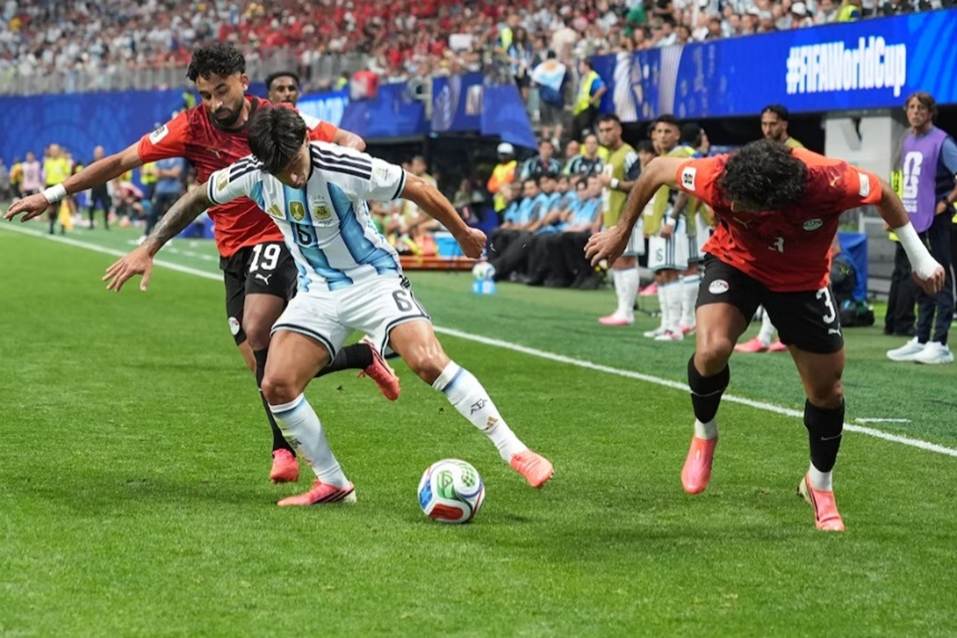
Argentina reportedly benefited from all three VAR interventions during its matches against Austria, Jordan, and Egypt. Across the 2022 and 2026 World Cups, it received eight penalties, twice England’s total. Five came in 2022, a tournament record. Penalty volume alone proves little, but when combined with repeated borderline reviews, these numbers suggest a pattern of favoritism that demands closer scrutiny.
The card data is harder to dismiss. Argentina reportedly committed 59 fouls in 2026 and received three yellows, one for every 19.6 fouls. England’s rate was one for every 6.75. The ratio is crude because a shirt pull is not a studs-up lunge. Still, that gap demands context, especially after Messi escaped punishment against Algeria and the remembered leniency of 2022, when he handled the ball against the Netherlands without a yellow and Leandro Paredes avoided red after firing the ball toward the Dutch bench.
No single number is a smoking gun. That is the wrong standard. Institutional bias rarely arrives as a memo titled “Protect the Star.” It appears as discretion repeatedly resolving in one direction, each choice defensible, the whole increasingly difficult to explain as chance.
Collina answers the accusation of corruption, which remains unproven, while sidestepping the stronger charge of structural favoritism. Officials may be honest and still be shaped by superstar deference, commercial incentives, institutional expectations, and fear of becoming the referee who sent Messi home.
Latin America Recognizes the Arrangement
In Latin America, this controversy touches on deep feelings. Messi is more than a player; he’s a symbol, and many feel the system favors the powerful, fueling frustration and mistrust.
The powerful rarely need to issue direct orders. Everyone already understands what outcome keeps the celebration, ratings, sponsorships, and mythology alive. FIFA’s commercial interest in Messi’s final World Cup run is obvious, even if commercial interest is not proof of manipulation. Hossam Hassan’s claim that “it is all about money” sounded conspiratorial to some ears. In a region repeatedly told that markets are neutral while outcomes favor the connected, it sounded familiar to others.
This is why smaller football nations read the whistle politically. Algeria, Egypt, Cape Verde, and other outsiders do not enter the World Cup with Argentina’s mythology, broadcast gravity, or institutional weight. They arrive knowing one marginal call can erase four years of labor. When those margins repeatedly favor the marquee nation, equality before the Laws of the Game begins to resemble equality before Latin American law, beautiful in text, negotiable in practice.
Argentina can be brilliant and favored at once. Messi can be historic and protected. Those truths do not cancel each other.
The evidence does not prove FIFA scripted results. It does, however, overwhelmingly support the rumor’s core claim: Argentina has received an extraordinary concentration of favorable discretion, and Messi has been treated with a softness unavailable to lesser names. FIFA’s refusal to confront that cumulative record only deepens suspicion.
The evidence suggests FIFA’s decisions influence perceptions of fairness worldwide. This should inspire fans and analysts to demand more transparency and equal treatment in the game.
Also Read: Brazil’s Long Climb Back Continues With Ancelotti as Icons Blast Contract Renewal