Rio de Janeiro Helicopter Crashes Expose Tourism’s Dangerous Blind Spot

Rio’s helicopter tours sell unforgettable views, but three crashes, thirteen deaths and suspected flight-log manipulation reveal a system where spectacle outran oversight. The city must protect passengers, grieving families and operators by making safety records public while defending personal privacy.
A View Sold Above the Rules
From the air, Rio de Janeiro seems designed to erase doubt. Christ the Redeemer rises above the haze. Sugarloaf appears close enough to touch. Beaches curve like a polished advertisement. A sightseeing helicopter turns that geography into an expensive promise: beauty without traffic, altitude without distance.
Then eight months changed the view.
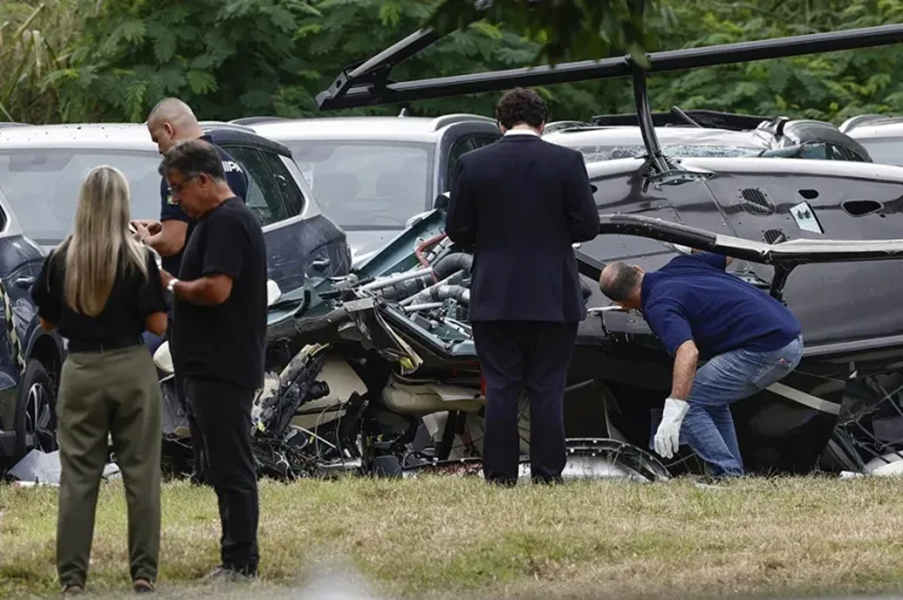
Three accidents involving four sightseeing helicopters killed 13 people. On August 8, a Colombian family boarded a VRP flight toward Christ the Redeemer. The pilot died with Lida Rocío Cubillos, 59, her daughter Wendy Marique Cubillos, and her granddaughter Sofía Murillo Manrique, a creator whose public life could not make the family’s loss less private.
In June, two helicopters collided, killing six, including U.S. singer Oliver Tree and Argentine YouTuber Gaspi.
Brazil’s National Civil Aviation Agency, known as Anac, suspended panoramic flights operated by VRP, Broad Fly, Nobre Turismo and Mr. Top Fly. Nine helicopters are affected. Rio had 12 authorized sightseeing companies operating 46 aircraft. The sanction reaches one third of operators and roughly one fifth of its tourist fleet.
The companies did not lack paperwork. Anac director Tiago Chagas Faierstein said their documentation was current. Inspectors found signs that flight time had been underreported, which could delay maintenance tied to hours in the air.
“They flew 30 minutes a day and reported 10,” Faierstein said at a news conference, according to EFE.
That allegation exposes the weakness of regulation built too heavily around documents supplied by the regulated company. A helicopter can appear compliant while its mechanical clock runs ahead of the official one. Safety then becomes a bookkeeping fiction, invisible to the tourist smiling beneath the rotor.
The Real Industry Flies to Sea
Rio should not mistake this scandal for an argument against helicopter aviation itself. The business is too important for that.
Sightseeing flights are its brightest public face, but offshore oil and gas logistics form the economic backbone. Rio state concentrated 92.2 percent of the oil-support flights measured across the Santos, Campos and Espírito Santo basin network. From 2022 through 2024, that offshore system carried about 2.58 million passenger journeys on more than 137,000 flights. The four busiest passenger bases were all in Rio state and handled roughly 88 percent of the traffic studied.
Those passengers are not primarily celebrities escaping traffic. They are drill crews, engineers, mechanics, cooks, safety specialists and medical workers traveling to platforms where ordinary roads end. If tourist flights stop, a market suffers. If the offshore helicopter network stops, crew rotations, maintenance, emergency evacuation and petroleum production can all be disrupted.
Jacarepaguá Airport illustrates the sector’s scale. It recorded 9,176 offshore flights in 2024, about 11.1 percent of its movements, while also supporting executive aviation, air taxis, hangars, fueling and maintenance. Roughly 120 million reais were invested in modernization completed in March 2026, including improvements intended to support safer operations in poor visibility.
This is why tourism oversight threatens more than one attraction. A safety culture is shared across pilots, mechanics, insurers, airports and regulators. When one corner of the market appears willing to manipulate flight hours, public confidence spreads the suspicion.
The comparison with offshore operators is instructive. Large petroleum contracts often require twin-engine aircraft, trained crews, demanding maintenance systems and multiyear accountability. Tourist aviation should not be treated as harmless because flights are shorter or passengers are on vacation. A short flight can be unforgiving. The mountain, weather and machinery do not recognize leisure.
Privacy for Families, Transparency for Operators
Rio now needs a distinction. Privacy belongs to passengers, workers and grieving families. Transparency belongs to companies operating aircraft over a crowded city.
The dead should not become a promotional afterimage or a social-media curiosity. Sofía Murillo Manrique’s work as an influencer does not convert her final trip into public property. Her family, and families affected by the crashes, deserves space beyond the camera. Authorities should release information necessary for accountability without turning personal grief into spectacle.
Operators deserve no comparable privacy around maintenance hours, inspection findings or safety violations. Flight logs should be digitally verified against tracking data. Maintenance records should be auditable across agencies. Repeat discrepancies should trigger immediate grounding, not prolonged negotiation. Passengers should be able to see an operator’s safety status before payment, in language clearer than a certificate behind a counter.
Anac has said it will review Brazil’s panoramic-flight rules this year. Faierstein told EFE the goal is to make the activity safer and distinguish responsible companies from those that mock regulation. That distinction is economically necessary. Honest operators should not compete against firms that allegedly cut costs by shrinking recorded flight time.
The city should also resist the temptation to declare victory after suspension. Grounding nine helicopters is a beginning, not a safety system. The deeper task is to make falsification difficult, inspection unpredictable and accountability visible.
Rio’s helicopter industry is valuable because it connects sea, city and economy in ways no other aircraft can. That value creates a higher obligation, not an exemption. The postcard must never outrank the maintenance log.
The view from above is extraordinary. The standard below must be clear.
Also Read: Latin American Football Faces a Billion-Dollar FIFA Future with Strings