Tijuana Adopted Iran as World Cup Politics Crossed the Border
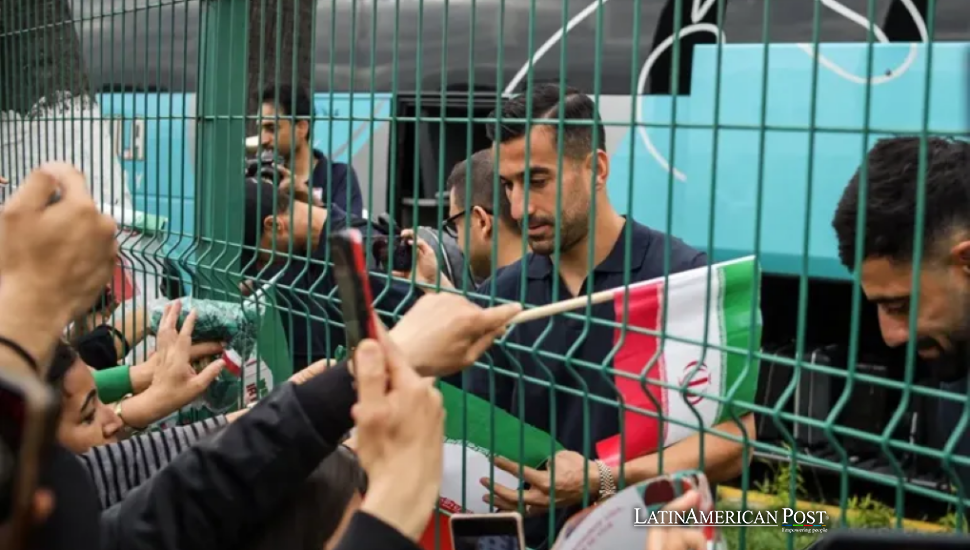
Iran left Mexico’s border city eliminated but embraced, after three draws and weeks of U.S. restrictions turned a World Cup campaign into a lesson in hospitality, geopolitics and the stubborn ways fans separate players from the quarrels of states.
A Farewell With Border Soul
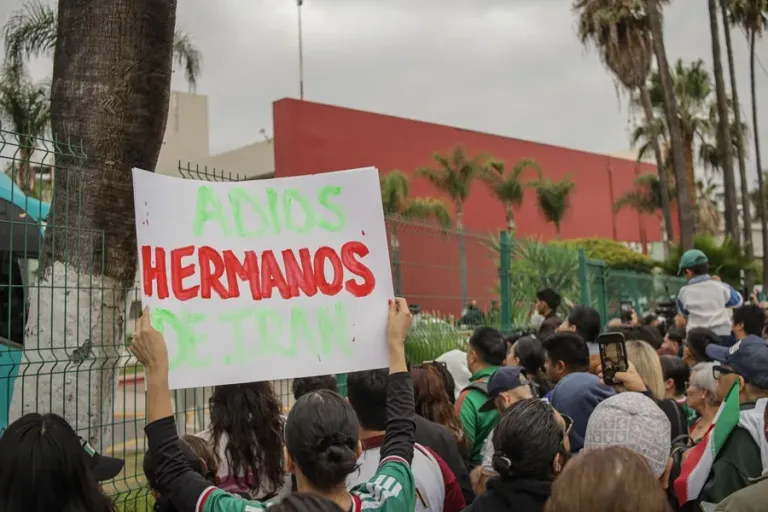
By Tuesday morning, the sidewalk outside the Marriott in Tijuana had become something warmer than a hotel exit and stranger than a sports sendoff. More than a hundred people gathered with Iranian flags, jerseys, hand-painted signs and the patient enthusiasm of fans who knew the team was already out of the 2026 World Cup but came anyway.
They were not there to celebrate a trophy. Iran had not won a match. It had drawn with Egypt, Belgium, and New Zealand, three stubborn results that kept pride alive but not the tournament dream. Still, the crowd leaned into the moment as if record-keeping belonged somewhere else. They chanted, waved, waited, and turned a departure into a small border-city fiesta.
“¡Irán, hermano, ya eres mexicano!” they shouted, according to EFE.
It was a funny chant, and also a revealing one. Tijuana knows something about being judged from the outside. It knows what it means to live under someone else’s security language, to be reduced to maps, walls, checkpoints, danger and suspicion. So when Iran’s players came out to sign autographs, pose for photos and thank the people who had adopted them for a few weeks, the exchange carried an easy intimacy. No one needed a lecture on geopolitics to understand what it feels like when power makes travel harder.
Members of the Iranian delegation told supporters, according to EFE, that although the team was returning to Iran, its “heart and soul” would remain in Tijuana. They said Mexico was now part of them. They said they were leaving with “pride,” despite failing to reach the next round.
That pride mattered because Iran’s World Cup was never just about soccer.
A Team Without a Normal Home
The competitive record is deceptively simple. Three matches, three draws, no collapse, no breakthrough. In another tournament, that might be filed away as a respectable but insufficient campaign. In this one, Iran’s performance unfolded under logistical strain imposed not only by the schedule but also by politics.
The team had to base itself in Tijuana because Washington refused to allow the Iranian delegation to lodge and train inside the United States. The restriction, imposed under President Donald Trump’s government, forced Iran into an emergency arrangement along the Mexican border while still requiring the team to compete in a World Cup shared across North America.
That is not a small inconvenience. In elite soccer, margins are built from sleep, recovery, training rhythm, transport time, and the quiet repetition that lets athletes forget the world outside the field. A team that cannot settle where it competes is not playing under ordinary conditions. It is carrying politics in its luggage, through customs, across highways, into the muscles of players who are expected to perform as if all preparation were equal.
Abolfazl Pasandideh, Iran’s ambassador to Mexico, told EFE a week earlier that the restrictions were “negative and violate FIFA regulations” because they mixed sport with international political disputes.
There is a serious argument there, and not only an Iranian one. World Cups sell themselves as common ground, even when they have always been tangled in power. Latin America understands this contradiction well. The region has hosted tournaments under military governments, watched stadiums become symbols of nation-building and repression, and seen soccer used both as escape and propaganda. Yet the basic promise of the game remains that the field should be level once the whistle blows.
For Iran, it was not.
The unfairness was not necessarily in a referee’s call or a missed penalty. It was structural. Belgium, Egypt, and New Zealand could prepare in line with more conventional sporting logic. Iran had to prepare for a diplomatic problem. That does not mean Iran would have advanced under perfect conditions, nor does it erase tactical limits or missed chances. But it does mean the table did not tell the whole truth. Three draws under uneven circumstances can look less like failure and more like evidence of a team that kept its shape while the tournament around it bent.

Mexico’s Old Lesson in Welcome
What happened in Tijuana also exposed a difference between government hostility and popular feeling. The United States border stood nearby as a barrier and warning. Mexico, through its people, became the place where the team could breathe.
That contrast fits a long Latin American pattern. State’s posture. Fans improvise humanity. Ordinary people often do what official policy cannot, or will not, do. They turn flags into conversation pieces, foreign players into guests, and a defeated team into a neighborhood memory. In Tijuana, a city shaped by migration and surveillance, the Iranian team found not neutrality but recognition.
The chant calling Iran a Mexican brother was not diplomacy. It was better than diplomacy. It was a joke with room inside it, the kind of public affection that border cities specialize in because they live daily with separation and mixture. Tijuana is Mexican, global, bruised, entrepreneurial, watched, and underestimated. It has heard too many speeches about control from people who do not live there. Perhaps that is why its fans could look at Iran’s strange World Cup route and respond first not with ideology, but with hospitality.
The farewell outside the hotel offered a counterimage to the official drama. Players leaving with suitcases. Fans holding phones in the air. Autographs passed over barriers. A team eliminated but not humiliated. A city telling strangers they had belonged, however briefly.
World Cup history is often written in finals, goals, and national glory. But sometimes the truer story happens beside a team bus, after the standings have already closed. Iran’s 2026 campaign ended in Tijuana with no victory lap, no knockout match, no heroic upset. Yet it left behind a question that FIFA and host governments cannot comfortably avoid.
Can a tournament call itself global when one team is made to carry the weight of geopolitics before it even reaches training?
Tijuana answered in its own language. Not with policy. Not with a ruling. With flags, chants, and a farewell that made room for a team caught between borders. Iran went home eliminated, yes. But it did not leave alone.
Also Read: Paraguay Roars as German Arrogance Crashes in World Cup Stunner