Puerto Rico Bets on AI Classrooms Before the Future Arrives
Puerto Rico’s public schools are testing artificial intelligence with ethics, safety and job readiness at the center, turning a classroom experiment into a broader question for Latin America: who teaches children to master machines before machines reshape opportunity?
A Classroom Learns the Machine
The future, in Puerto Rico, is not arriving as a thunderclap. It is entering through school passwords, teacher planning tools, robotics programs, invoice systems and a cautious phrase repeated like a guardrail: human-centered.
That is how Beverly Morro, Puerto Rico’s secretary of academic affairs, framed the island’s new artificial intelligence push in comments to EFE. The Department of Education, she said, is introducing AI in educational institutions with special attention to ethics and student safety. Younger students are using learning accelerators, while older students are working with Copilot and generative AI. The choice of Microsoft tools, Morro explained, reflects a concern for protecting students inside a system that knows innovation can be useful and dangerous at the same time.
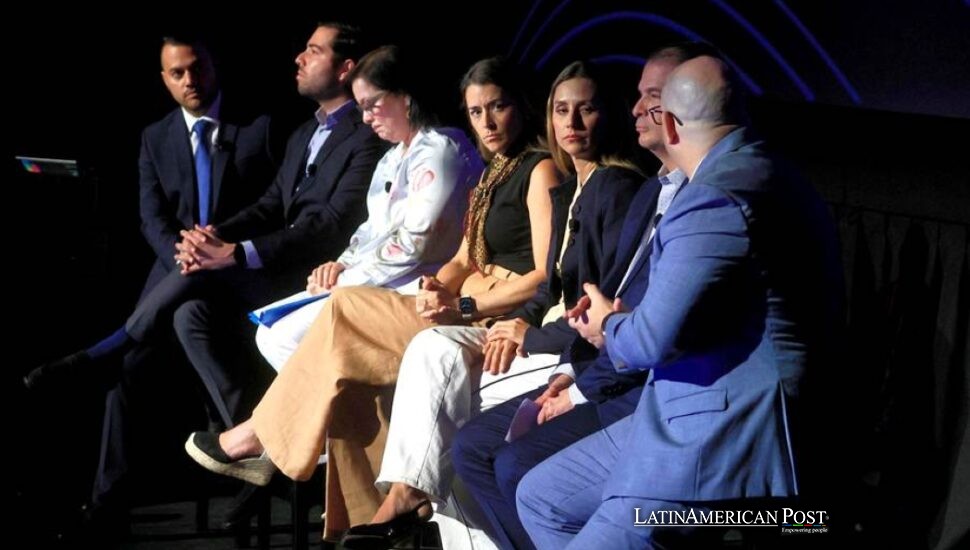
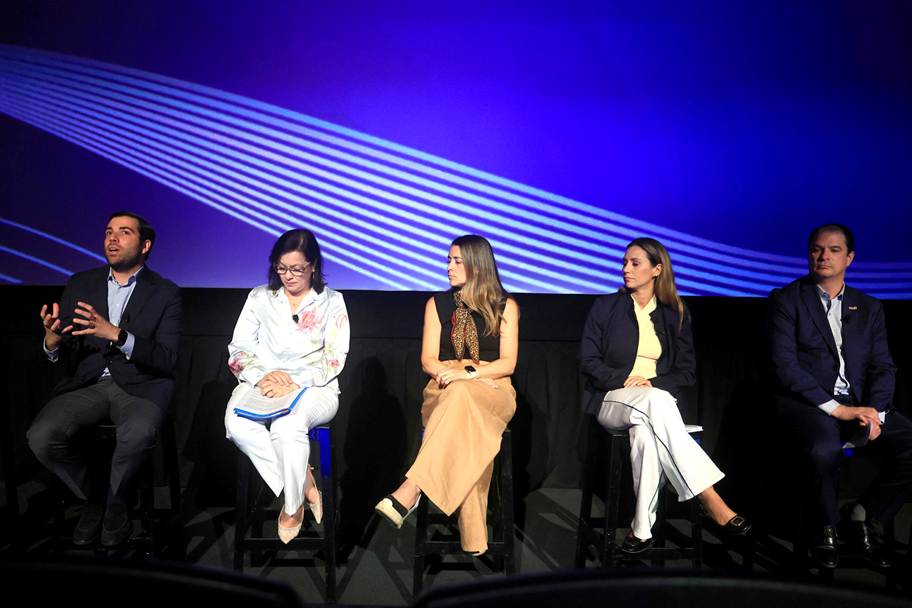
The announcement came during the forum “AI Revolution: An Opportunity for Businesses in Puerto Rico,” organized in San Juan by GFR Media and Agencia EFE. It sounded like an economic event, and it was. But the deeper story was educational. Puerto Rico is trying to decide whether AI will become another imported technology that widens inequality, or a tool students can learn to handle before the labor market uses it to sort them.
That question matters across Latin America. The region has often received technological change as something designed elsewhere, priced elsewhere and governed elsewhere. First came industrial dependency, then software dependency, then platform dependency. Now AI arrives with an even sharper edge. It can help a teacher prepare lessons, identify learning gaps and open pathways into coding, robotics and certification. It can also reproduce old divides between students with guidance and students left alone with shortcuts.
Puerto Rico’s gamble is that early structure can prevent chaos later.
Morro said the department has developed guidelines for integrating AI through ethical processes, evaluating its possibilities while preserving a human-centered approach. At the core is the “Sense Model,” designed to help students choose the appropriate tool for an educational task and use it responsibly. The model applies only to students 13 and older, she said, because the department wants to protect cognitive development, which she linked to stimulation of the perceptual system.
That detail is important. It suggests the policy is not simply about access. It is about timing. Children do not need every tool at every age. They need tools matched to development, supervision and purpose. In a region where education systems are often pressured to chase novelty before building foundations, Puerto Rico is at least naming the risk.

Ethics Before the Shortcut
AI in schools can look harmless when described as a helper. A lesson plan draft. A chatbot answering repeated questions. A system sorting invoices. An algorithm identifying academic priorities for the coming school year. These are administrative uses, not science fiction. Morro told EFE that generative AI is already being used to support teachers in planning activities, while specialized tools are being introduced for robotics programming and related disciplines.
That practical side matters. Teachers in Latin America and the Caribbean are often asked to do too much with too little: crowded classrooms, uneven infrastructure, bureaucratic overload, poverty at the door, and families who need the school to be educator, counselor and safety net. If AI reduces paperwork or helps teachers design better materials, it can free human time for the work only humans can do: noticing discouragement, reading silence, building trust, pushing a child without humiliating them.
But the same tool can also become a substitute for thinking if introduced carelessly. Students can outsource writing. Teachers can outsource judgment. Administrators can confuse algorithmic priority with educational truth. The danger is not that AI becomes intelligent enough to replace people overnight. It is that institutions under pressure use it to avoid responsibility.
Morro’s warning captured that tension. “AI will not replace us, but people who use it will,” she told EFE. It is a memorable line because it contains both aspiration and threat. It tells students that refusing AI is not an option. It also tells adults that the new divide will not be simply between rich and poor, but between guided users and unguided users, between ethical fluency and blind dependence.
That is the Latin American issue hiding inside Puerto Rico’s policy. The region does not only need connectivity. It needs technological citizenship. A student must learn what AI can do, what it cannot do, when it lies, when it copies, when it flattens culture, when it invents sources, when it turns English-language assumptions into global defaults. Without that literacy, AI becomes another colonial echo, polished and digital.
Puerto Rico is uniquely positioned in this debate. It belongs politically to the United States, culturally to the Caribbean and historically to Latin America. Its students live between English and Spanish, between U.S. federal frameworks and Hispanic social realities, between migration and local belonging. If AI education works there, it could offer a model for bilingual, unequal, culturally layered societies across the hemisphere.
The Island as Test Lab
Next academic year, 15 schools in Puerto Rico will integrate AI into their curricula, combining it with esports, programming, robotics and CertiPort certification programs. The number is modest, but the design is revealing. This is not only about teaching students to ask better prompts. It is about linking AI literacy to workforce pathways, credentials and technical confidence.
That connection is crucial for an island shaped by debt, hurricanes, migration, school closures and a long struggle over economic dependency. Puerto Rico does not need AI as decoration. It needs AI to answer a hard material question: can public education help young people stay, work and build futures at home?
The answer will depend on execution. Fifteen schools can become a seed or a showcase. If the initiative remains concentrated in better-resourced campuses, it will deepen the gap it claims to close. If teachers are not trained deeply, they will be handed disruption without power. If families are not brought into the conversation, AI will feel like another reform delivered from above.
Morro acknowledged that the adaptation process is disruptive for teachers, students and families. That honesty matters. Latin America has seen too many reforms wrapped in heroic language and abandoned when the political spotlight moves on. The real work is slower: training educators, measuring learning honestly, protecting student data, keeping tools available, translating ethics into daily classroom habits.
EFE noted that the forum was part of a broader partnership between Agencia EFE and GFR Media to address key issues for Puerto Rico and the Hispanic world, following earlier events on educational tourism and the island as a global hub for music and entertainment. That sequence is telling. Puerto Rico is trying to imagine itself not only as a place people leave or visit, but as a producer of knowledge, culture and technology.
For Latin America, the lesson is not that every country should copy Puerto Rico’s model. It is time for the AI debate to move beyond panic and celebration. The real question is governance. Who decides which tools children use? Who protects their data? Who trains teachers? Who ensures Spanish-speaking and bilingual students are not treated as afterthoughts in systems built elsewhere? Who keeps AI from becoming a shortcut for inequality?
Puerto Rico is not answering all of that yet. But it is asking the right question inside the schoolhouse, before the labor market asks it more brutally.
The machine has entered the classroom. The child is still the point.
Also Read: Smart Players Never Pay Full Price at Online Casinos