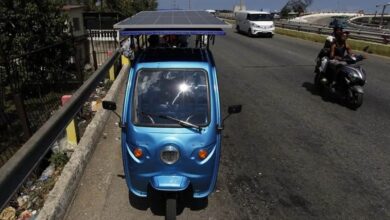
Cuba’s Garbage Crisis Turns Havana Streets Into a Geopolitical Warning

Havana’s garbage crisis has become a public health emergency and a political mirror for Cuba, exposing fuel shortages, failing services, mosquito-borne disease risks, and a deeper regional question about how Latin America absorbs shocks when states run out of capacity.
Havana Learns to Walk Around Rot
Javier has learned the choreography of collapse. At 55, he moves through Centro Habana with the practiced caution of someone avoiding potholes, puddles, and now heaps of refuse spreading from the sidewalk into the street. The sour smell rises before the trash appears. He squints, as if cutting an onion, and steps sideways while cars, bicycles, and pedestrians negotiate the same obstacle course.
“No one is taking care of this,” Javier told EFE, complaining that the piles are full of worms and are beginning to creep toward homes. “Every day it gets worse. They say there is no gasoline for the garbage trucks, but I don’t know.”
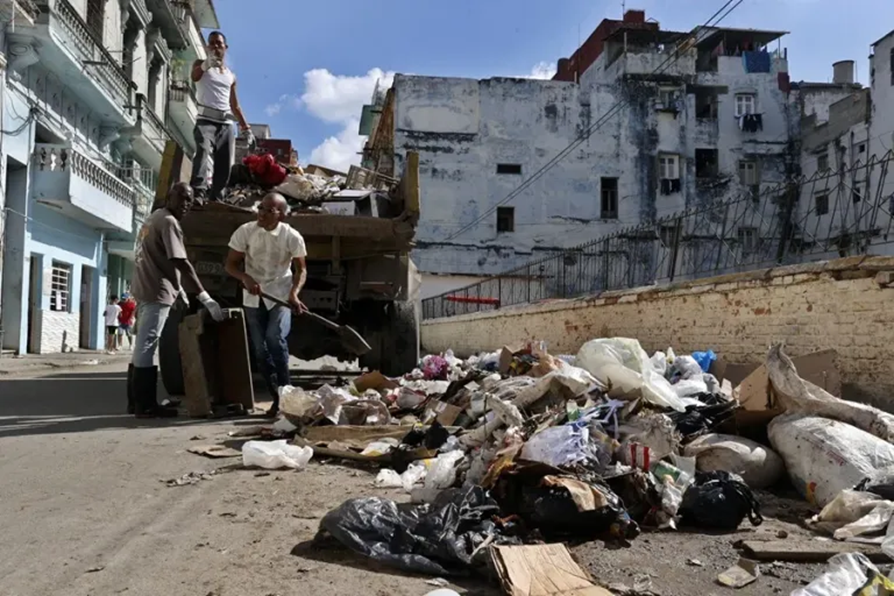
For months, residents of Havana, home to roughly 2 million of Cuba’s nearly 10 million people, have lived with garbage stacked on corners, curbs, alleys, and traffic lanes. The crisis worsened after a U.S. energy blockade triggered blackouts, water shortages, and a fuel crunch, leaving state-run garbage trucks stalled. What had once been an urban nuisance has become something heavier: a daily test of endurance, a source of disease, and a visible measure of how far the Cuban state’s basic machinery has slipped.
In the city center and on the outskirts, the trash has changed the rhythm of life. People cross streets not for traffic but for odor. Some burn waste in the open, sending smoke into neighborhoods already strained by heat, outages, and scarce water. Health officials fear those fires may release toxic fumes. At the same time, residents worry the coming summer and hurricane season will turn the city’s waste into a moving, soaking, infectious mass.
The numbers explain the scale, but only partly. As of last July, Havana was producing the equivalent of about 12 Olympic-sized swimming pools’ worth of solid waste every day, according to the latest available municipal figures. Even then, authorities collected just 57 percent. That means nearly half of the capital’s daily waste was left behind in a city where fuel, spare parts, public labor, and political patience are all in short supply.
A Campaign Meets Empty Tanks
Three months ago, the Cuban government announced a major campaign to clean Havana. Officials promised “a before and after” in the fight against the mountains of garbage, and President Miguel Díaz-Canel was shown collecting trash in the street with volunteers. It was a familiar image in Cuban political theater: the leader among the people, labor as patriotic proof, crisis framed as a battle to be won by discipline.
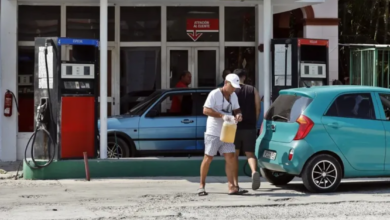
But the streets have not followed the script. These days, garbage piles appear on almost every corner of the capital. Authorities blame broken-down trucks and, above all, the lack of fuel, sharpened by the end of supplies from Venezuela after the capture of President Nicolás Maduro. In practical terms, geopolitics has landed at Havana’s doorstep, rotting in bags.
That is the deeper story. Cuba’s garbage crisis is not only about sanitation. It is about the exhaustion of a regional survival model built on alliances, subsidies, and political resilience. For decades, Havana survived scarcity through geopolitical patrons, first Soviet, later Venezuelan, while presenting sacrifice as sovereignty. When those lifelines weaken, the consequences are not abstract. The lights go out. Pumps stop. Trucks sit idle. Trash accumulates.
A woman whose window faces the ridge of waste Javier passed lowered her voice when asked why collection has become nearly impossible. “If I said what I think, I would go to prison,” she told EFE. In her block, she was not alone in measuring every word. The trash is visible, the odor unavoidable, yet criticism remains risky. That tension defines much of Cuba’s current crisis: everyone can see the failure, but not everyone feels free to name it.
Spanish priest Alberto Sola, whose parish sits in the neighborhood, said he has gone from office to office seeking help. Epidemiology. Sanitation. Poder Popular. Institutions with names that suggest order. He told EFE that officials know the problem and answer with the same explanations: no fuel, no trucks. Then he added a pointed observation: he does not see the same garbage outside any Communist Party house.
When he suggested to Cuban colleagues that they organize to collect the trash themselves, they warned him he could get into trouble. “It is a little frustrating,” he told EFE, lamenting what he called great indifference. The remark cuts because it speaks to more than inefficiency. It suggests a state that still controls public initiative even when it cannot provide public services.
Cuba’s economy has lost 15 percent of its gross domestic product in six years. Shortages of basic goods, inflation, mass migration, and blackouts lasting more than 20 hours a day have become ordinary. Garbage is therefore not an isolated collapse. It is the smell of a broader contraction, the civic residue of an economy unable to power its own promises.
Mosquitoes, Migration, and the Region
Public health is where the crisis becomes most dangerous. Overflowing containers and waste-strewn streets create ideal breeding areas for mosquitoes that transmit chikungunya and dengue. Cuba acknowledged in 2025 that it was suffering an epidemic of these illnesses, though authorities stopped publishing figures late last year. According to the Pan American Health Organization, using official data, 65 people have died in the health crisis, more than half of them minors, and 81,909 have been infected.
For Havana resident Estrella Ramos, the link is obvious. She suffered chikungunya and endured five months of joint pain and exhaustion. “Everywhere, on every corner, there is garbage,” she told EFE. “We are not going to cover the sun with one finger. This country needs to get serious.”
Neighbors watched with concern. Someone asked her to lower her voice. She continued anyway, saying that many children and elderly people are sick because of the filth in Havana. In that moment, the garbage crisis became both epidemiological and political. Disease spreads through mosquitoes, but fear spreads through silence.
A few streets away, a garbage truck passed with a crew of men who identified themselves as prisoners. With too few workers available, the state has used people serving minor sentences to collect waste. They lifted what they could with beer cartons or bare hands, lacking proper tools and gloves. The image was stark: a weakened state relying on captive labor to clear the signs of its own weakening.
Prime Minister Manuel Marrero has acknowledged that the cleanup campaign has not delivered what the government hoped. The people, he said, deserve results, and those results are not visible. It was an unusually plain admission in a system that often treats public failure as an enemy narrative.
For Latin America, Havana’s trash is a warning about cascading fragility. Energy dependence becomes a sanitation crisis. Sanitation becomes a health crisis. Health crisis feeds migration. Migration reshapes regional politics from Mexico to Chile to the United States. Cuba’s decay is never only Cuban, because its people, doctors, remittances, alliances, and exiles have long moved through the hemisphere.
The garbage piling up in Havana is therefore a geopolitical document, written in plastic bags, smoke, mosquitoes, and fear. It says that sovereignty without fuel is fragile, ideology without services is brittle, and a state that cannot collect the trash will struggle to hold the loyalty of those forced to live beside it.
Also Read: Guatemalan Maya Climb Chicabal Seeking Rain as Climate Anxiety Deepens