How Peruvian and Ecuadorian Fishermen Named El Niño as Climate Roared
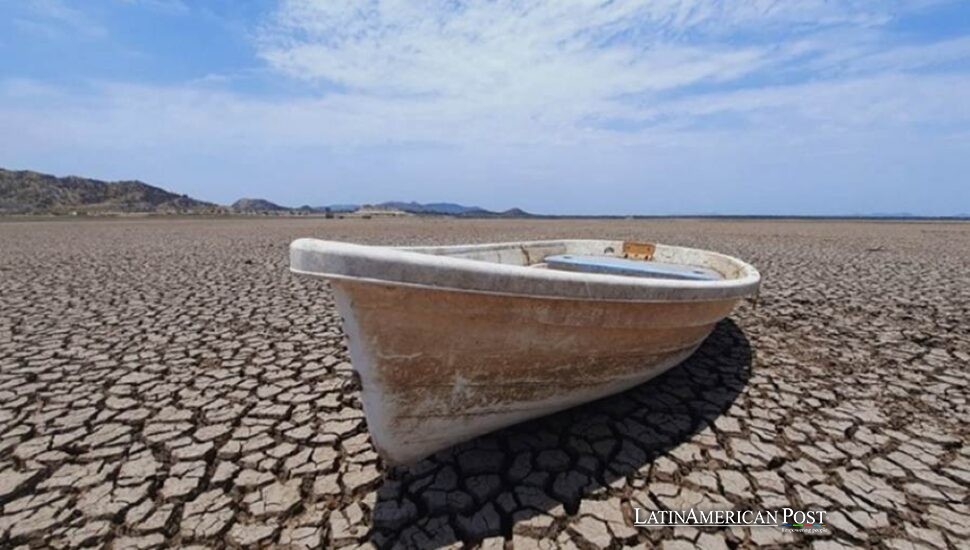
El Niño began as coastal wisdom from Peruvian and Ecuadorian waters, then became a global climate alarm. As the powerful 2026 El Niño event grows, Latin America faces floods, droughts, fishery shocks, food stress, and a harder future of adaptation and survival.
The Child Came From the Sea
Long before El Niño became a phrase spoken in climate centers, commodity markets, and presidential briefings, it lived in the hands of fishermen.
They knew it first not as a model, not as an index, not as a global oscillation with satellite maps and probability curves. They knew it as warm water where cold water should have been. Along the coasts of northern Peru and Ecuador, the Pacific usually gives with a cold hand. The Humboldt Current lifts nutrient-rich water from below, feeding anchovies, sardines, and the larger marine life that follows them. A good current means work. A bad one means quiet boats.
Around Christmas, some fishermen noticed the sea changing. Fish thinned out. Nets came back lighter. The season bent. In plain Spanish, el niño means “the boy.” Capitalized in Catholic Latin America, El Niño can mean the Christ Child, El Niño Jesús. So the warm current that arrived near Christmas was given a name that sounded tender, sacred, and local.
The name stuck. Then it outgrew the shore.
At first, El Niño described a coastal warming that disrupted fishing and signaled a time for repairs, maintenance, and waiting. But every few years, the warm water was stronger, stranger, more stubborn. It lingered for months. It brought heavy rain to places that knew dryness as a way of life. Rivers swelled. Hillsides softened. In northern Peru and coastal Ecuador, a phrase born from fishermen’s observation became a warning.
By the 1960s, scientists understood that the old coastal phenomenon was part of something much larger. El Niño was tied to changes across the tropical Pacific Ocean and the atmosphere above it. The broader system became known as the El Niño-Southern Oscillation, or ENSO. The Southern Oscillation emerged from research into linked pressure changes across the Pacific and Indian Oceans. At the same time, later work explained how the ocean and atmosphere lock together in a planetary conversation.
La Niña came later as the cool counterpart, the girl phase, sometimes described as anti-El Niño. In one phase, the central and eastern tropical Pacific waters warm. In the other, they cool. Between them sits the neutral state, never permanent for long, because the Pacific is less a flat surface than a restless engine.
This is the first thing to know: El Niño is natural. It is not invented by climate change. It has been moving through history for centuries. But the world it now enters is hotter, more crowded, more urbanized, more unequal, and less forgiving.
What Actually Happens
An El Niño begins when the usual trade winds, which generally blow east to west across the tropical Pacific, weaken or sometimes reverse. Normally, those winds push warm surface water toward the western Pacific, allowing colder water to rise near South America. When the winds falter, warm water spreads eastward across the central and eastern tropical Pacific.
That sounds technical until one stands in a fishing town and understands the translation. Warm surface water can suppress the upwelling that feeds marine ecosystems. Less nutrient-rich water means less food for fish. Fewer fish mean less income, less protein, and less certainty in households where the ocean is both workplace and pantry.
NOAA has reported that El Niño conditions are present in 2026 and expected to strengthen into the Northern Hemisphere winter of 2026-27, with a 63 percent chance of a very strong event between November 2026 and January 2027. The World Meteorological Organization has warned of an 80 percent likelihood of El Niño during June through August 2026 and a near- or above-90 percent probability that it continues at least into November.
A very strong El Niño is generally associated with central tropical Pacific sea surface warming of 2 degrees Celsius or more over an extended period. That may look small on paper. It is not small in the climate system. A degree or two across a vast ocean region can shift rainfall, heat, storms, and pressure patterns far beyond the water itself.
During El Niño, the ocean releases heat into the atmosphere. On top of decades of human-caused warming, that extra pulse can help push global temperatures higher. Scientists are cautious about saying that a single El Niño will guarantee a record-hot year, but the risk is real enough to shape planning. A strong event can tilt the odds toward heat waves on land and marine heat waves at sea, drought in some regions, and violent rainfall in others.
No two El Niños are identical. That matters. The public often wants a simple map: here, flood; there, drought. Reality is messier. Timing, local geography, the Atlantic, the Amazon, the Andes, the Caribbean, soil moisture, and government preparedness all shape what happens. Still, the patterns are familiar enough to worry.
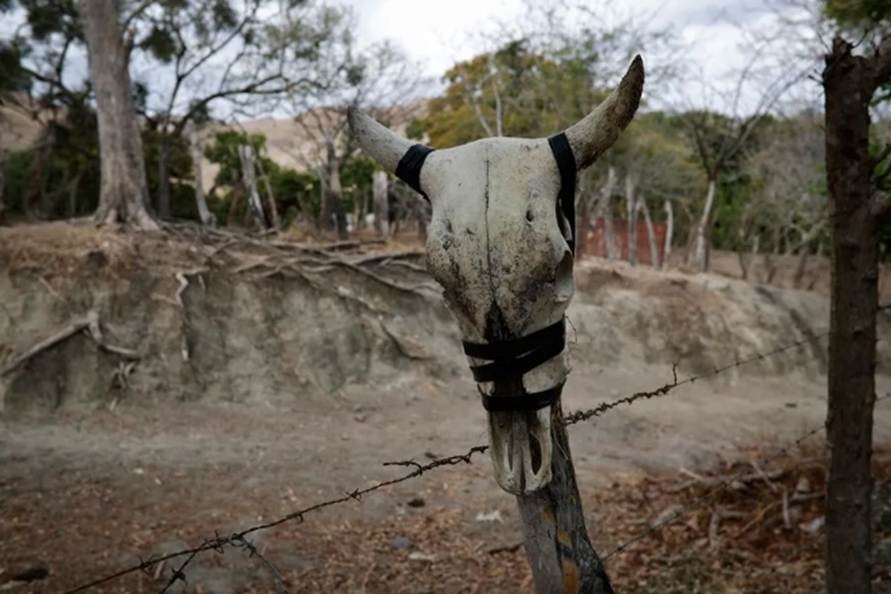
Parts of the Pacific coast of South America can see heavier rainfall, especially in Peru and Ecuador. Some northern parts of South America and the Caribbean can dry out. Central America can face drought pressure, especially in vulnerable farming zones. Brazil can experience a divided country in terms of climate, with drought risks in some regions and excessive rainfall in others. The Amazon, already stressed by deforestation and heat, can become more flammable when rainfall fails.
This is the second thing to know: El Niño is not one disaster. It is a risk multiplier.
It turns weak drainage into flooding. It turns bad roads into isolation. It turns informal housing on slopes into death traps. It turns a dry planting season into debt. It turns a warmer sea into a bad catch. It exposes the difference between a country with warning systems and a country with speeches after the funeral.
Latin America Feels It First
Latin America has lived with El Niño longer than the rest of the world has known how to pronounce it. That gives the region memory, but memory alone is not resilience.
In Peru and Ecuador, the politics of El Niño are coastal, intimate, and brutal. A major warm event can bring rain to desert landscapes not built to absorb it. Streets become brown rivers. Bridges fail. Schools close. Mosquitoes breed. Families lose mattresses, documents, medicine, and tools. People with low incomes do not merely get wet. They lose the small stored capital that lets a household keep going.
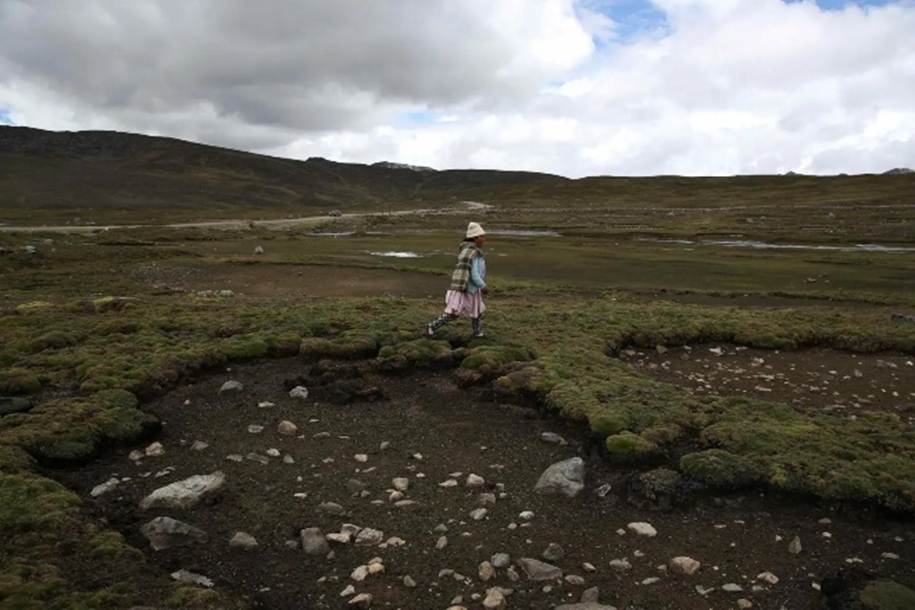
In the Andes, the same climate disruption can affect glaciers, reservoirs, and seasonal water availability. In Central America’s dry corridor, the issue may be failed maize and bean harvests. For families already squeezed by food prices, violence, debt, and migration networks, a bad season is not an abstract climate anomaly. It is one more push north, one more child pulled from school, one more loan taken at ruinous rates.
The food question is larger than any one harvest. El Niño can disrupt rice, corn, sugar, soy, and livestock production across different parts of the world. Latin America is both a producer and a consumer in that system. Argentina, Brazil, Paraguay, and Mexico are tied to global grain flows. The Caribbean depends heavily on imports. If drought hits production while climate shocks elsewhere tighten supply, food prices travel faster than compassion.
Then there is fish.
Peru’s anchoveta fishery is one of the world’s most important, not because every family is eating anchovies for dinner, but because anchoveta are processed into fishmeal and fish oil used in animal feed and aquaculture. When El Niño weakens upwelling, the biological shock can move through global food chains. A warm patch off South America can show up in the price of farmed fish, poultry feed, fertilizer substitutes, and local employment.
That is Latin America’s strange position in the climate economy. The region is often treated as peripheral, yet its ecosystems, minerals, forests, fisheries, and agricultural exports are central to global survival. The Amazon stores carbon. The Andes store water. The Pacific feeds fleets. The lithium triangle feeds energy transition dreams. The Panama Canal moves trade. When El Niño hits Latin America, it is not a local inconvenience. It is a hemispheric stress test.
The third thing to know is the hardest: El Niño is political.
Not partisan, necessarily. Political in the older Latin American sense, where the state either arrives before the rain or after the coffin. Zoning determines who lives on a floodplain, and corruption decides whether drainage works. Where meteorological agencies issue warnings, but mayors lack machinery. Where informal workers cannot evacuate because leaving means losing the day’s income.
Climate science can tell governments that risk is rising. It cannot make them clear the ravine, inspect the bridge, pre-position medicine, protect fishers’ income, regulate water use, or keep schools functioning as shelters. Those are choices.
Academic journals such as Nature Climate Change and Environmental Research Letters have repeatedly emphasized that climate extremes are shaped not only by hazards, but by exposure and vulnerability. For Latin America, that sentence is almost a biography. Inequality is infrastructure. Informality is infrastructure. Distrust is infrastructure, too.
El Niño’s name came from a child, but its lesson is adult. A warmer Pacific does not strike a blank map. It strikes neighborhoods built without permits because formal housing was impossible to obtain. It strikes farmers without irrigation insurance. It strikes fishing families whose fathers remember the sea before satellite alerts and whose sons now check WhatsApp rumors before official bulletins.
A strong 2026 El Niño would arrive in a region already wrestling with weak growth, public insecurity, migration, energy strain, and anti-establishment politics. If governments respond badly, the climate shock will deepen cynicism. If they respond well, they may prove something rare and necessary: that the state can still protect ordinary people before disaster becomes spectacle.
The old fishermen named what they saw. That was wisdom. The modern task is harder. Latin America now sees El Niño coming months in advance, thanks to satellites, buoys, models, and warnings. The question is whether seeing is enough.
The sea has already spoken. The rest is governance.
Also Read: Ecuador’s Emergency Habit Tests Democracy as Noboa Hunts Narco Power