Latin American Thrill Tourism Faces Its Deadliest Safety Reckoning Yet
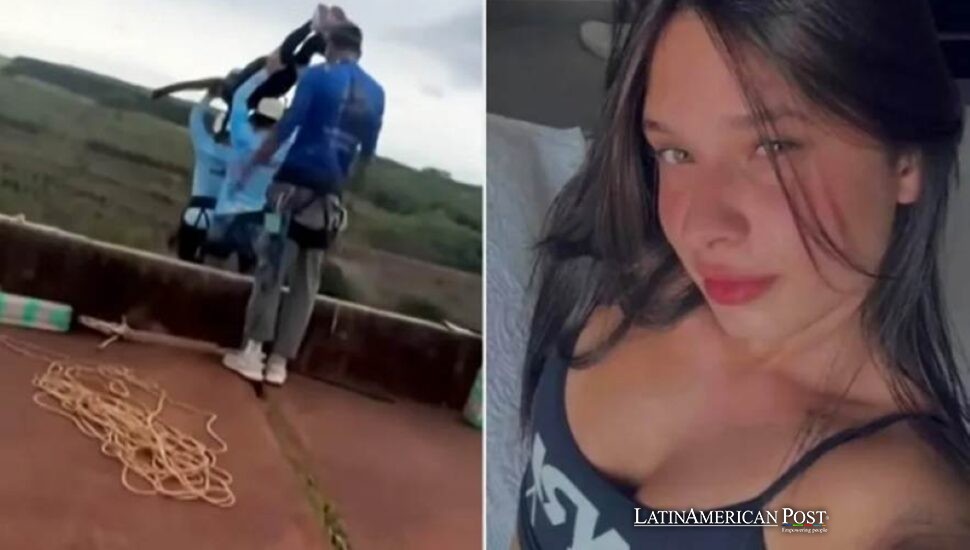
A fatal rope jump in Brazil has exposed a regional adventure-tourism crisis, where Instagram spectacle, informal operators, and lax inspections turn paid thrills into tragedy across Latin America, from bridge jumps to ziplines and broken promises of safety.
The Jump Was Never Secured
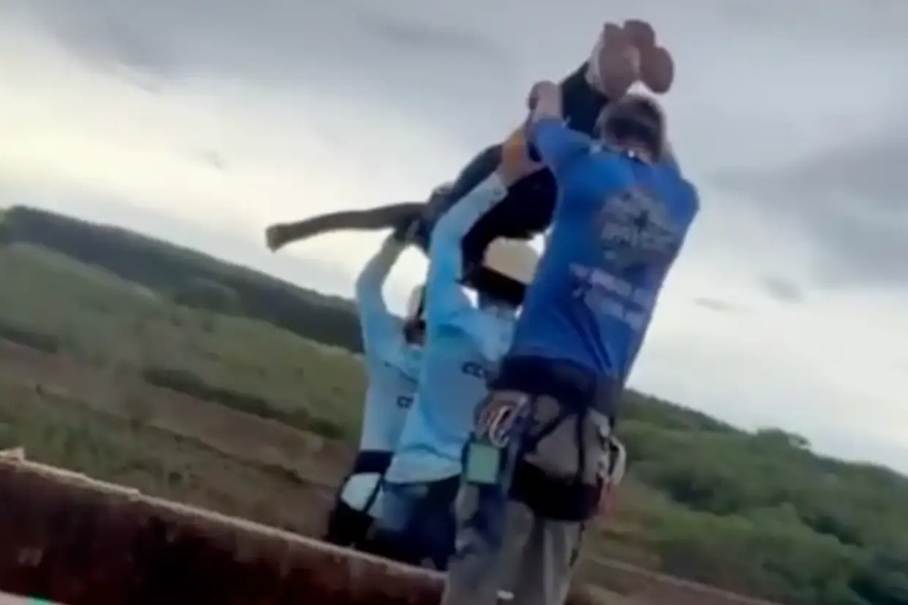
At the edge of an abandoned bridge in the interior of São Paulo, Maria Eduarda Rodrigues de Freitas became, for a terrible second, the image adventure tourism sells so well. Arms out. Body lifted. Air waiting. A camera is reportedly in hand. A young woman, 21 years old, about to be launched like a plane over the drop at Ponte do Esqueleto, the Skeleton Bridge, near Limeira.
Then came the scream from an onlooker. Attach the cord.
By then, according to local reports, it was already too late. Rodrigues de Freitas fell about 40 meters, or 130 feet, and emergency crews pronounced her dead at the scene. Police arrested three men identified as instructors, Luis Felipe Feliciano Egoroff, Vitor de Freitas Goncalves, and Maicon Fernandes Cintra, and charged them with homicide with eventual intent, a Brazilian legal category used when someone may not have directly intended to kill but knowingly accepted a fatal risk.
The case is ghastly because the alleged failure was not obscure. It was not a freak weather shift, a hidden rock, a rope weakened by age in some invisible way. The basic safety step, attaching the person to the system that makes the activity survivable, appears to have been missed. The men, according to reports citing police, acknowledged she was not connected to safety ropes and said they did not remember who was responsible for checking her equipment.
That line should chill an entire industry.
Rope jumping is not bungee jumping. It uses low-stretch climbing ropes to turn a vertical fall into a pendulum swing, while bungee relies on an elastic cord and bounce. But the physics matter less than the ritual. Harness. Rope. Anchor. Check. Second check. Communication. No launch until it’s all confirmed.
In Limeira, the ritual appears to have collapsed into spectacle.

A Pattern Written in Falls
Brazil’s tragedy does not stand alone. Across Latin America, recent adventure tourism deaths and near deaths show the same basic anatomy: a paid extreme activity, a guide or operator system, and a catastrophic failure at the simplest safety point.
In Colombia in 2021, 25-year-old lawyer Yecenia Morales Gómez died during a bungee activity at a viaduct between Amagá and Fredonia, Antioquia. Early reports said she apparently jumped after hearing an instruction while she was not yet secured to the elastic cord. The company later disputed that version, but the central horror remained. She entered the jump sequence without being properly attached. Local reporting also cited the mayor of Fredonia saying the operator lacked permission to run the activity there.
In Ecuador in 2017, Vicente Salazar Mesías, 26, died during a bridge jump in Baños de Agua Santa after the cord length was reportedly miscalculated, and he struck the ground after jumping from roughly 25 meters. Authorities suspended the activity while experts investigated.
Then come the cousins of the same problem. In Brazil in 2022, Sergio Murilo Lima de Santana, 39, died in Canoa Quebrada, Ceará, after a zipline support structure reportedly failed during his descent. In Mexico in 2023, a 6-year-old survived a 40-foot fall from a zipline after his harness reportedly failed, with the family saying it planned to sue the operator.
The data set is small but revealing. In these five cases, the danger was not the marketed thrill itself. It was the control layer around the thrill. Two cases, Brazil and Colombia, centered on a person apparently jumping without a proper attachment. One centered on rope calculation. Two involved equipment, harness, or structure failure. Different countries. Different activities. Same underlying vulnerability. The safety system depended too much on people improvising at the edge.
That is not an adventure. That is administrative collapse with a view.
Latin America has always sold landscapes beautifully. Volcanoes, cliffs, jungle rivers, colonial bridges, dunes, canyons, waterfalls, places where a traveler can feel both small and reborn. For towns outside the old circuits of capital cities and beach resorts, adventure tourism offers jobs, pride, and visibility. A bridge in Baños, a dune in Ceará, a viaduct in Antioquia, and an abandoned railway structure in São Paulo state. These are not just backdrops. They are local economies.
But the region also knows informality intimately. The same improvisational genius that helps families survive low wages and broken bureaucracies can become deadly when transferred to high-risk recreation. A rope jump cannot run on vibes. A zipline cannot be inspected by reputation. A bridge cannot become a business model because it looks cinematic on TikTok.
The State Arrives Afterward
The Skeleton Bridge case adds another layer in Latin America: the fight over who bears responsibility. The bridge has been abandoned for years and falls under federal responsibility. At the same time, Limeira officials say they had demanded action from federal agencies and now intend to sue the federal government. Brazil’s Secretariat of Federal Assets said it was available to assist investigators.
There, in miniature, is one of the region’s oldest political failures. Everyone can identify the danger once the body has fallen. Before that, the responsibility was foggy. Municipality. Federal agency. Private company. Informal group. Tour seller. Instructor. Client. The chain of command becomes visible only when prosecutors start naming defendants.
For Latin America, the lesson is not to kill adventure tourism. That would punish communities that need diversified income and travelers who want more than sanitized resorts. The lesson is that adventure tourism must stop living in the gray zone between formal business and weekend dare.
There should be licensing that means something, public registries that tourists can check, mandatory insurance, audited equipment logs, operator permits tied to specific sites, and criminal liability when the basics are ignored. Not paper reforms designed to collect fees. Real inspection culture. Real closure power. Real consequences before the funeral.
The market will not solve this alone because the market rewards the image first. A young woman’s final reported Instagram words, “Who was the crazy person who let me jump off a bridge?” now read like a caption from a generation trained to turn risk into content. But she was not supposed to be responsible for the engineering of her own survival. That duty belonged to the adults selling the fall.
Rodrigues de Freitas has already been remembered by loved ones as joyful, affectionate, dedicated, a presence that lit up rooms. Her mother’s grief, thanking God for the privilege of hearing her daughter call her mom for 21 years, pulls the story away from viral footage and back toward the human center.
Latin America does not lack courage. It has courage in excess. What it lacks, too often, is the boring infrastructure that lets courage come home alive.
Also Read: Brazilian Legend Ronaldinho Turns Camisa 10 into Bad Bunny Pop Passport