Mexico’s Big Wave Moment Revives an Old Question About Its Birthplace
As Mexico City chases a Guinness record for the stadium wave, a familiar Latin American question rises with the crowd. Who gets to own a tradition once the world renames it, broadcasts it, and folds it into national pride forever?
A Record Attempt With an Old Argument
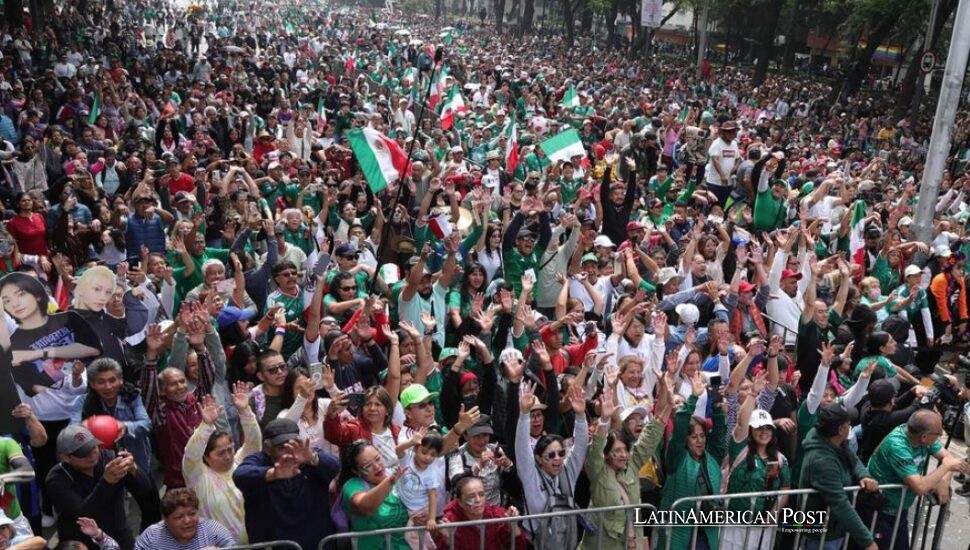
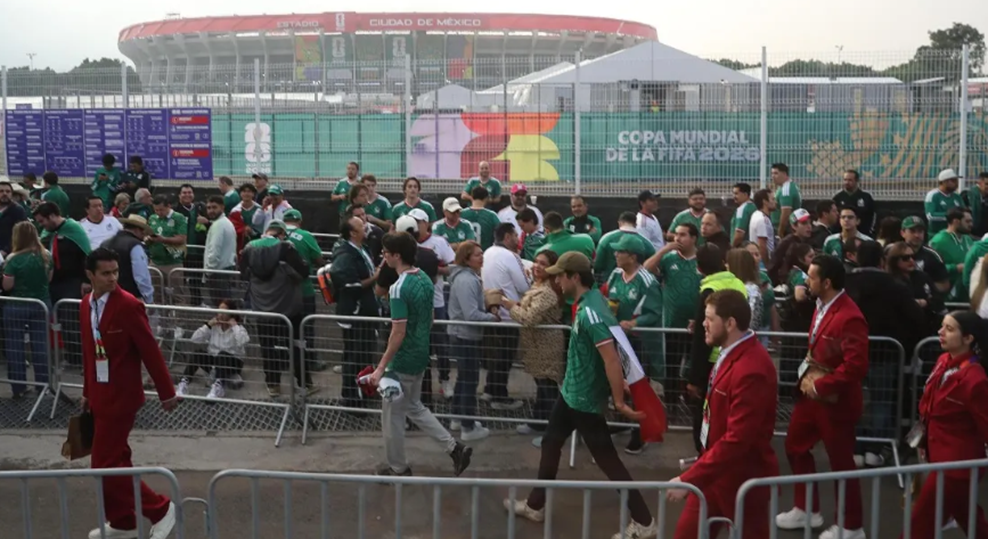
On Paseo de la Reforma, Mexico City’s grand boulevard of monuments, traffic, memory, protest, and Sunday strolls, thousands of people lifted their arms. They shouted “Mexico, Mexico!” in a rolling attempt to make the biggest stadium wave ever recorded.
The setting mattered. This was not a private arena sealed off from daily life. It was the capital’s ceremonial spine, an avenue modeled on European boulevards, then made Mexican by decades of marches, parades, vendors, grief, celebration, and political noise. For a country preparing to help host another World Cup, the choice turned a sports gesture into civic theater.
According to notes from a BBC report by Dalia Ventura, Guinness World Records officials are still analyzing whether Mexico City surpassed the standing mark, set at a NASCAR event in Tennessee in 2008, when 157,574 people joined a wave around the stadium. That number is enormous, almost absurd. Yet the Mexican attempt carried a different weight. It was less about choreography than authorship.
The wave is known outside North America as the Mexican wave, and for many fans, that name feels settled. Mexico did not merely perform it. Mexico gave it a world stage. At the 1986 FIFA World Cup, television sent the movement outward, seat by seat, screen by screen, until a crowd trick became global language. That tournament was remembered for Diego Maradona, Argentina’s genius, and Mexico’s warmth under pressure. It also made the wave internationally legible.
Still, origin stories are rarely polite in Latin America. They arrive with paperwork from somewhere else.
George Henderson, the American cheerleader better known as Krazy George, told the BBC in Ventura’s report that he believes he initiated and directed the first wave at a 1981 baseball game in California between the Oakland Athletics and the New York Yankees. “The Oakland A’s had already lost two away games,” he recalled. “In the third inning, I thought about trying something no one had seen before.”
He said he found three sections and explained what he wanted. The first two attempts failed. The third went all the way around the stadium. The fourth became continuous. “The place was going crazy,” he said.
Who Owns a Gesture Once It Travels?
That dispute is almost too perfect for Latin America. A practice may be invented elsewhere, but it becomes famous here. A name may be inaccurate, but it sticks because the region made the image unforgettable. This is not theft in the simple sense. It is the messy politics of cultural circulation.
Mexico did not need to invent the wave to make it Mexican in the world’s imagination. That distinction is important. Nations often gain symbolic power not by creating a form from nothing, but by giving it scale, emotion, color, repetition, and myth. The mariachi, the plaza, the mural, the football chant, the masked wrestler, the Day of the Dead altar, each has histories of mixture and argument. Latin American identity often lives in that tension between origin and adoption.
The wave’s fame also reflects the economic structure of global sports. The 1986 World Cup was a media event, and television rewards what looks simple, contagious, and joyful from far away. A crowd lifting itself in sequence needs no translation. In a region too often shown abroad through debt crises, violence, coups, migration, and disaster, the wave offered another image: mass coordination without command, public feeling without fear.
That is why Mexico City’s attempt is more than nostalgia. It comes as Latin America again prepares to serve as a stage, supplier, labor force, market, and atmosphere for global entertainment. Mega-events promise tourism, jobs, investment, and soft power. They also expose inequality. The people who fill the streets and stadiums create the spectacle, while the largest profits usually flow upward through federations, sponsors, broadcasters, hotels, and political branding machines.
A wave costs nothing to perform, but its image has value. That is the Latin American paradox. Popular culture is the region’s renewable energy, yet it is constantly extracted, packaged, renamed, and sold back.
The Science of Joy and Restlessness
The wave also has a strange scientific dignity. Fifteen years after the 1986 World Cup, physicist Illes Farkas, working with Tamas Vicsek and Dirk Helbing, studied stadium waves from the statistical and biological physics group at the Hungarian Academy of Sciences in Budapest. Their research, published in Nature in 2002, found that a typical wave travels clockwise at about 12 meters per second, or roughly 20 knots per second.
Their model resembled those used to describe forest fires or electrical signals moving through heart tissue. In large stadiums, the notes say that only 25 to 35 people are needed to start one. That is both charming and politically suggestive. Latin America knows what can begin with a small cluster of bodies willing to move first.
But the wave is not always pure joy. Chris Hunt, author of World Cup Stories, told the BBC that it can also mean spectators are bored or irritated, or that they are asking players for more. When a match drags, he said, fans use it to get something out of the ticket they paid for. In the final minutes of a tight World Cup final, nobody wastes attention on choreography. The wave appears when the crowd feels free enough, or restless enough, to become the show.
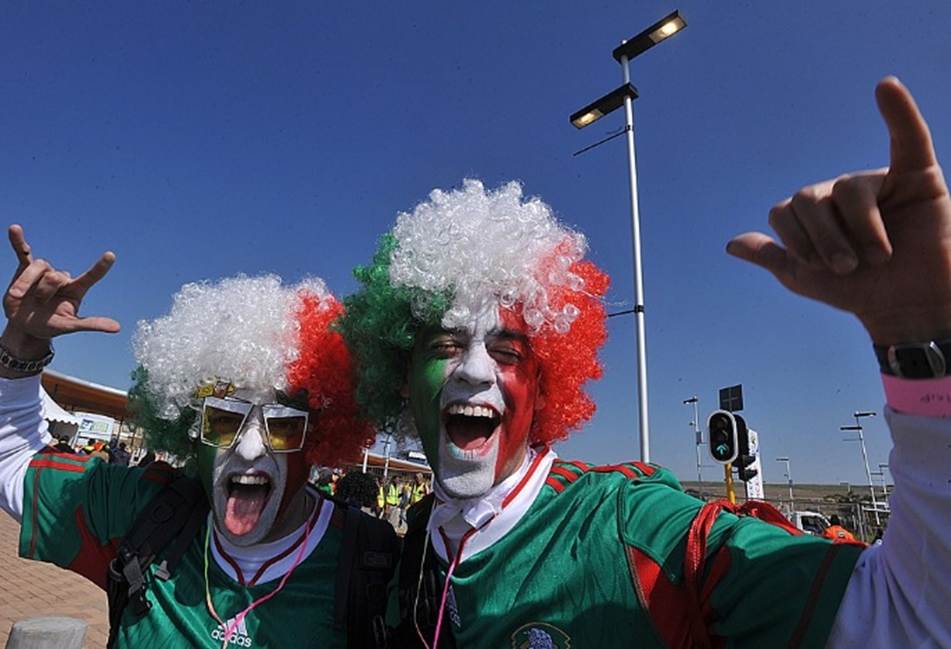
That ambiguity is the heart of it. The wave can be a celebration, a complaint, a filler, a communion, a branding, a rebellion, or a distraction. On Reforma, it carried all those meanings at once. People in green jerseys shouted for Mexico, but the larger story belonged to the region: Argentina remembering 1986, Brazil recognizing the rhythm, Central America understanding the hunger to be seen as more than a footnote, and every Latin American capital knowing how quickly public joy can become public argument.
So is the Mexican wave really Mexican? Historically, the answer may be complicated. Culturally, it already is. The world named it after Mexico because Mexico made it unforgettable. Latin America should hear both the compliment and the warning. When the crowd rises, it creates beauty. When the cameras arrive, someone else may decide what that beauty is called.
*Adapted from BBC report “Mexicans chase a world record wave – but is the trend even Mexican?” by Dalia Ventura: https://www.bbc.com/news/articles/c2ly1q0940qo
Also Read: Mexican Maracaná Dreams of Pele Magic in Tepito’s World Cup