Guatemala’s Pacific Graves Show Climate Crisis Eating Latin America’s Shoreline
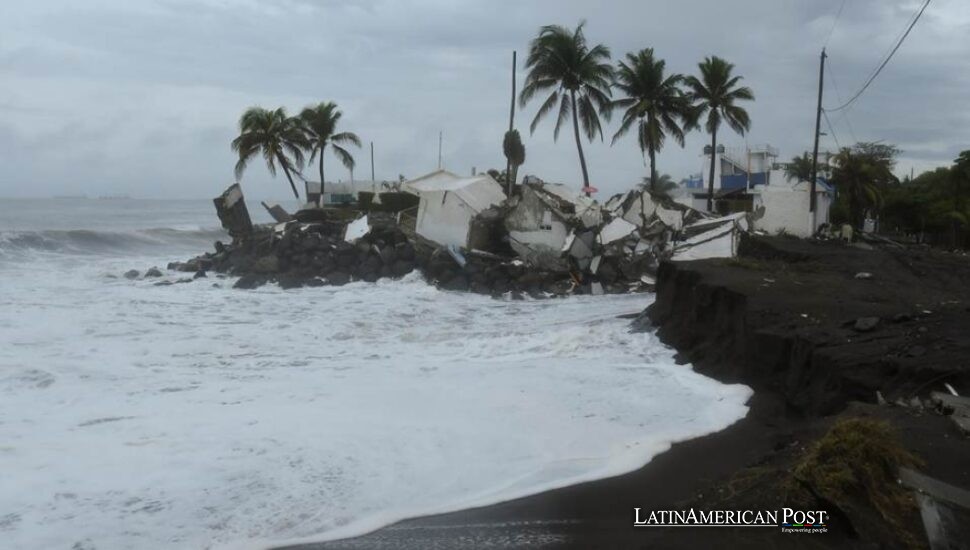
Tropical Storm Cristina exposed Guatemala’s Pacific coast as a frontline of climate change, where rising seas, violent surf, damaged homes, and threatened cemeteries reveal how Latin America’s poorest communities are being asked to absorb a planetary bill first, alone now.
Where the Ocean Reaches the Dead
In Iztapa, the sea did not stop at the beach. It kept coming, rude and hungry, until it reached the edge of the cemetery in El Conacaste and began taking from the dead what storms had already taken from the living.
According to an EFE report, the aftermath of Tropical Storm Cristina laid bare the vulnerability of Guatemala’s Pacific communities, where stronger waves and rising sea levels are not only damaging houses but also changing the local landscape. In the port municipality of Iztapa, in the southern department of Escuintla, residents watched as the ocean ate away more than three meters of beach and reached gravesites, forcing families to remove the remains of loved ones after niches began collapsing.
There are moments when climate change stops sounding like a policy phrase and becomes a hand inside the family tomb.
“The truth is that we are worried and sad because we survive on tourism and some of it is leaving us,” resident Verónica Florián told EFE. The sea does this every year, she said, but when a storm helps it along, everything becomes worse than normal. It becomes chaos.
Her words carry the tired knowledge of people who do not need a satellite image to know the coast is moving. They have watched it. Season by season. House by house. Meter by meter. Florián said the water carved beneath the shoreline until about two meters of pavement were left hanging in the air. That image is almost too neat as a metaphor: a country standing on infrastructure with nothing underneath.
The storm’s damage is being measured officially in houses, roads, waves, and reports. But in places like El Conacaste, the true accounting is more intimate. The loss is not only economic. It is spiritual, historical, and territorial. When a cemetery is threatened, a community is told that even memory has no safe ground.
Tourism Sits on Fragile Sand
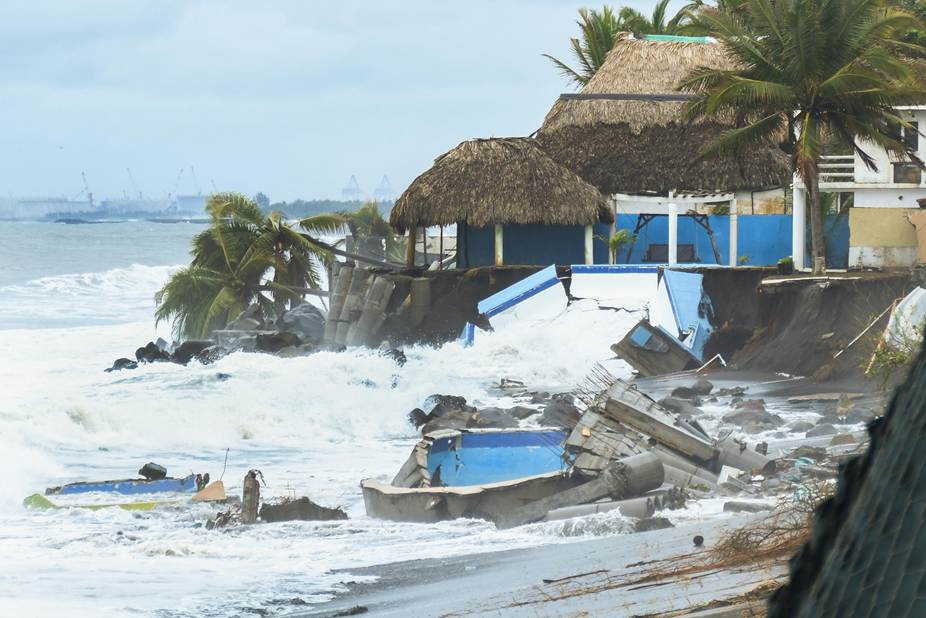
The residents of Guatemala’s Pacific coast do not live beside the ocean as postcard spectators. They work from it. Tourism feeds small restaurants, informal vendors, boat operators, caretakers, builders, cleaners, drivers, guides, and families who depend on visitors arriving with enough confidence to stay.
That is why erosion is not an environmental side story. It is an economic ambush.
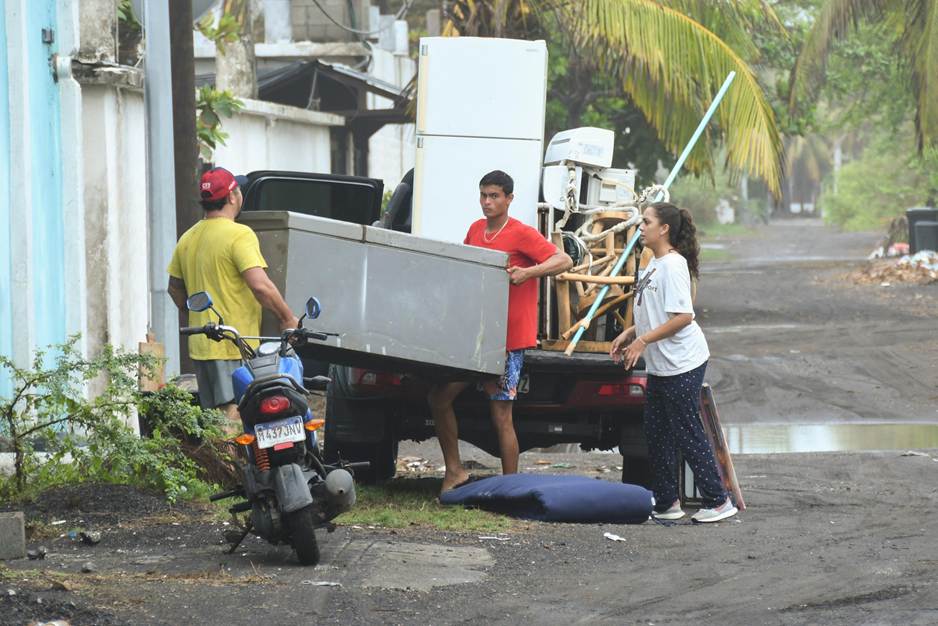
EFE reported that the damage validates a fear shared by coastal communities that depend on the maintenance and construction of tourism properties to survive. In neighboring Atitancito, resident Karla Fermín described collapsed houses and utility poles after the sea surged with Cristina’s outer force. The town also lost power lines. She said they did not know when the sea could grow stronger again, adding that they had never seen the waves so high.
Officially, Guatemala’s disaster agency, Conred, registered 15 affected homes in Atitancito. But that figure is only the narrow doorway into a wider problem. A count of houses cannot capture the way fear changes a town’s behavior. Visitors cancel. Investors hesitate. Families stop repairing because they wonder if the next storm will make the repair foolish. Young people begin to imagine leaving. Older people stay because leaving would mean abandoning the graves, the shop, the kitchen, the name of the place.
This is where Latin America’s climate injustice becomes concrete. Countries like Guatemala did not build the carbon-heavy world economy that is warming oceans and loading storms with new force. Yet their coastal towns are asked to pay early, with fragile homes, weak public planning, and tourism economies that can collapse with one bad season.
The vulnerability is not natural. It has been produced. By poverty. By informal construction. By weak zoning. Due to a lack of long-term coastal defenses. By governments that respond after the water enters instead of planning before it arrives. By an international system that talks about resilience as if resilience were a personality trait, not a budget line.
There is also a knowledge gap, and it is dangerous. The notes cited by EFE point to a historic deficit in official oceanographic studies in Guatemala, with experts saying the country is nearly 80 years behind in research and monitoring of its marine dynamics. In plain language, the country is fighting a changing ocean without enough instruments, records, or local science.
Without that documentation, authorities lean on global projections and recent anomalies. In 2023, during El Niño, warmer-than-average sea surface temperatures raised sea levels during the dry season. They pushed water into populated areas of Sipacate, Monterrico, Iztapa, and Buena Vista, in Escuintla and Santa Rosa. Those were not isolated scares. They were previews.
Latin America Watches the Tide
Conred monitoring confirms that rising sea levels are a latent threat along Guatemala’s southern coastline and on the Caribbean beaches of Izabal. The damage is more visible on the Pacific side because of the region’s land and coastal characteristics, according to the agency’s geophysicists. The World Risk Report places Guatemala among the ten countries most at risk from the effects of climate change.
That ranking should embarrass more than Guatemala. It should embarrass the hemisphere.
Latin America is often described as a climate treasure trove: Amazon forests, mangroves, glaciers, rivers, coral reefs, biodiversity, and carbon sinks. But it is also a climate casualty. The region is expected to protect the planet. At the same time, its own poor are relocated by drought, floods, landslides, and seas that no longer respect the old line between beach and village.
The rainy season, which runs from May to October, has already left five people dead and nearly 600 homes with moderate or severe damage, according to official figures. Those numbers are early-season warnings. They are also reminders that disasters in Central America rarely arrive alone. It meets inequality already waiting at the door.
Guatemala’s Pacific communities are not asking for pity. Their demand is more serious. They need science, infrastructure, coastal planning, housing policy, and climate finance that reaches the people whose roads, graves, and livelihoods are actually at risk.
The sea at Iztapa is not only swallowing sand. It is exposing the old bargain that Latin America knows too well: the poor stand closest to danger, then get praised for surviving it.
In El Conacaste, families moved their dead because the living state had not moved fast enough. That should haunt the region. A coastline that cannot protect its cemeteries is telling us, with terrible clarity, that tomorrow has already arrived.
Also Read: Bolivia Roadblocks Bite Back as Paz Faces Emergency Rule Reckoning