La Guaira Quake Turns Deportation Flight Into Venezuela’s Cruelest Homecoming
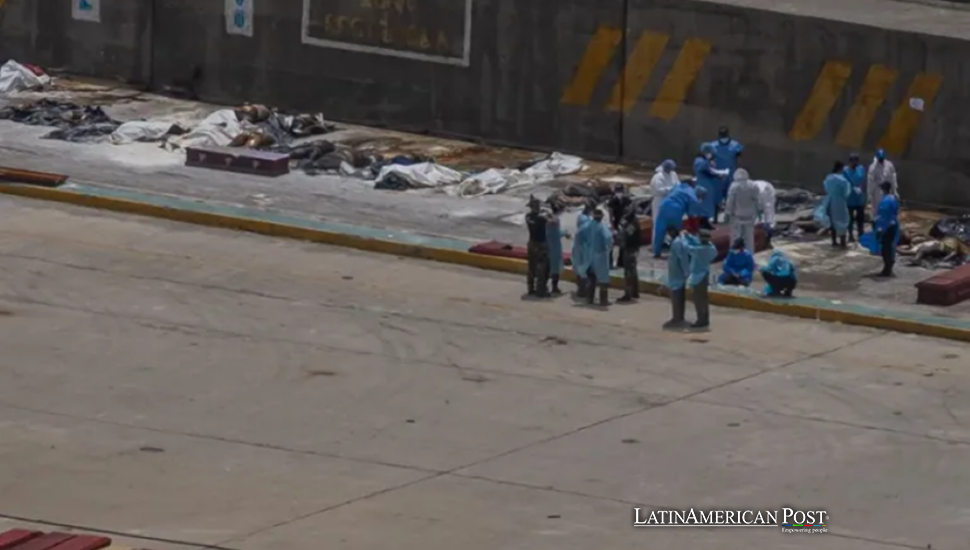
After Flight 164 carried Venezuelan deportees from the United States to La Guaira, twin earthquakes shattered their forced return, leaving families chasing names through morgues, hospitals, rubble, and silence in a country already exhausted by migration and loss.
A Phone Call Before the Ground Opened
The call from La Guaira should have been the end of one nightmare, not the beginning of another.
Abelardo Rincón, 23, had been gone long enough to build the outline of an American life in Georgia. He worked at a car dealership. He married. He was waiting for the birth of a daughter who would know him first as a voice, then, he hoped, as a father standing beside her crib. For six years, the United States had been the place where he worked, planned, and made himself useful.
Then came detention during President Donald Trump’s immigration crackdown. Then custody. Then a deportation flight. Then Venezuela.
Rincón landed on June 24 aboard Flight 164 with more than 140 other Venezuelans, according to BBC reporting by Nicole Kolster Luces and Sheila Flynn, whose interviews captured the families’ unraveling search. Still in custody, he called relatives in Atlanta. He told them he and other deportees were being kept in a coastal hotel near La Guaira after medical checks and documentation.
A few hours later, twin earthquakes hit.
The official numbers gave the disaster a national shape: at least 2,200 dead, more than 10,000 injured, and 50,000 missing, according to United Nations figures cited in the reports. But numbers do not explain the particular cruelty of Flight 164. These were people whose families had already survived the small deaths of migration: an empty chair at dinner, a WhatsApp call dropped by bad signal, a child learning to stop asking when someone is coming home.
Now the same families were being asked to search for them twice. First through detention systems. Then through rubble.
The Hotel Became a Border
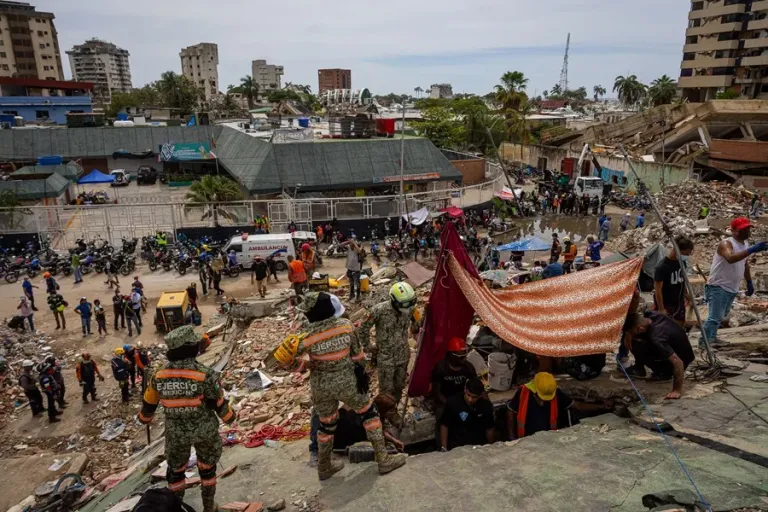
Hotel Santuario La Llanada was supposed to be temporary. A holding place. A state-managed pause between deportation and whatever came next. The passengers reportedly included 19 women and seven children, people who returned to a country many had left because work, food, safety, or possibility had run thin.
La Guaira, with its port memory and salt-air fatigue, has long been one of Venezuela’s thresholds. People pass through it. Goods pass through it. Hope and government paperwork pass through it. In Latin America, coastal cities often carry that double meaning: escape route and receiving dock, promise and punishment.
For the deportees, the hotel became something else. It became a border inside the homeland.
The Department of Homeland Security told the BBC that the flight safely reached Venezuela and that all “illegal aliens” aboard were returned home. The agency added that once someone is no longer in ICE custody, ICE is no longer responsible for them. That sentence has the cold perfection of bureaucracy. It marks a jurisdictional ending. For families, nothing had ended.
Rincón’s grandfather, Jose Rincón, searched at morgues, including in Caracas. He said he viewed at least 200 bodies looking for his grandson. He tried to reach the destroyed hotel, but Venezuelan authorities blocked access and told him there was “no life” at the site. In the BBC interviews, his anguish had the rhythm of someone trapped between proof and prayer. If he could only see the rubble, he said, he might be satisfied. Days had passed, and he still had not found Abelardo alive or dead.
That is where the data becomes unbearable, not in the total dead, but in the missing whose names sit between categories. A body can be buried. A survivor can be treated. A missing person becomes a room no one can leave.
Darwin Eliecer Serrano Lopez, 35, called a cousin at 5:32 a.m. to say he was back after four years in the United States. The first earthquake struck less than half an hour later. His family drove all night. Relatives said he had been detained in Chicago, then moved through four detention centers before being put on the flight.
By Monday, his cousin Paola Chacón had begun to accept that he was dead, though no official answer had come. His wife, Mildrey Sarazo, had not seen him in three years. She still had not told their daughters, ages 9 and 15, the full truth. She wanted his body, she told the BBC, so the family could identify him and bury him with certainty.
Certainty is a human right that no migration file can replace.
A Nation Built on Leaving Meets Return
Venezuela’s crisis has made departure ordinary and return complicated. Millions have left in recent years, scattering across Latin America and the United States, sending money back into households where remittances often serve as both a lifeline and an apology. Coming back unwillingly is not simply crossing a border in reverse. It is to confront the reason one left.
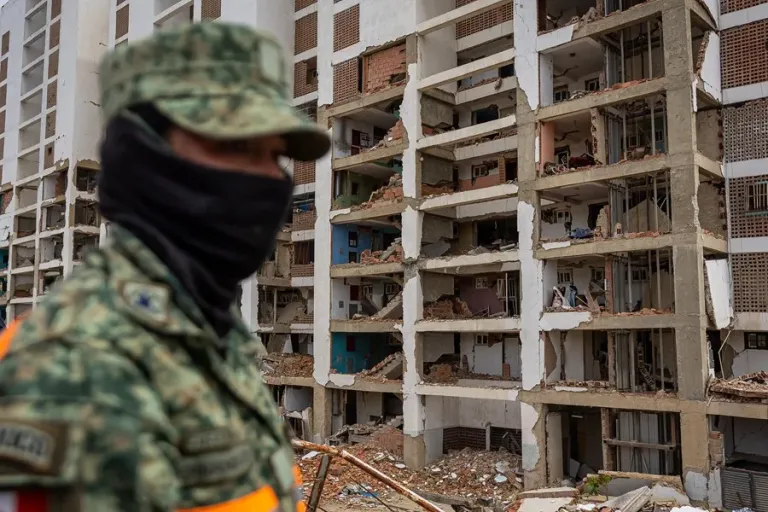
That is why Flight 164 reads as more than a deportation story. It sits at the intersection of U.S. immigration enforcement, Venezuelan state control, disaster response, and the intimate economics of survival. One government says custody ended. Another controls access to the wreckage. Families do the work in between, carrying names from hospital corridors to morgue doors.
Daniel Alejandro Nunez, 28, also called his mother after returning while still in state custody. His stepfather, Jose Alejandro Abache, told BBC Mundo they searched hospitals, morgues, everywhere. The repetition is familiar in Latin America, where families too often become their own investigators when institutions fail to speak clearly.
Some passengers survived, which deepened the horror rather than softening it. Lisbeth Portillo, 58, was lying in a second-floor room with 16 other women when the building collapsed. She told the Associated Press that she saw the woman beside her begin to fall, then heard screams. She said God gave her a second chance.
Anderson Daniel Salcedo, 22, was found at Caracas’s university hospital after nearly two days trapped under rubble, Reuters reported. His family learned he had survived, then learned his legs had been amputated. He had lived in the United States for three years, sending money home before deportation put him in that hotel. His grandmother, Marlene Lozano, said he had no documents, no way to be accounted for, no way to communicate.
That absence of documents is not a small detail. In modern migration, papers decide whether a person exists cleanly inside a system. Without them, a son can become an unknown patient, a husband can become a rumor, a deportee can disappear inside his own country.
La Guaira now holds that cruel lesson. Home is not always safe. Return is not always rescue. For the families of Flight 164, the earthquake did not begin when the ground moved. It began when the plane landed, when the state took custody, when the phone rang, when a loved one said he was back, and then vanished again.
*Adapted from original BBC report “The US deported them to Venezuela – hours later earthquakes struck” by Nicole Kolster Luces and Sheila Flynn: https://www.bbc.com/news/articles/c3eyxjy01y3o
Also Read: Venezuela Quakes Turn Rubble Into a Test of Regional Mercy