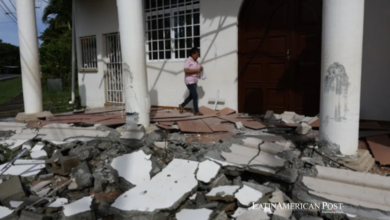
Latin America Shadows Panama as Region Embraces Tougher Prison Politics

Panama’s largest prison escape exposed more than broken fences at La Joyita. It revealed an exhausted state, a public primed for punishment, and a regional fear that overcrowded prisons can become criminal headquarters, or, as Haiti showed, simply disappear altogether.
The Night the Walls Gave Way
At La Joyita, June 1 began with an inmate transfer and ended with national humiliation. During the confusion, 195 prisoners escaped the complex outside Panama City. Three inmates died, and nine people were injured, including three guards. By June 18, authorities said 178 escapees had been recaptured, and 17 remained free, none described as major gang bosses. Officials were removed, internal inquiries were opened, and a criminal complaint was filed. One question lingered: how did nearly 200 men pass through a state-controlled prison?
President José Raúl Mulino answered bluntly. The system, he said, had failed and collapsed. He promised “hard models” and new policies on July 1, language that travels easily across a region captivated by El Salvador’s CECOT prison and President Nayib Bukele’s punishment-first politics. Mulino noted that Panama pays nearly $2 million yearly for prison electricity, while inmates allegedly use state-funded power and contraband phones to arrange crimes against those covering the bill.
That line will land in Panamanian homes. A family sweating over an electricity payment has little patience for images of cellphones or luxuries behind bars. Yet contraband does not float through concrete. It enters through doors, corrupt networks, and badly supervised supply chains. A break this large shows that guards, administrators, infrastructure, and intelligence failed together.
Crowding makes every failure more combustible. Panama holds more than 24,000 people in prison. Officials describe the system as 35 percent oversaturated, while reported figures for the larger La Joya complex show 15,118 inmates in space designed for 9,909, a strain of 52.5 percent. The frames differ, but the lived reality does not: too many bodies, too few officers, and pavilions where the strongest group can become the government after visiting hours.
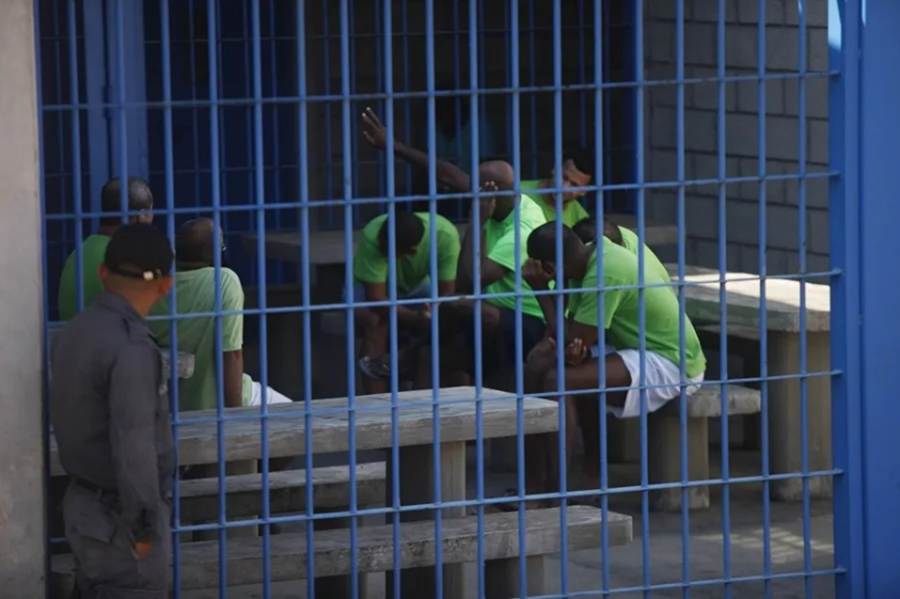
When the Prison Becomes the Headquarters
Authorities say high-profile inmates order extortions and killings from their cells. Homicides rose 7 percent between January and May, according to prosecutors, and Mulino linked the increase to drug trafficking. Panama is a logistical hinge between South American cocaine production, Caribbean routes, container ports, and global finance. The connectivity that creates legal prosperity can also be rented by criminal networks.
The temptation is isolation. Move gang leaders far away. Cut communications. Make prison severe. There is a legitimate case for separating commanders who continue directing violence. But Mulino’s suggestion that rehabilitation is a relic creates a false choice. Prisons must incapacitate dangerous people, yet most inmates eventually return to society. If institutions abandon education, treatment, and reintegration, they do not eliminate criminal networks. They supply them with frightened recruits.
Across Latin America, nearly 1.4 million people were incarcerated by 2021 amid widespread overcrowding and poor conditions. Researchers warn that such prisons can strengthen organized crime, raise recidivism, and turn low-level offenders into more capable violent actors. The hard cell can produce the threat it was built to contain.
There is another uncomfortable number. At the end of 2025, roughly 35 percent of Panama’s prison population was awaiting trial. A tougher system will not fall only on convicted gang leaders. It will govern thousands whose guilt has not been finally established. Delayed courts create crowding, crowding weakens control, weak control empowers gangs, and gang power justifies harsher detention. The circle closes.
Human rights are often framed as favors for criminals rather than restraints on state power. But a guard who cannot be bribed, a judge who processes cases promptly, a prisoner prevented from ordering murder, and an innocent detainee released are parts of the same security system. Discipline without legality is only force. Rehabilitation without control is only rhetoric.
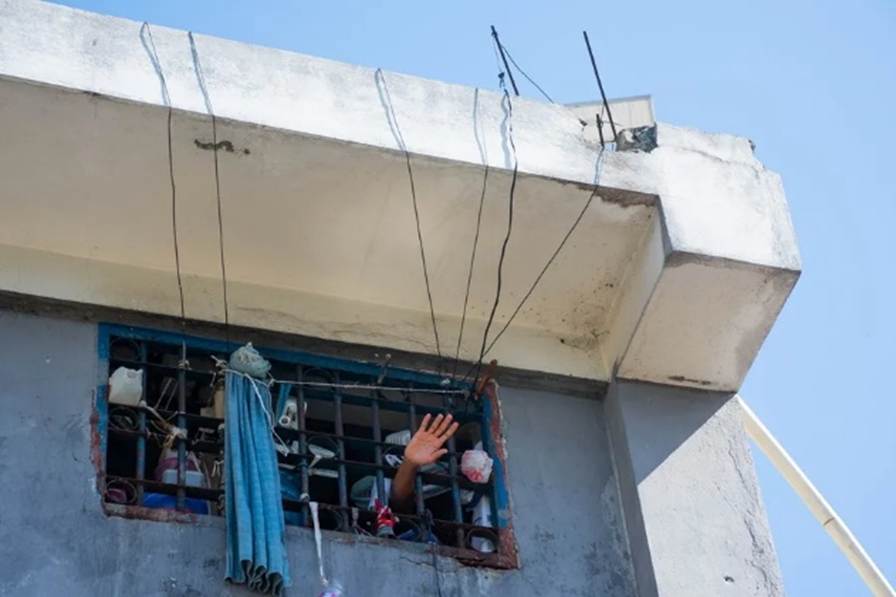
Haiti Is the Edge of the Map
Haiti gives the argument its darkest horizon. In March 2024, gangs attacked major prisons and an estimated 4,600 detainees escaped. By June 2026, more than 70 percent of Port-au-Prince remained under gang influence, while violence had killed more than 2,300 people and displaced 1.5 million this year, according to the United Nations. The prison collapse did not merely release inmates. It warned that armed groups could overrun the state’s architecture.
Panama is not Haiti. Most escapees were recaptured quickly, and the state retained command. But Haiti shows the far end of a process in which prisons, police stations, courts, and neighborhoods stop obeying one public authority. The lesson is not to imitate a permanent emergency. It is to build capacity before spectacle replaces it.
Mulino’s July announcement will reveal whether toughness means only walls and punishment, or the less cinematic work of staff vetting, financial investigations, reliable communications controls, faster trials, and custody levels matched to risk. Latin America has built many fortresses. Its harder task is building institutions that cannot be purchased from the inside.
La Joyita’s broken perimeter has delivered its verdict. A prison can be overcrowded and still look imposing from the road. A government can speak fiercely and still be absent inside the gate. Panama can restore authority without confusing cruelty for control. For ordinary families, that difference determines whether tomorrow brings quiet streets or another locked front door. Haiti shows what happens when that distinction is lost.
Also Read: Peru’s Election Turns Into Democracy Test as Sánchez Allies Mobilize Against Fujimori’s Edge