Peruvian Gang Los Pulpos Stretches Its Tentacles Across South America
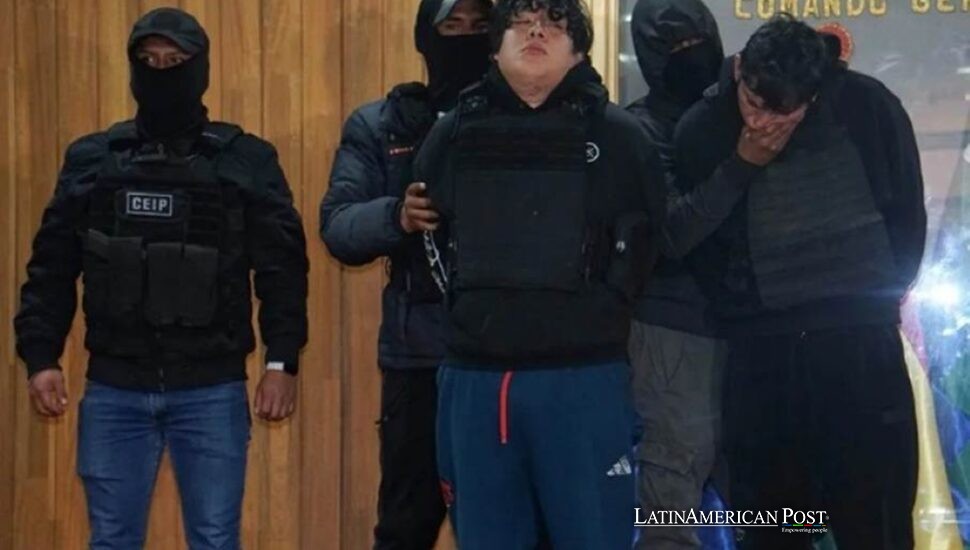
The arrest of Los Pulpos leader Jhonsson Cruz Torres in Bolivia exposes a criminal economy no longer confined to Peru, connecting gold regions, migrant businesses, extortion markets, and weak borders from Trujillo to Santiago, Ecuador, Bolivia, and Argentina’s uncertain frontier.
A Fugitive Becomes a Regional Map
The handover took place at Desaguadero, beside Lake Titicaca, where Bolivia and Peru meet. Jhonsson Smit Cruz Torres, better known as Jhonsson Pulpo, crossed back under guard hours after Bolivian police captured him in La Paz.
Cruz Torres, 29, carried an international warrant and a life sentence tied to violent crime. Peru had offered 500,000 soles, about $148,000, for information leading to him. Officers reportedly found Peruvian passports and Bolivian identity documents bearing different names, suggesting an effort to move between jurisdictions.
The operation had been developing since January and involved police in Bolivia and Peru, with support from FBI and DEA personnel based in Lima. Bolivian officials called Cruz Torres a “high-value regional target.” The phrase describes what Los Pulpos has become: not simply a Trujillo clan, but a criminal method capable of traveling.
The immediate accusation is brutal. Los Pulpos has been linked to the kidnapping of 31-year-old mining businessman Jenss Lara Tantaquilla and the killing of his four companions. About 20 attackers allegedly staged a fake police operation, stopped their vehicle, murdered the others, and carried Lara away. He was freed the next day after an apparent partial ransom payment.
By imitating the state, the gunmen corrupted the meaning of authority. Reports that some Trujillo officers allegedly collaborated with the organization make that mimicry more dangerous. On a dark road, a driver seeing police markings must decide whether to stop. Los Pulpos turned compliance into a vulnerability.
Gold, Migration, and the Extortion Economy
The gang began in the 1990s in El Porvenir, a poor district of Trujillo, under brothers Miller, Nilton, Eddy, and Jhon Cruz Arce. Robberies evolved into a family-run system of extortion, kidnapping, and contract killing. The recurring payment was called a vacuna, a vaccine. The term carries the gang’s cruel promise: pay regularly and perhaps violence will pass you by.
Under Cruz Torres, who reportedly assumed leadership at 17 in 2014, the organization widened its targets. Shopkeepers, schools, bus operators, miners, and business owners became sources of predictable income. Refusal could bring explosives, abduction, mutilation, or death. Violence was not merely punishment. It was advertising.
La Libertad gave the model fertile ground. The region contains valuable gold economies, formal and illegal, surrounded by transport companies, suppliers, merchants, and workers who move cash where state protection is inconsistent. A gang need not control the industry. It must identify who is earning and make one example frightening enough for everyone nearby.
That model traveled south with people and opportunity. In Santiago, Chilean police began receiving complaints linked to Los Pulpos in 2021. Peruvian restaurant owners and other migrant entrepreneurs reportedly faced monthly demands, while some victims were pressed for sums reaching $20,000. The gang also fought Tren de Aragua, showing how cities become overlapping extortion markets where criminal groups compete for the right to tax fear.
The Chilean case revealed another strength: camouflage. An alleged network operated around a waste-collection cooperative and cultivated informants in municipalities including Recoleta. Transnational crime does not remain outside legal society. It borrows contracts, jobs, vehicles, neighborhood knowledge, and the appearance of ordinary work.
Ecuador offered another frontier. In September 2025, police arrested 18 alleged Los Pulpos members in the gold-mining province of Zamora Chinchipe. They were accused of extorting miners and killing people associated with the Choneros. Again, the gang appeared where extractive wealth, informal commerce, and fragmented authority already met.
Bolivia may have represented the next stage. Police said the group intended to develop operations there. Cruz Torres’s presence in La Paz and possession of multiple identities do not prove a functioning Bolivian branch. They show that leadership and ambition were no longer confined to Peru.

Argentina Is the Test, Not the Proof
Argentina now sits at the edge of the same map, but precision matters. Authorities have reported signs of possible Los Pulpos activity, and Argentine media linked suspects in a 2025 triple femicide near Buenos Aires to the organization. Yet the available evidence does not establish a stable Argentine structure.
That uncertainty should produce vigilance, not panic. Latin American security debates often expand a notorious name faster than investigators can prove its presence. Every violent migrant suspect becomes a foreign gang member, every local cell becomes a cartel, and fear hardens into xenophobia. This can obscure the corruption, weak witness protection, prison failures, and informal economies that let extortion flourish.
Still, Argentina cannot treat the warning as somebody else’s problem. Los Pulpos does not require a flag or a large headquarters. A small network can identify Peruvian-owned businesses, transport workers, or cash-based merchants. One credible threat can create a monthly income stream. One murder can establish a reputation before police recognize the structure behind it.
Cruz Torres’s arrest is therefore a regional victory with limited finality. Los Pulpos survived the imprisonment of founders, shifted leadership across generations, and produced splinter factions. Removing one commander can disrupt communications, but it can also trigger succession struggles and more visible bloodshed.
The deeper lesson lies at Desaguadero. South American police proved they can cooperate across borders. Now prosecutors, financial investigators, prison authorities, and local governments must do the same. The gang’s leader was returned to Peru in hours. The economy he helped build, moving through gold, migration, front companies, and fear, will be much harder to send home.
Also Read: Mexico’s Influencer Killings Expose Cartels’ Deadliest Algorithm in Plain Sight