Ecuador’s Teddy Bear Hitmen Reveal a Gang War Without Borders
A gang leader’s killing outside Guayaquil airport, carried out by teenagers hiding a gun behind flowers and a stuffed toy, captures Ecuador’s security crisis through spectacular violence, splintering criminal groups, expanding illicit markets, and a government reaching for emergency powers.
The Ambush Behind the Welcome Sign
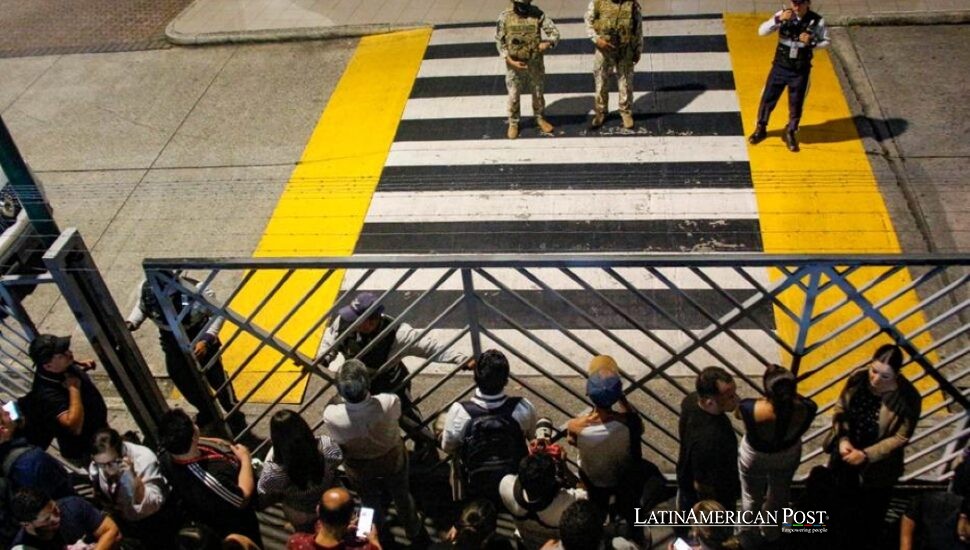
Outside the international arrivals hall in Guayaquil, two young men reportedly waited with the props of an ordinary reunion: flowers and stuffed toys. Then one stepped toward Carlos Alberto Suástegui Villanueva, reached behind a teddy bear, and fired at close range. Suástegui, 39, was identified by authorities as an alleged leader of Los Águilas in El Triunfo. A bystander was wounded. Travelers scattered with their luggage, and the terminal entrance closed while forensic teams worked where families had expected hugs. Two teenagers were detained.
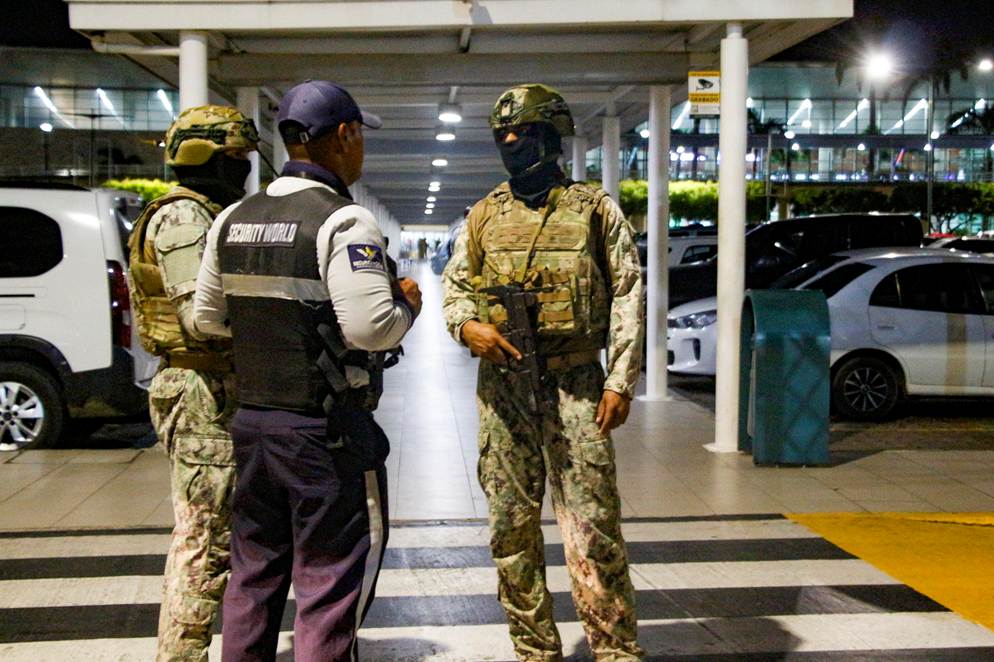
The location gave the killing its force. Guayaquil’s airport has been under military protection since January 2024, yet the attackers reportedly waited in plain sight. Their message was that organized crime could stage an execution beside a guarded city gateway, in daylight, using childhood objects as camouflage.
The alleged use of teenagers points to the crisis beneath the body count. Gangs need couriers, lookouts, collectors, shooters, and neighborhood informants. Where formal work is scarce, and the state often arrives as a raid rather than a service, criminal groups offer money, status, fear, or all three. The young become disposable labor for executives who are rarely seen.
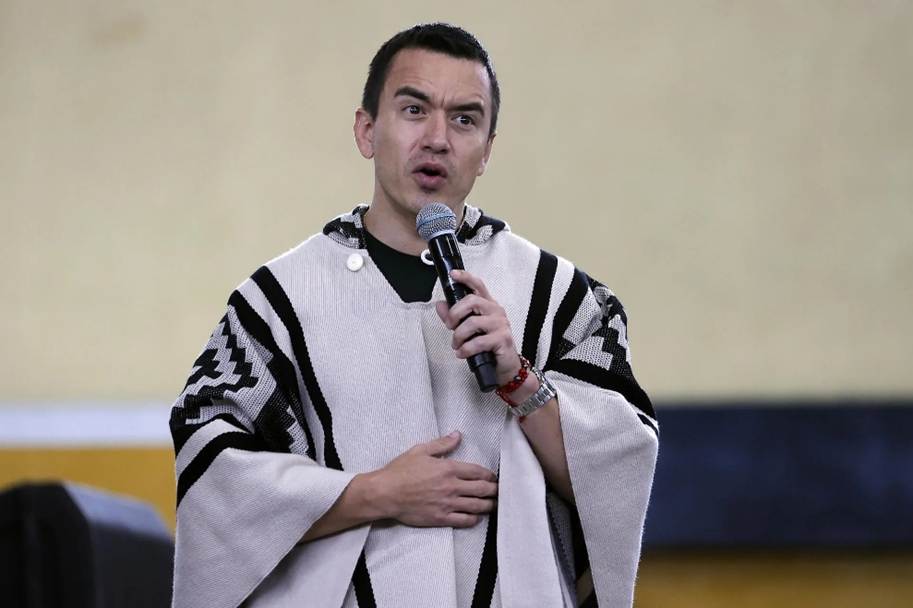
The ambush came one day after President Daniel Noboa declared another 60-day state of emergency across 10 provinces and three municipalities. The decree cited 879 homicides in the affected territories between May 1 and June 12, roughly 20 killings a day. In 2025, Ecuador recorded 9,216 murders, up 30 percent from 7,063 in 2024. That is more than 25 people killed daily for a year. Emergency rule is supposed to mark an exception. In Ecuador, it is becoming a governing calendar.
How a Safe Country Broke Apart
The speed of Ecuador’s collapse still startles. In 2017, the homicide rate stood near six per 100,000 people. By 2023, it had reached 44.5, more than seven times higher. This was not a sudden outbreak of national wickedness. It was the convergence of weakened institutions, overcrowded prisons, a reorganized cocaine trade, and local groups that learned to govern profitable corridors.
Geography supplied the opportunity. Ecuador sits between Colombia and Peru, the principal coca-producing countries. At the same time, its Pacific ports connect exporters to Europe and North America. Dollarization eases transactions. After Colombia’s 2016 peace accord altered control along parts of the cocaine chain, Mexican, European, Colombian, and Ecuadorian networks competed for containers, roads, officials, prisons, and neighborhoods.
The prisons became headquarters. Ecuador’s incarcerated population more than tripled between 2010 and 2020 while prison funding was cut and justice institutions weakened. Earlier gang pacification helped lower street violence, but criminal actors also exploited political connections. Short-term calm was never converted into resilient institutions.
The most revealing figures come from the Armed Conflict Location and Event Data project. In its report, “Ecuador’s Noboa Declared War on 22 Gangs. In His New Term, He Faces Many More”, ACLED found gang activity in more than 150 of Ecuador’s 222 municipalities. Nearly 80 percent of recorded gang violence remained concentrated in five coastal provinces. Still, the map was spreading inland along highways and toward illegal mining zones. The coast is the export platform. The interior is becoming the feeder system.
ACLED recorded 2,389 events involving nonstate armed-group violence in Ecuador in 2024, compared with 2,157 in Colombia, which has almost three times the population. Guayaquil alone registered 570 events, behind only Rio de Janeiro and Salvador in ACLED’s city comparison. These counts are not homicide totals. They show frequency and territorial pressure. Violence has become a method of administration.
Even gang manpower estimates expose the state’s blindness. The lower figure is about 15,000 members. Some experts and unofficial military estimates put those linked to gang activity as high as 60,000. A fourfold range suggests Ecuador does not know the size of the system it is fighting.
That system lives on more than cocaine. Gangs extort shopkeepers, taxi drivers, fishermen, mechanics, and transport businesses. They engage in illegal gold mining, kidnapping, fuel theft, and smuggling. In many neighborhoods, the gang resembles a predatory municipality. It taxes, punishes, recruits, settles disputes, and decides who may work.
Violence has entered formal politics. ACLED recorded 99 deaths in attacks involving political figures during the 2023 electoral cycle. The 2025 election period produced more than 140 violent events targeting political actors. Transit officers, prison directors, judges, and prosecutors face danger because they control permits, evidence, custody, and impunity. The motive is often practical: remove whoever obstructs business.
The Limits of Permanent Emergency
Noboa’s militarized approach has produced real, if temporary, gains. After he declared an internal armed conflict in January 2024 and labeled 22 gangs as terrorist organizations, gang violence events fell 34 percent from January to February. During the military’s first year controlling prisons, clashes and targeted attacks inside them dropped 64 percent, while reported gang-related fatalities there fell by about two-thirds. Force created breathing room. That should not be dismissed.
But pressure changed the enemy’s shape. Captured, killed, or isolated leaders left factions competing for neighborhoods, prison markets, and extortion income. ACLED identified at least 37 active gangs in 2024, 54 percent more than in 2023. From January 1 through May 23, 2025, it recorded over 1,300 gang-violence events, more than 60 percent above the same period a year earlier.
This is Latin America’s decapitation trap. Breaking a hierarchy can weaken coordination while creating smaller franchises led by younger leaders with shorter horizons. They fight harder for immediate control. Extortion grows attractive because it needs less international sophistication than cocaine trafficking. A neighborhood store can be monetized today.
The state can lose legitimacy while recovering territory. Authorities reported more than 73,000 detentions in 2024, but most detainees were released for lack of evidence. Rights monitors documented disappearances, arbitrary arrests, and torture allegations, including four Guayaquil boys detained by soldiers and later found dead. Operations produce headlines. Without cases, witnesses, prosecutors, and accountability, they do not produce lasting justice.
Ecuador needs a strategy that treats soldiers as a single instrument, not as the entire state. Ports need trusted customs and container intelligence. Prisons need civilian management and corruption cases. Extortion requires financial tracing and protected reporting. Mining regions require environmental enforcement tied to money-laundering investigations. Coastal neighborhoods need schools, transportation, and jobs that can compete with gang recruitment.
Regional cooperation matters because cocaine begins beyond Ecuador, weapons cross borders, and criminal alliances reach overseas markets. Yet cooperation cannot mean copying El Salvador’s mass-detention model without considering Ecuador’s fragmented gangs, trafficking economy, and constitutional system.
The airport murder compressed the crisis into seconds: flowers, a teddy bear, teenagers, a dead man, frightened passengers. Behind those images sit ports, prison deals, threatened merchants, compromised officials, absent jobs, and splinter groups multiplying under pressure.
Noboa may need emergency powers at times. But a country cannot search its way out of institutional weakness. Until Ecuador builds a state presence before the gunman arrives, gangs will keep turning ordinary places into stages and ordinary young people into ammunition.
Also Read: A Nation Split by a Sliver: De la Espriella’s Narrow Win Tests Colombia’s Democracy