Mexico’s Sheinbaum Is Right to Put Cortés Back on Trial Again
Claudia Sheinbaum's release of a 1548 Spanish royal edict makes the Cortés debate harder to dismiss, forcing Mexico to confront conquest nostalgia as evidence, not opinion, and exposing why colonial wounds still shape Latin America's political imagination.
The Archive Answers Back
The case against Hernán Cortés did not need another witness, but Claudia Sheinbaum produced one anyway.
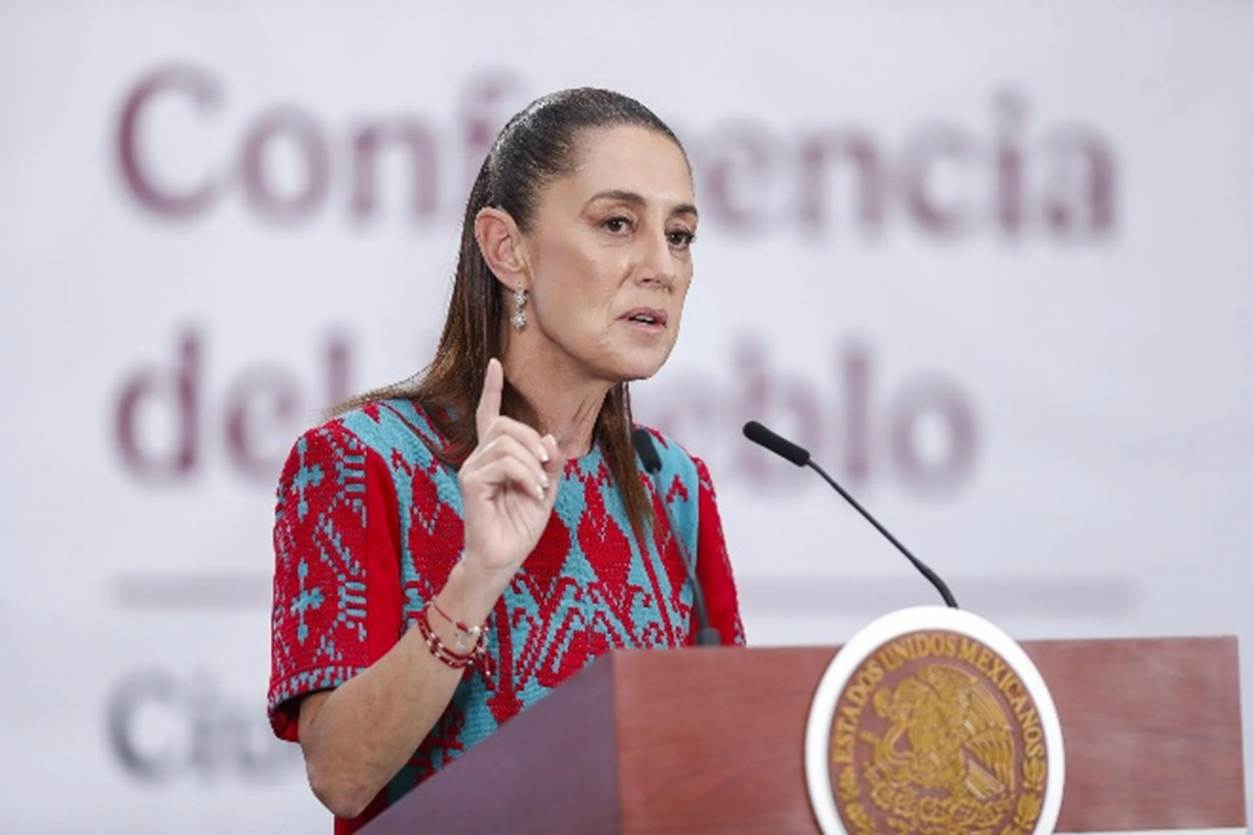
On Thursday, Mexico's president published a 1548 edict from King Charles I of Spain, issued in Valladolid, and presented it as proof that even imperial Spain recognized the brutality of the conquistador now being praised by Isabel Díaz Ayuso, the president of the Community of Madrid. In Sheinbaum's reading, the document does not merely belong to dusty colonial history. It is evidence.
"Here I leave you the edict of Charles I of Spain in Valladolid, from 1548, in which he speaks of the atrocities of Hernán Cortés," Sheinbaum wrote on social media, adding that the original peoples are "the true reserve of values of the Mexico of yesterday and today."
She was right to make the archive speak.
The decree, which she shared in photographs, ordered the release of "all the Indians whom the Marquis of the Valley made slaves in the Indies," referring to Cortés by his noble title and to the conquered American territories. The text also referred to crimes tied to his campaigns, including the massacre of 400 men from the Indigenous town of Cachula, the forced enslavement of descendants of original peoples, and the Cholula massacre carried out by Cortés' forces.
This matters because defenders of conquest often ask Latin America to argue with myth while keeping the documents in the drawer. They dress conquest in the language of civilization, faith, mixture, and historical destiny. Sheinbaum answered with the colonizer's own paperwork.
The result is devastating. If the Spanish Crown's own machinery discussed Indigenous enslavement and violence linked to Cortés, then the modern effort to rehabilitate him as a misunderstood founder becomes not only insensitive but historically unserious.
Conquest Was Not a Misunderstanding
Ayuso's visit to Mexico became a provocation because she praised Cortés, defended the supposed purity of colonial mestizaje, and attacked Mexico's governing party, Morena. She framed conquest as part of a shared legacy and criticized narratives that, in her view, promote hatred.
But Mexico is not promoting hatred by remembering Cholula. It is refusing amnesia.
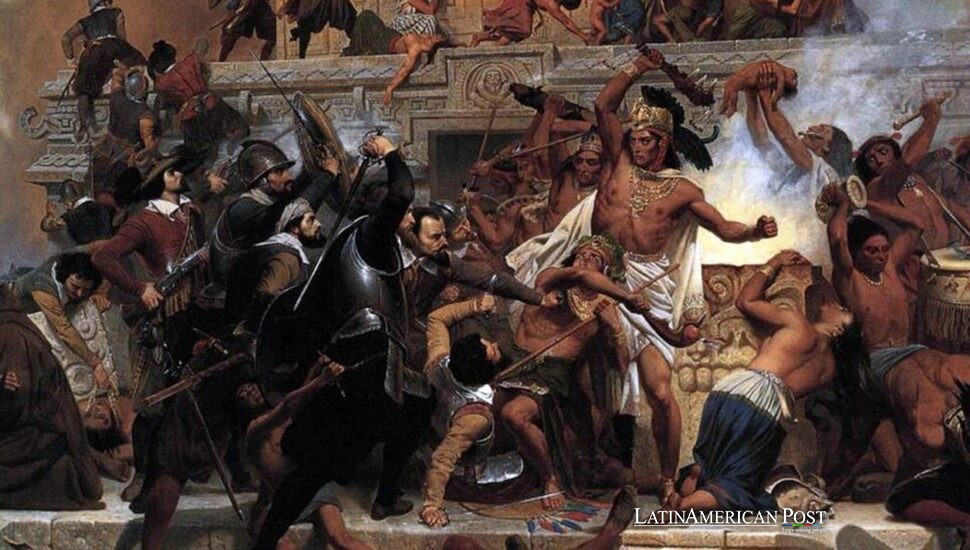
The Cholula massacre, as the historical notes describe, was among Cortés' most ruthless actions during his march toward the conquest of Mexico. In October 1519, Spanish conquistadors assembled nobles of Cholula in a courtyard, accused them of treachery, and then attacked a mostly unarmed crowd. Outside the city, Tlaxcalan allies also attacked. Within hours, thousands were dead in the streets, including much of the local nobility. The massacre sent a message to central Mexico and to the Aztec state that the Spaniards were not simply travelers, diplomats, or soldiers passing through. They were a force willing to use terror as political communication.
That is the true crime frame of the conquest. Not mystery, but motive. Gold. Power. Territory. Fear. The evidence runs through Cholula, the Templo Mayor massacre, the siege of Tenochtitlan, the torture of Cuauhtémoc, enslavement, forced labor, and the destruction of Indigenous worlds. Conquest was not the rough birth of modern Mexico. It was a campaign of domination.
This does not deny that mestizaje became part of Mexico's identity. It does not deny that modern Mexico is a country of mixture, contradiction, pain, and creation. But to celebrate mestizaje without naming coercion is to turn violence into romance. It asks Indigenous descendants to be grateful for surviving. It treats the wound as if it were a wedding.
That is why Sheinbaum's argument is stronger than Ayuso's. Sheinbaum is not saying history must be reduced to resentment. She is saying history cannot be cleaned so thoroughly that the blood disappears.
Latin America Refuses the Old Script
The deeper regional meaning is not about one Spanish politician or one Mexican president. It is about who gets to interpret Latin America's past, and for whose comfort.
For centuries, the region was told that the empire brought order to chaos, religion to emptiness, language to silence, and civilization to people who supposedly lacked it. That narrative has always been useful to power. It turned theft into destiny. It turned a massacre into a foundation. It turned Indigenous survival into a footnote.
Latin America's anticolonial sentiment today is not a childish refusal to move on. It is a demand that the past be described accurately before reconciliation is requested. Mexico cannot have an honest relationship with Spain if Spain's political right still insists on polishing the conquistador while telling Mexicans not to hate. Respect does not begin with telling the injured how to remember the injury.
Sheinbaum's stance also matters because it rejects a common trap. When Latin American leaders criticize colonial memory, they are often accused of diverting attention from current problems. But the present is not separate from colonial inheritance. Land inequality, racial hierarchy, Indigenous exclusion, extractive economics, and elite contempt did not fall from the sky. They were built over time, often with conquest as their first architecture.
To say that Cortés' atrocities matter is not to live in 1521. It is to understand why some structures of power lasted so long.
Ayuso's trip, which includes a stop in the Riviera Maya for the Platino Awards, has been criticized even by the Spanish opposition as a provocation. That word fits because the timing and tone seemed less like dialogue and more like performance. She came to Mexico and praised the man whose name still cuts through Indigenous memory. She defended a conquest that Mexican communities have spent generations trying to name truthfully.
Sheinbaum answered with a royal edict, and that was the perfect response. Not a slogan. Not a tantrum. A document.
Mexico is right in this debate because a country has the right to reject the glorification of its own historical devastation. It is right because Indigenous peoples are not props in a Spanish nostalgia play. It is right because the archive itself confirms that conquest produced atrocities, enslavement, and massacres. It is right because Latin America can build relationships with Europe without kneeling before Europe's preferred version of history.
Cortés does not need vindication. The dead need honesty. The living need dignity. And Mexico, after five centuries of being told how to remember, has every right to put the old ghost back on trial.
Also Read: Peru Election Fury Turns Fraud Claims Into Democratic Crime Scene