Colombia Puts Southcom Back on the Pacific Drug War Map
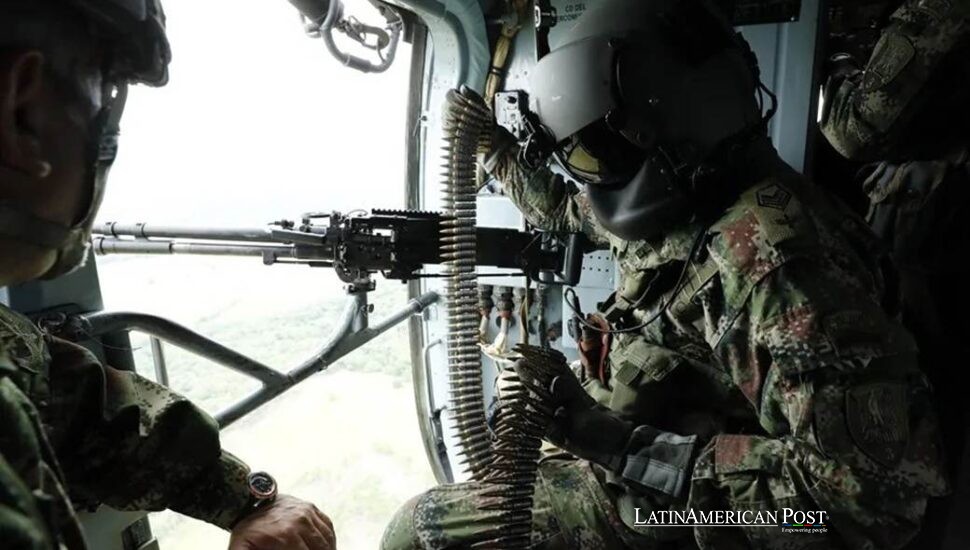
A high-level meeting in Tumaco and a deadly bombing in Guaviare signal Colombia’s swift return to offensive security policy, deepening ties with Washington while testing whether renewed military pressure can weaken armed economies without repeating the failures of earlier campaigns.
Tumaco Becomes the New Front Door
In Tumaco, Colombia’s Pacific edge feels less like a border than a hinge. Fishing boats move through mangroves, Ecuador lies beyond the frontier, and waterways sustaining coastal communities can also carry cocaine, weapons and armed men toward open sea.
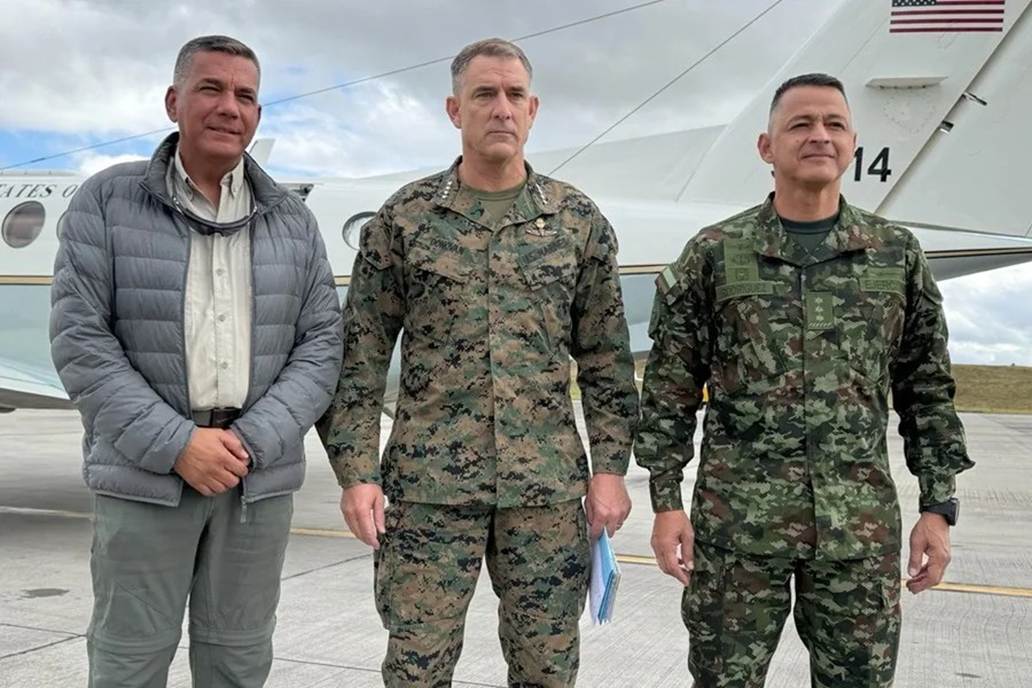
That was the setting Thursday when U.S. Southern Command chief Francis Donovan met Defense Minister Jorge Eduardo Mora and Colombia’s new military commander, Maj. Gen. Erick Rodríguez Aparicio. Donovan had arrived in Bogotá a day earlier to meet the leadership appointed by President Abelardo de la Espriella.
“From Tumaco, in Nariño, we met with the commander of U.S. Southern Command, Gen. Francis L. Donovan, to strengthen security and defense cooperation between Colombia and the United States,” Mora wrote on X. Southcom said the officials received briefings from elite personnel operating against narcotrafficking groups in the southern Pacific.
“Taking the fight to the areas that need it most,” Southcom said while releasing images of the visit, according to EFE.
The choice of Tumaco was the message. Bogotá is where agreements are announced. Tumaco is where their consequences arrive.
Its geography makes the municipality central to the regional drug economy. Coca-growing zones connect with rivers, clandestine departure points and routes into Ecuador. Armed groups compete for crops, laboratories, access and control over communities whose legal economy has rarely received comparable investment.
In July, the Army reported destroying a rural cache containing more than 700 explosive devices, the largest such discovery in Colombia this year. It suggested preparation for prolonged territorial warfare, with explosives protecting corridors and intimidating residents.
The meeting marks a practical restart of an old alliance. De la Espriella seeks closer security ties with Washington after years of distance under former President Gustavo Petro. Colombia has also joined the U.S.-promoted Coalition of the Americas Against Cartels, or A3C, coordinating regional action against narcotrafficking and transnational crime.
A Bombing Announces the Doctrine
Before dawn Thursday, Colombian forces bombed camps in rural El Retorno, Guaviare, used by the Jorge Suárez Briceño Bloc. At least eight fighters from the Estado Mayor de Bloques y Frentes, or EMBF, were killed, the president announced. Eleven rifles, five machine guns and military supplies were seized after commandos entered.
De la Espriella called Operation Amón a “precision bombing” and a “forceful blow” against structures aligned with Alexander Díaz Mendoza, known as Calarcá. “Colombia must know that we are going on the offensive,” he said, according to EFE. “The major leaders and their criminal structures will have no hiding place or sanctuary anywhere in the national territory.”
Three weeks into his presidency, the language is unmistakable. De la Espriella has rejected terms such as dissidents, subversives and politically legitimate insurgents. Those who terrorize civilians with guns and explosives, he said during the transfer of military command, are terrorists and will be treated as such.
Labels determine which tools the state considers legitimate. Calling an armed structure a political interlocutor opens negotiation. Calling it terrorist places military defeat at the center of policy. The administration is closing one vocabulary and restoring another.
Calarcá embodies the complications hidden inside that clarity. A former member of the FARC’s Eastern Bloc, he abandoned the 2016 peace agreement and rose within dissident structures. In 2024, he split from Iván Mordisco and formed what became the EMBF, effectively creating a dissidence from a dissidence.
That fragmentation makes the battlefield harder to read. Killing fighters and destroying camps can reduce capacity. It does not dismantle financial networks, local alliances and coercive systems that let another faction occupy the same space. In Colombia’s rural wars, armed acronyms change faster than the conditions sustaining them.
The Old Alliance Returns With New Risks
Cooperation with Washington can bring better intelligence, surveillance, training and regional coordination. It can also produce quick political victories. A seized arsenal photographs well. A destroyed camp offers a clean headline.
But the drug economy is not a single army waiting to be defeated. It is a market recruiting through poverty, geography and weak institutions. Pressure in Tumaco can redirect routes through Ecuador. Bombing in Guaviare can scatter fighters into smaller units, harder to detect and more embedded among civilians.
That does not make military action unnecessary. Communities facing explosives, extortion and armed confinement have little patience for theories that leave gunmen untouched. The state has an obligation to recover territory from organizations governing through fear.
The deeper test is what follows the soldiers. Tumaco needs maritime security, but also legal commerce, reliable roads, schools and protection for local leaders. Guaviare needs troops capable of confronting camps, but also judges, land administration, environmental enforcement and economic alternatives that survive after helicopters leave.
Colombia has repeatedly discovered that the state can arrive quickly as an operation and slowly as an institution. That imbalance is where armed economies regenerate.
Donovan’s visit and Operation Amón are two halves of the same announcement. One restores the international machinery of the security alliance. The other demonstrates the government’s willingness to use force immediately.
Whether this becomes durable security will not be measured only by fighters killed, rifles seized or coalitions joined. It will be measured in places like Tumaco, where families must decide whether the state is passing through again, or finally intends to remain.
Also Read: Paraguay Demands Brazil Return Cannons from Latin America’s Bloodiest War