Cuban Queen Celia Cruz Gets an AI Encore with Guardrails
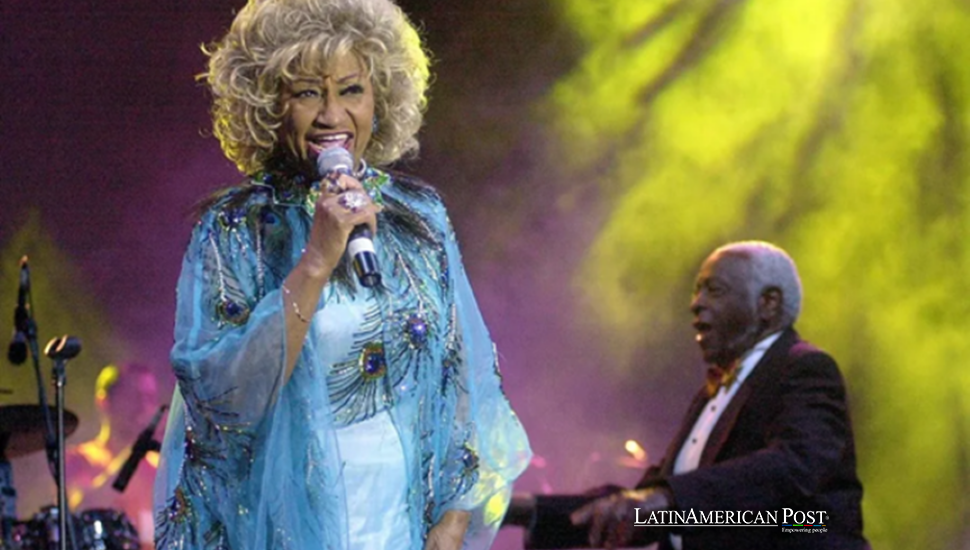
Celia Cruz’s estate has recreated the Cuban salsa legend’s voice with artificial intelligence, promising education, cultural memory and strict controls while raising a sharper question: who speaks for an icon whose cry of “Azúcar!” still belongs to millions worldwide today?
A Voice Returns, Under Lock and Key
The afterlife of Celia Cruz has always been loud. It lives in Miami car radios, San Juan wedding playlists, Havana memories carried into exile, and sequined costumes that still seem to move when “Quimbara” starts. Now it has entered a strange room: the lab of artificial intelligence.
Omer Pardillo, the singer’s executor and longtime representative, told EFE that Cruz has become the “first Latin artist” whose voice has been recreated through AI. The voice already exists and has been registered, he said, but the purpose is not to let the internet play costume with the Queen of Salsa. It is to keep her legacy “relevant and accessible for future generations,” while preserving the estate’s control over her image, words, and unmistakable sound.
In Latin music, where artists have too often lost royalties and narrative control to labels, managers and political mythmaking, AI is a new border crossing. A voice can migrate without a body. It can be loved, stolen, translated, monetized, or weaponized. For a Cuban exile icon shaped by joy and rupture, the stakes are not theoretical.
Pardillo told EFE the process will be “very limited.” Not everyone, he stressed, will have access to the voice or be allowed to “do what they want.” ElevenLabs developed the recreation after previously simulating the voice of poet Maya Angelou, a connection that Pardillo said helped ease his doubts because he knew Angelou through Cruz.
The uses he described to EFE are deliberately narrow: educational content, book narration, and interactive projects in which Cruz answers through things she actually said in life. Spanish will come first. English may appear only in small pieces if it preserves its authenticity. Politics, Pardillo said, is off limits. That refusal matters because Cruz became, willingly and unwillingly, a symbol in the long argument over Cuba, exile, memory, and belonging.
From Havana Stages to Fania Fire
Celia de la Caridad Cruz Alfonso was born in 1925 in Barrio Santos Suarez, Havana, one of four children in a house where music slipped into daily life before it became destiny. She sang to siblings, in school productions, at neighborhood gatherings, and, as a teenager, in cabarets reached with relatives.
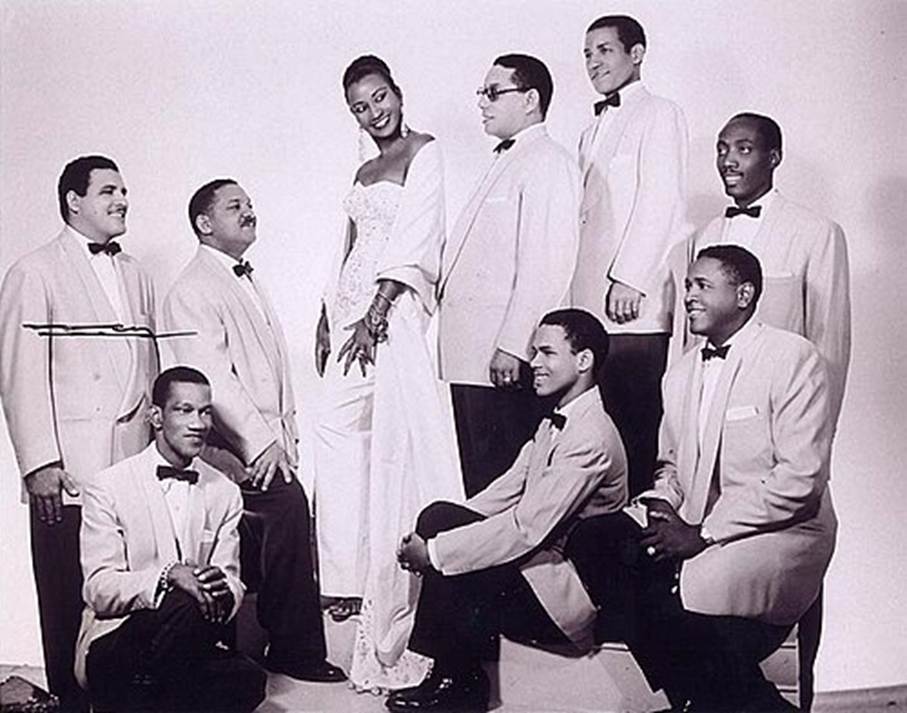
Her father wanted her to teach. In a way, she did. Cruz studied voice, theory, and piano at Havana’s National Conservatory of Music, built a reputation through radio contests, and by 1950 became the lead female singer of La Sonora Matancera, Cuba’s most popular orchestra.
The Cuban Revolution changed the geography of her life. Touring in Mexico in 1960, Cruz chose not to return to the island. She moved to the United States in 1961 and married Pedro Knight, her friend, trumpeter, and later manager. Fidel Castro barred her from returning. She never saw Cuba again.
That loss sits under the brightness of her music. Salsa, as it grew in New York through the 1960s and 1970s, was Caribbean migration reorganized in apartment buildings, ballrooms, record shops, and barrio streets. Cruz joined Tito Puente, then Fania, recording “Celia y Johnny” with Johnny Pacheco in 1974. “Quimbara” became a signature song. In a male-dominated salsa world, she was not a decoration. She was the voltage.
Her career also advanced Afro-Latinidad at a time when Latin American markets often preferred to soften or hide Blackness. Cruz did the opposite, through dress, phrasing, rhythm, and presence. In 1974, she performed in Kinshasa, Zaire, at the festival later documented in “Soul Power,” placing Afro-Caribbean music inside a larger Black Atlantic conversation, not as folklore, but as modern power.
The numbers still look impossible: more than 80 albums, 1,000 songs, 23 Gold Records, and five Grammy Awards. Yet the data only explains the scale, not the intimacy. Cruz became enormous because she sounded personal. She could command an arena and still make a listener feel scolded, blessed, teased, and fed.

Legacy, Law, and the Ghost in the Machine
Her material legacy is already institutional. The Smithsonian holds her dress and shoes. The U.S. Postal Service placed her on a stamp. The U.S. Treasury announced that she would be the first Afro-Latina to appear on U.S. currency. Her honors stretch from a Hollywood Walk of Fame star and honorary doctorates to a Miami street bearing her name and a 2026 induction into the Rock & Roll Hall of Fame.
That is why the AI version cannot be treated as a novelty track. Pardillo told EFE his greatest fear was waking up to find Cruz’s voice paired with someone or something she would never have accepted. “That does not happen,” he said, insisting there is “absolute control” and that unauthorized uses will be fought legally.
Bridget Ferris, ElevenLabs’ head of talent partnerships, told EFE the collaboration is meant to carry Cruz’s voice into a new technological chapter “in an intentional and dignified” way. Ferris called Cruz’s energy, joy, and cultural impact unique.
The project is a test case for Latin music’s future. AI can preserve accents, timbre, and phrasing, but it cannot mourn Havana for her. It cannot know the cost of exile, the discipline of a Black Cuban woman conquering salsa’s boys’ club, or the communal release inside one shouted “Azúcar!” Those things belong to history and to listeners.
The estate seems to understand that the voice is not the whole woman. Used carefully, it may become a doorway for young listeners who know the slogan before the story. Used carelessly, it would be a puppet. For now, Celia Cruz returns as a guarded echo, still teaching, still laughing, still forcing the future to dance with memory.
Also Read: Angelina Jolie Meets Her Horned Spider Namesake in Ecuador’s Andes