Chile and Argentina’s Tiny Mouse That Carries a Cruise Ship Mystery

A long-tailed mouse native to Chile and southern Argentina has become the unlikely suspect in a luxury cruise hantavirus outbreak, revealing how fragile ecosystems, rural travel, and human intrusion can turn a tiny rodent into a regional health alarm.
The Small Animal Behind a Large Fear
The animal at the center of the story weighs less than a mouthful of bread. It is brown, nocturnal, nervous, and almost delicate, with small ears, large eyes, and a tail that can measure twice the length of its body. In Chile and southern Argentina, people know it as the ratón colilargo, the long-tailed mouse. Science calls it Oligoryzomys longicaudatus. Now, because of an outbreak linked to the cruise ship MV Hondius, it has been pulled from the forest floor into the harsh light of international concern.
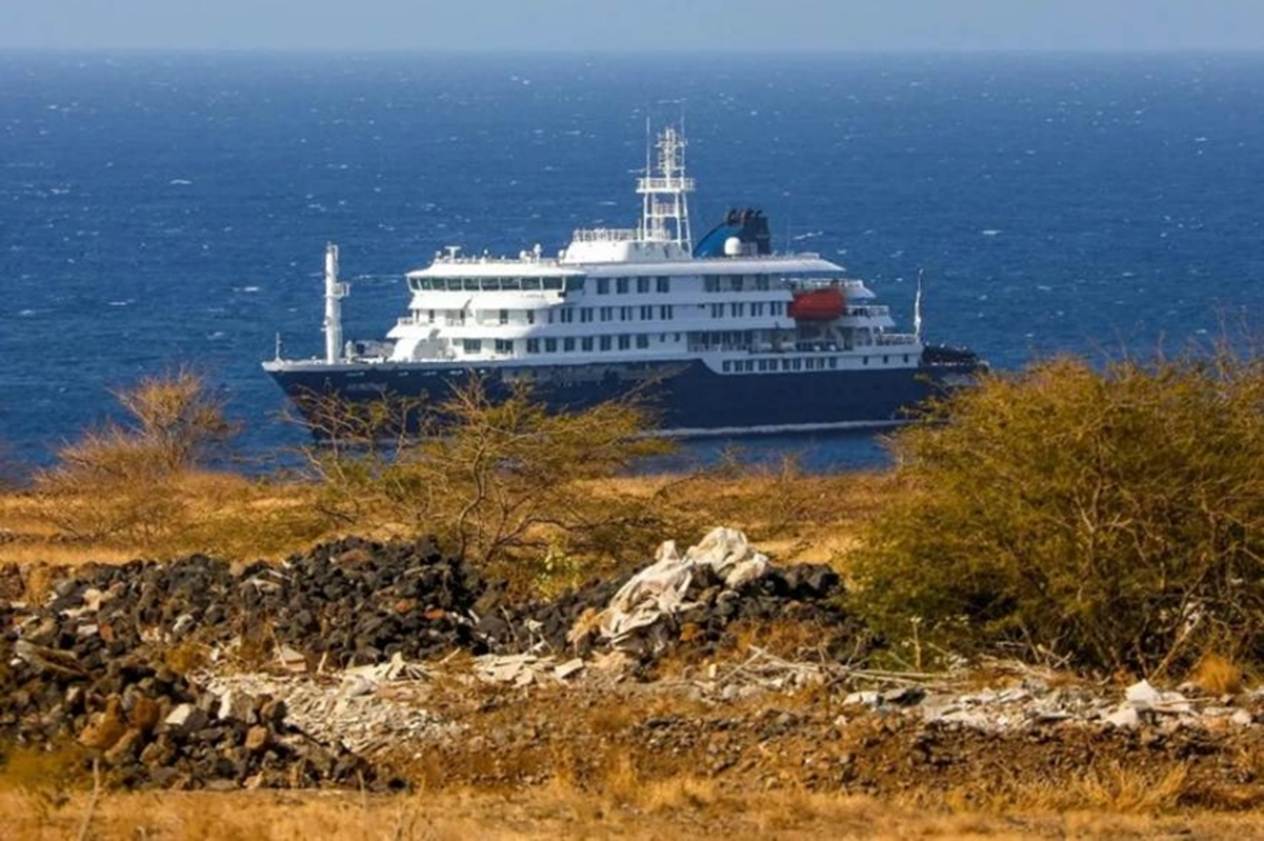
The mouse is the main reservoir of the Andes strain of hantavirus, the variant responsible for the outbreak aboard the luxury vessel that departed Argentina on April 1. At least nine people aboard have reportedly been infected, five already confirmed by the World Health Organization, and three have died. The trail has led investigators back toward land, toward Patagonia, toward the damp rural spaces where humans, cabins, cars, and wildlife cross paths in ways that feel harmless until they are not.
André Rubio, a Chilean academic at the Faculty of Veterinary and Animal Sciences of the University of Chile and one of the country's leading experts on the species, told EFE that the long-tailed mouse is not a villain invading from outside. "It is a native rodent and, therefore, it is protected," Rubio said. "It fulfills its ecological functions in the ecosystem, since it disperses seeds and is food for other animals."
That distinction matters. The mouse is not the criminal in this story. It is evidence. It is a witness to a larger disturbance.
A Virus Hidden in the Dust
The long-tailed mouse lives mainly in Chile and southern Argentina, although in Chile it can be found from the Atacama Desert in the far north to the country's southernmost regions. It prefers brushy terrain, weeds, shrubs, and places near water. At night, it moves by jumping, helped by unusually long hind legs that make it resemble North America's kangaroo rat.
Most people will never see one clearly. They may only encounter what it leaves behind.
The virus spreads to humans mainly through inhaling viral particles from the urine, saliva, and especially feces of infected rodents. The feces, according to Chile's Hantavirus Program, are black and shaped like grains of rice. The danger can hide in a closed rural cabin, a shed, a storage room, a campsite, a dusty corner where air moves after months of silence.
Not every long-tailed mouse carries the virus. Rubio told EFE that studies in Chile and Argentina generally show between 5 percent and 10 percent of individuals are infected, usually adult males. During ratadas, explosive population increases in these rodents can reach 20%. The species reproduces two or three times a year, with litters of four to six offspring, so environmental shifts can quickly reshape risk.
The infected animals usually do not become visibly ill, Rubio explained, though some studies suggest the virus may shorten their already brief life expectancy, estimated at one year. They pass it to other mice through mating or fighting. Humans enter the chain by accident, often through proximity rather than direct contact.
That is what makes the MV Hondius case so unsettling. The leading hypothesis from the World Health Organization is that the first two people who developed symptoms aboard the ship, a Dutch couple who later died, were infected on land before embarking. Argentina is investigating where the exposure may have occurred and has revealed that the couple spent four months traveling by car through Patagonia, crossing into Chilean territory several times.
Chile, however, said Thursday that the tourists' entries into the country do not align with the virus's incubation period and therefore ruled out Chile as the site of infection. The dispute is not only medical. It is reputational, diplomatic, and regional. In an outbreak, a place can become suspected almost as quickly as a person.

The Forest Is Moving Closer
Chile has recorded 39 hantavirus cases and 13 deaths so far this year, but no person-to-person transmission. Most infections occur during the summer months, when rodents move closer to populated areas because food is scarce in the forests and because more people are traveling through rural zones, camping, opening cabins, and entering spaces where rodents may have been active.
The Andes strain is particularly serious because it is the only hantavirus variant known to be capable of person-to-person transmission. Yet Rubio urged calm. He told EFE that the cruise created conditions highly conducive to viral proliferation, including low light and poor ventilation. "It is a labile virus, which lasts little in open environments," he said. He also noted that the proportion of infected rodents is low and that, unlike rats, the long-tailed mouse does not usually enter homes often.
Still, his warning was direct. "We are increasingly intervening in natural environments and therefore increasing our exposure to viruses," Rubio said, recommending that people always ventilate rural cabins and storage spaces.
That is the deeper lesson for Chile, Argentina, and the region. Latin America's landscapes are often sold as escape: Patagonia as wilderness, forests as purity, rivers as healing, rural cabins as retreat. But nature is not a postcard. It is a living system with reservoirs, cycles, stress points, and consequences. When roads, farms, tourism, deforestation, and settlement push deeper into habitats, the distance between human breath and animal-borne disease shrinks.
The long-tailed mouse has always been there, dispersing seeds and feeding predators. What is changing is the frequency with which people enter its world, sleep beside it, stir up its dust, and then board planes, cars, and ships.
For Chile and Argentina, the outbreak is a reminder that public health cannot stop at hospitals or ports. It must begin in forest management, rural education, tourism protocols, cabin ventilation, cross-border epidemiology, and honest communication. The region does not need panic. It needs humility before the ecosystems it keeps entering.
The smallest creature in the story is not the least important. It is the messenger. And in the silence between Patagonia's forests and a cruise ship at sea, it is telling Chile, Argentina, and the world that the border between wilderness and modern life was never as sealed as people wanted to believe.
Also Read: Mexico Turns Scorpion Venom and Habanero Heat Against Killer Superbugs