Mexico Turns Scorpion Venom and Habanero Heat Against Killer Superbugs
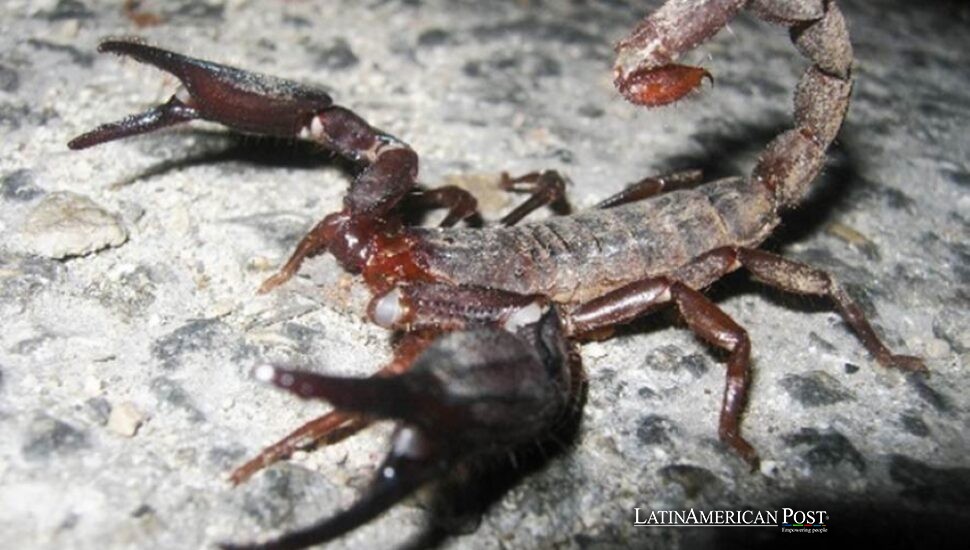
Mexican scientists are turning scorpion venom and habanero peptides into experimental antibiotics, a laboratory hunt with true crime stakes as tuberculosis, hospital infections, and resistant bacteria expose how Latin America must fight killers too small to see before they spread.
A Killer Hiding in the Ward
The suspect is ancient, patient, and almost invisible. It moves through lungs, wounds, hospital rooms, and weakened bodies. It does not need a gun, a cartel road, or a dark alley. It only needs time, delay, and a medicine cabinet that no longer works.
In Mexico, scientists at the National Autonomous University of Mexico (UNAM) have identified new routes to fight tuberculosis and reduce bacterial resistance through three experimental antibiotics derived from scorpion venom and habanero chili. Wired reported the findings, which place Mexican biotechnology inside one of the most urgent global crime scenes of modern medicine: the rise of bacteria that survive the drugs built to kill them.
The team led by Lourival Domingos Possani Postay of UNAM’s Biotechnology Institute in Morelos developed two compounds that showed activity against Mycobacterium tuberculosis, the bacterium that causes tuberculosis, and Staphylococcus aureus. This hospital-associated microorganism can cause skin infections, pneumonia, meningitis, septicemia, and endocarditis.
Those names may sound clinical, but they belong to a grim roster. Tuberculosis is one of humanity’s old assassins. Staphylococcus aureus is the kind of opportunist that can turn a routine hospital stay into a fight for life. Acinetobacter baumannii, another bacterium later targeted by the same blue molecule, is notorious for resistance to treatment and for causing blood, urinary tract, lung, and wound infections, especially in hospitals.
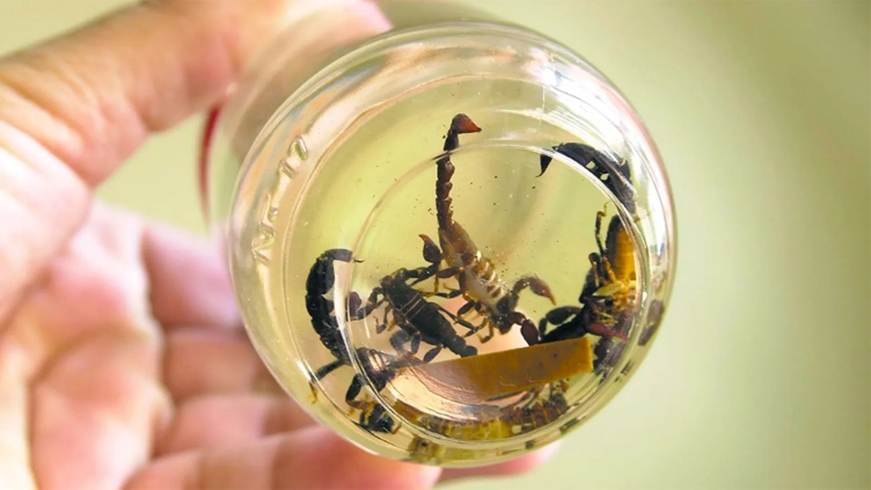
The discovery’s strange source gives the story its Latin American pulse. The compounds came from the venom of Diplocentrus melici, a scorpion native to Veracruz. From that toxin, the scientists isolated two colorless molecules, benzoquinones. When exposed to air, they oxidize and change color. One turns blue. The other turns red.
It sounds almost folkloric, a creature of the earth, yielding a blue-and-red clue against invisible killers. But the color shift allowed researchers to determine the molecules’ chemical structure, synthesize them in the laboratory, and test their biological properties.
Venom Becomes Evidence
According to Wired’s reporting, the blue benzoquinone showed activity against the bacterium that causes tuberculosis, while the red one proved effective against Staphylococcus aureus. Richard Zare, a Stanford University chemistry professor and recognized expert in physical chemistry, participated in the work, strengthening validation of the findings.
The project also involved Rogelio Hernández Pando of Mexico’s National Institute of Medical Sciences and Nutrition Salvador Zubirán, who evaluated the blue benzoquinone in a mouse model with induced tuberculosis. After the tests, he concluded that the molecule is highly effective as an antibiotic against the disease.
The same substance later showed the ability to kill Acinetobacter baumannii. That detail matters because antimicrobial resistance is not a future threat in Latin America. It is already here, especially in hospitals where overcrowding, uneven access to diagnostics, weak infection control, and unequal health systems give resistant pathogens room to evolve.
The scorpion-derived molecules have already been patented in Mexico and South Africa. The next challenge is delivery. Researchers are working on nanoparticles that can stabilize and protect the compounds, enabling them to be administered safely in the body. Possani Postay told Wired that the next step is clinical trials. However, he acknowledged the high cost and expressed interest in working with a Mexican pharmaceutical company to bring the compounds toward large-scale production.
That is where science meets politics. Discovery is not enough. Latin America has many brilliant laboratories and too many fragile bridges between invention, funding, regulation, manufacturing, and public access. A molecule can be promising in a lab and still die in the valley between patent and patient.
Mexico’s opportunity is also its test. If national science produces a potential weapon against resistant bacteria, will the country build the industrial and clinical pathway to develop it? Or will the discovery become another admired breakthrough waiting for foreign capital, foreign validation, or foreign production?
From Salsa Heat to Regional Power
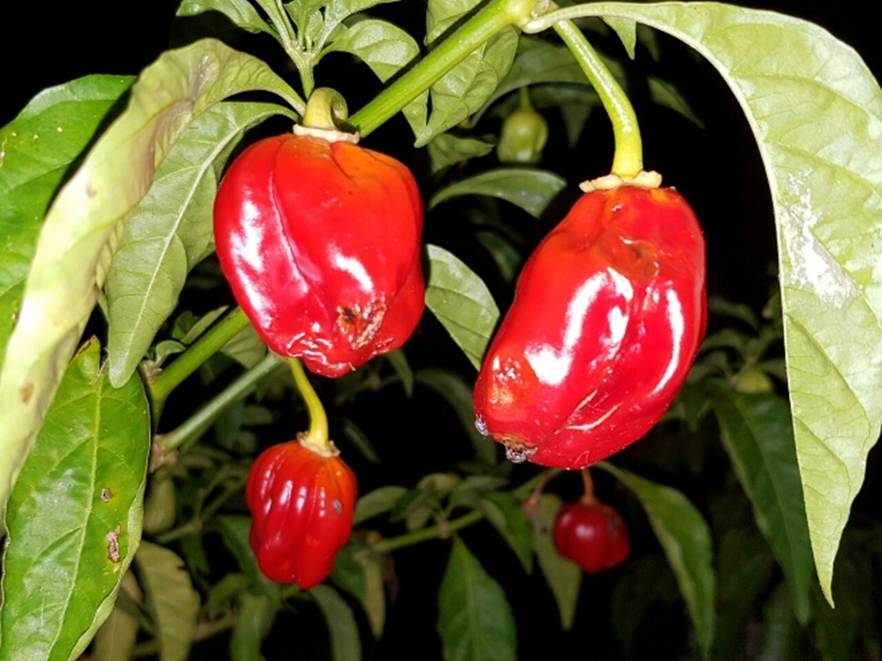
The second line of research is almost as Mexican as science can get: the habanero pepper. Another group at UNAM’s Biotechnology Institute identified a peptide in Capsicum chinense that can fight opportunistic bacteria that can cause severe infections, especially in people with weakened immune systems.
The project, led by Gerardo Corzo Burguete and Georgina Estrada Tapia of the Yucatán Center for Scientific Research, focused on Pseudomonas aeruginosa, which the World Health Organization considers a high-priority pathogen due to its resistance to conventional antibiotics. The researchers identified a peptide, defensin J1-1, in habanero and developed a biotechnological process to produce a drug, XisHar J1-1, which showed activity against Pseudomonas aeruginosa and potential antifungal activity.
The procedure involved genetically modifying a bacterium to produce defensin J1-1. The modified microorganism was then cultivated through submerged fermentation, an industrial technique that can generate compounds at scale. The peptide was extracted and purified for use as an antibiotic.
Estrada Tapia, quoted by Wired, cautioned that the study has limitations because the team did not use a patient-derived resistant strain but a laboratory strain. Still, the defensin and its synthetic variants have shown efficacy and already hold a patent in Mexico. The next phase would test the molecules against resistant strains taken from patients.
That caveat is important. It keeps the story honest. This is not yet a miracle cure, and Latin America has suffered enough from miracle promises. It is a promising path, not a finished weapon.
Still, the symbolism is powerful. Mexico is not only importing solutions from the biomedical north. It is looking at its own biodiversity, its own venom, its own chili, its own ecosystems, and asking what medicine may be hidden there. That matters for a region often treated as a supplier of raw material rather than a producer of high-value knowledge.
Iván Arenas Sosa, part of the group, told Wired that resistant bacteria have increased in recent years and will continue to pose a problem, making it essential to support projects to discover new molecules and develop innovative treatments against antimicrobial resistance.
For Mexico and the region, the deeper lesson is that health sovereignty is no longer only about hospitals and vaccines. It is about patents, laboratories, biodiversity, public investment, and the ability to turn local knowledge into accessible medicine. If Latin America cannot produce its own tools against resistant pathogens, it will face tomorrow’s infections with yesterday’s dependence.
The killer in this story is microscopic. But the crime scene is enormous. It stretches from a Veracruz scorpion to a Yucatán habanero, from a UNAM lab to a hospital bed, from national patents to the global race against superbugs. Mexico has found clues in venom and fire. Now it must prove it can turn them into justice for the living.
Also Read: Ecuador Saves Frogs While the Ground Beneath Them Keeps Shifting