Peru’s Femicide Fight Turns Into a Battle Over Legal Memory
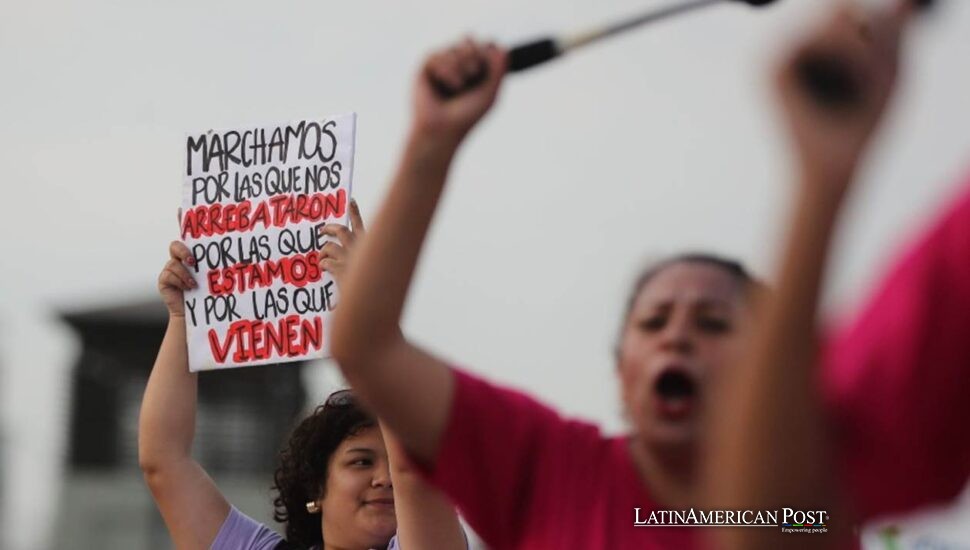
In Lima, a proposal to erase femicide from Peru's penal code has turned a legal debate into a national warning, as grieving families, feminist groups, and human rights advocates say the change would reward killers and silence victims once again.
When a Word Holds a Country's Grief
In Peru, the word femicide is not an abstraction. It is a photograph held at a press conference. It is a mother's voice shaking in a congressional hallway. It is a sister remembering the last time she saw a woman alive, before the state learned her name only through a case file.
That is why the bill introduced by Congresswoman and evangelical pastor Milagros Jáuregui has landed with such force. Jáuregui, a member of the ultraconservative Renovación Popular party, wants to remove the crime of femicide from Peru's penal code and replace it with "murder of a partner." She argues that femicide is an ideological concept that assigns different value to men's and women's lives.
For the families who appeared on Thursday with progressive congresswoman Ruth Luque, and for the feminist and human rights organizations that joined them, the proposal is not a semantic correction. It is a legal retreat dressed as neutrality.
According to comments and interviews reported by EFE, relatives of women killed in gender-based violence warned that deleting the term would create room for impunity. Their fear is specific. If femicide disappears as a criminal category, aggressors may be sentenced under homicide provisions that allow reduced penalties. Under femicide convictions, those benefits are restricted. The children of femicide victims also have access to a subsidy, a protection that may not be guaranteed if the crime is reclassified as homicide.
So the fight is not only over language. It is over prison time, children's survival, public memory, and the state's willingness to name a pattern that women have been naming for generations.
The False Calm of Neutral Language
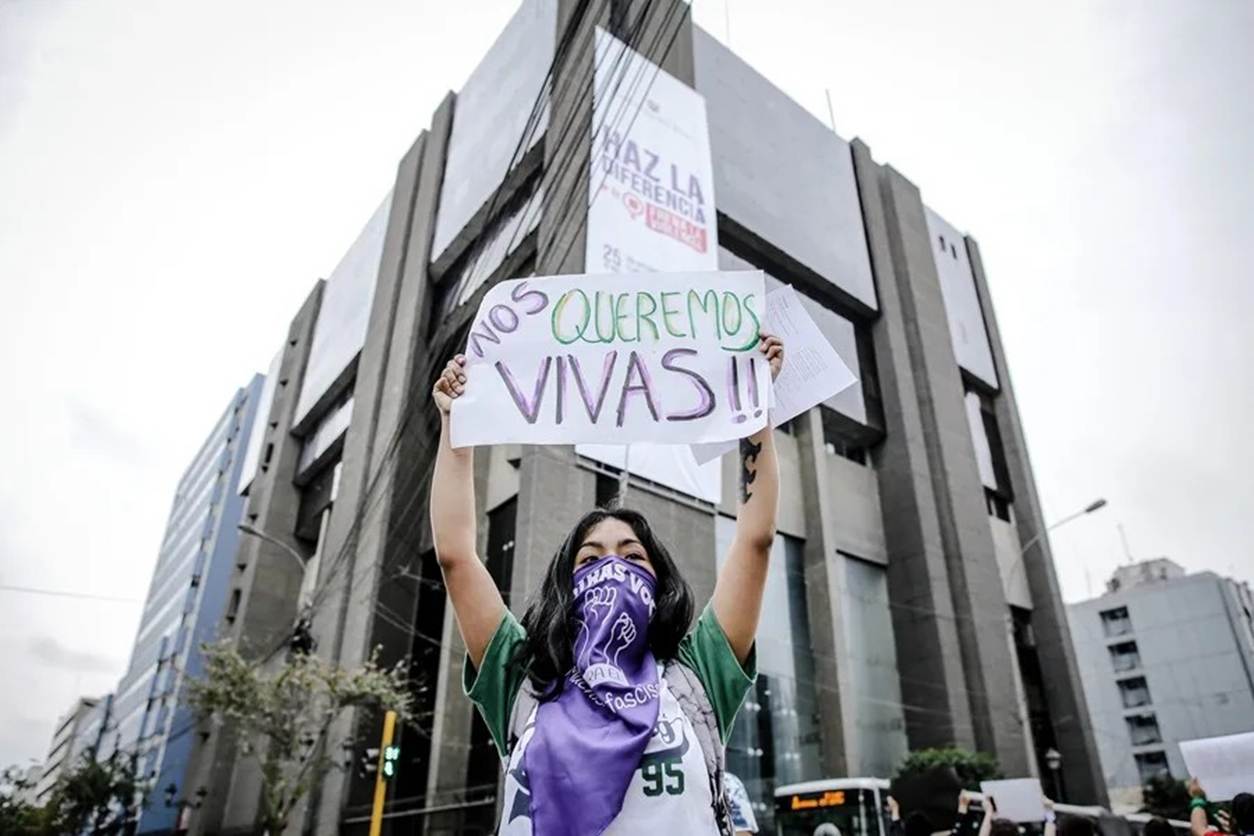
Luque accused Jáuregui of promoting a measure that "despises women's rights," because the proposed replacement narrows the crime to partner killings. That matters. Femicide is not limited to husbands, boyfriends, or former partners. A woman can be killed by a friend, a neighbor, a coworker, a stalker, a relative, or a man who believed her body, rejection, or freedom belonged to him.
If the law only recognizes "murder of a partner," much of that violence falls into a colder legal room. It becomes ordinary homicide, even when the motive is not ordinary at all.
That is the central danger. The term femicide does not claim that one life is worth more than another. It recognizes that some murders are committed inside a social structure that has repeatedly placed women at risk because they are women. The word does not invent the violence. It records it.
The sister of Estephany Flores, killed by her former partner in 2019, said in remarks reported by EFE that eliminating femicide "is not a technical change" but a grave setback that invisibilizes the specific violence women suffer, weakens the fight, and endangers advances won after years of effort.
That sentence carries the weight of the room. Legal reforms are often discussed as if they happen in a clean chamber of concepts. But this debate is full of names. Estephany Flores. Érika Oblitas. Women whose relatives now have to stand before cameras and explain, again, why the way their loved ones died should not be legally blurred.
Érika Oblitas's mother, also cited in EFE reporting, said she fears the sentence of her daughter's former partner could be reduced. She warned that erasing femicide would weaken justice and leave victims more unprotected.
It is hard to make a more direct argument than that. For these families, the bill is not philosophy. It is the possibility that a conviction, already painful and incomplete, becomes less stable. It is the fear that the state may look at their daughters and say the old category was too uncomfortable to keep.
A Vigil Against Forgetting
The Coordinadora Nacional de Derechos Humanos, known as Cnddhh, said Peru's congressional Commission on Women and Family still has the repeal of femicide on its agenda. In a statement, the organization warned that the proposal represents a serious risk because it invisibilizes gender violence and weakens the state's response to these crimes. The state, it said, has an obligation to protect, not retreat.
That word, retreat, is essential. Latin America has spent decades naming forms of violence that older legal systems minimized or absorbed into private life. Domestic violence was once treated as a family matter. Sexual violence was often buried under shame. Forced motherhood was framed as morality. The killing of women by men who claimed possession over them was too often seen as passion, jealousy, tragedy, anything but power.
Femicide entered the legal and public vocabulary because women, lawyers, activists, journalists, and grieving families forced institutions to see a pattern. The word came from struggle. It was not handed down politely.
Peru knows this landscape well. Like much of the region, it carries a contradiction: strong women's movements, vibrant public protest, and legal advances on paper, alongside deep machismo, institutional weakness, and a justice system that often moves slowly for the dead and the living. In that context, removing femicide would send a signal far beyond courtrooms. It would tell women that the category built to describe their risk is negotiable.
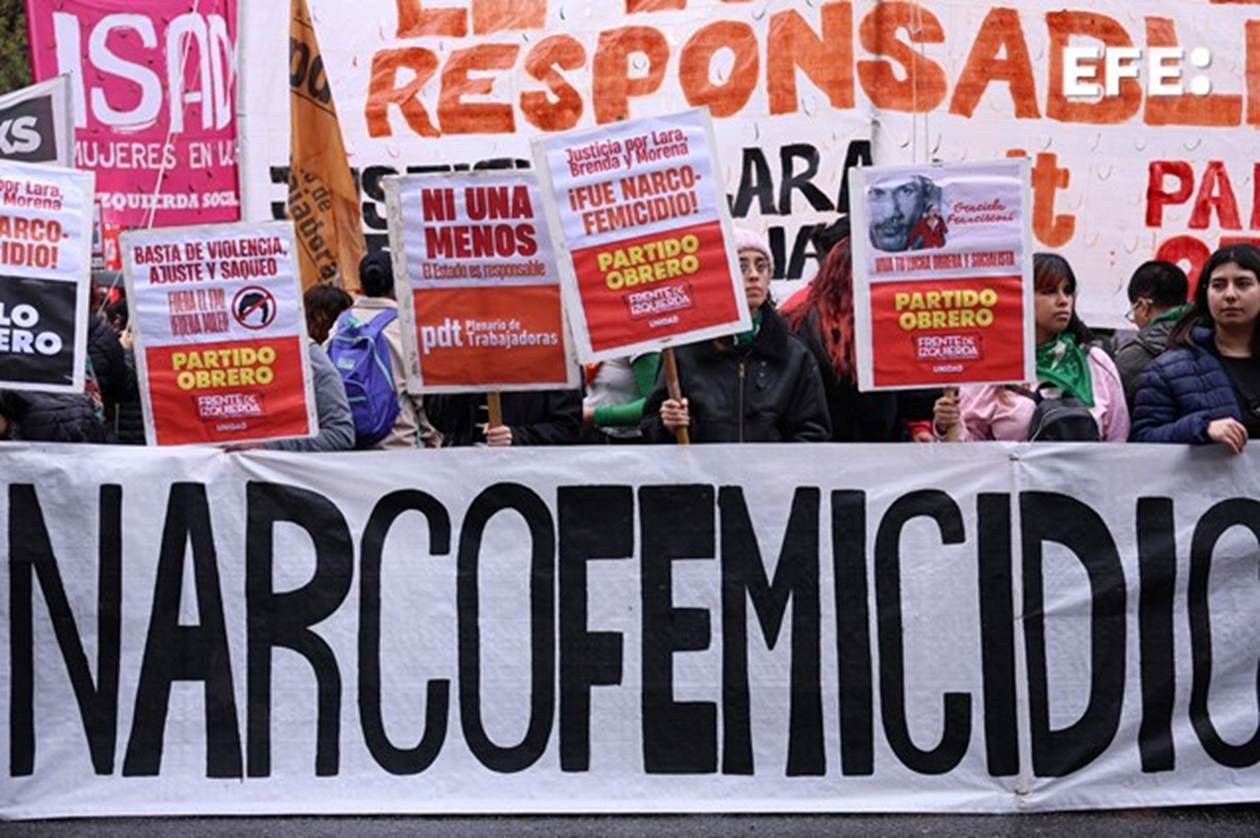
This is why feminist movements, including Manuela Ramos and Flora Tristán, along with Cnddhh, have called for a collective vigil on Tuesday outside Lima's Palace of Justice. The location is not accidental. A vigil there becomes more than a protest. It is a demand placed at the door of the institution that decides whether grief becomes law or remains grief.
The deeper issue is political. Peru is not debating a word in isolation. It is debated whether conservative backlash can recode rights as ideology and turn protection into privilege. There is a debate over whether equality language can be stripped from law, because neutrality is fairer. But neutrality in an unequal society often protects the strongest form of silence.
Jáuregui's bill may be presented as a defense of equal human value. Yet the people most marked by femicide hear something else. They hear the beginning of erasure. They hear a legal system preparing to forget what they cannot stop remembering.
And that is why the families stood in Congress with photographs, names, and fear. In Peru, the battle over femicide is not only about punishment after death. It is about whether the law can still see the warning signs before the next woman becomes a headline, a statistic, a vigil candle, another name carried by someone who loved her.
Also Read: Peru Awaits Pope Leo as Faith Meets Fragile Politics Again