Peru Unearths Caral’s Tiny Gods and a Civilization’s Long Memory
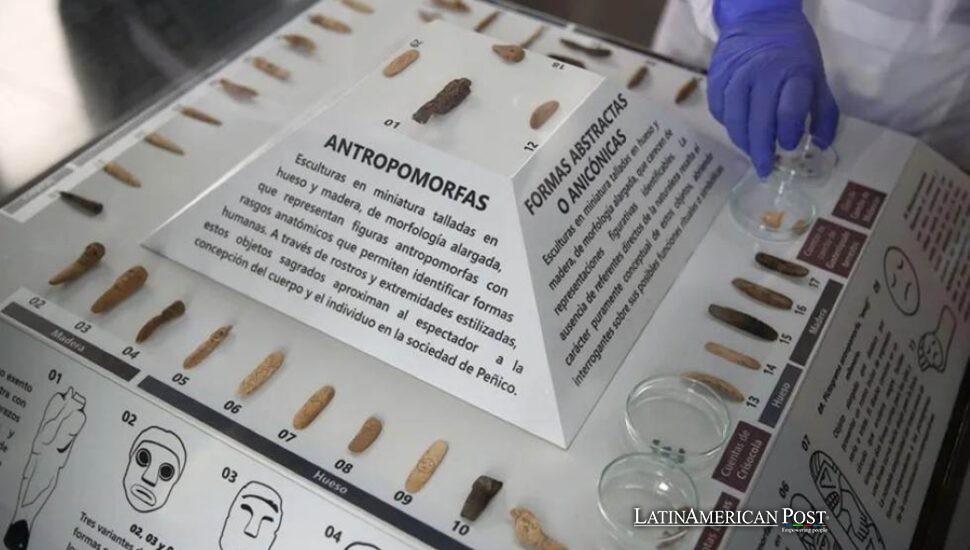
Forty-three bone and wooden figures discovered at Peñico are giving archaeologists a rare glimpse into how Peru’s Caral civilization survived political decline, renewed sacred buildings, and connected coast, highlands, and jungle nearly four millennia before the modern republic took shape.
Tiny Faces, Vast Afterlives
On a table at Peru’s Ministry of Culture, the ancient world looked almost intimate.
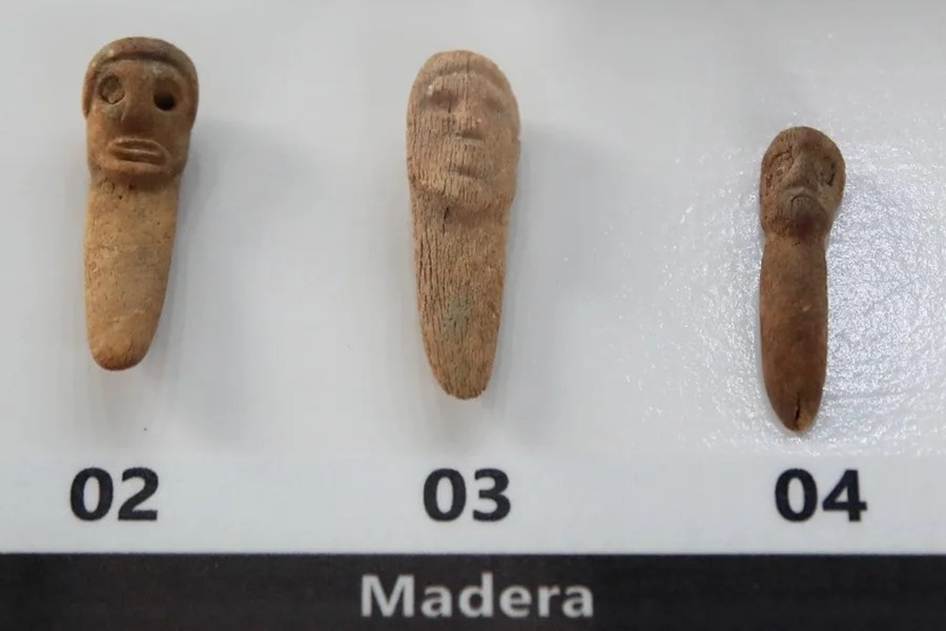
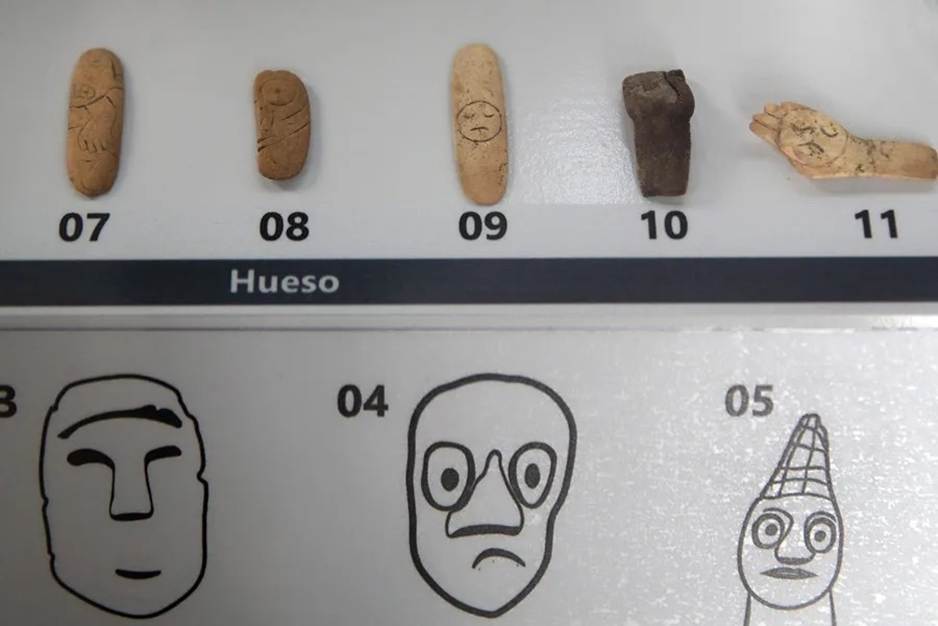
There were carved faces with triangular eyes, figures wearing elaborate headdresses, serpents, birds, tadpoles, and shapes that may represent rivers, highlighting their role in expressing beliefs and social hierarchy. Some had been stained red, and others carried deep hollows where eyes once held minerals or semiprecious stones. One female figure, already nicknamed the Venus of Peñico, had no head.
Forty-three objects in all, fashioned from bone and wood, had been laid carefully around stones arranged in a semicircle. Several bore fire marks. Archaeologists believe the miniatures formed part of an offering made while a new platform was built for the settlement’s largest public building.
Someone placed each figure there. Someone chose which face looked toward which stone, lit the fire, and sealed the offering beneath a structure meant to outlive them.
Mauro Ordóñez, the archaeologist directing work at Peñico, described the figures as carrying powerful symbolic weight. Carbon dating is pending. The building where they were found is about 3,800 years old, while the objects are provisionally dated between 1800 and 1500 B.C.
The human figures may depict gods and authorities, categories ancient states often kept close. One wears a decorated conical cap that could identify political rank. Two tablets show red-tinted deities with triangular eyes and headdresses unlike those found in the valley. These were not casual toys. They appear to have compressed belief, hierarchy, and memory into objects small enough to hold.
A City After Caral
Peñico was founded around [1800 B.C.], after the great urban center of Caral began to lose prestige. The Sacred City of Caral-Supe lies only 13 kilometers away, close enough to inherit its influence but far enough to develop a distinct role. This positioning should intrigue the audience about Peñico’s significance in regional history.
That geography changes the story.
Civilizations are often narrated as clean sequences. A capital rises, flourishes, collapses, and disappears. Peñico suggests something messier and more human. Institutions weaken, populations reorganize, sacred practices travel, and old symbols acquire new uses. Cultural systems do not always die when famous cities decline. Sometimes they move down the valley.
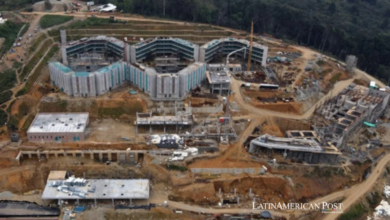
The Peñico complex covers 19.44 hectares and contains 15 public buildings. Those numbers indicate more than a ceremonial outpost. They point to organized labor, an authority capable of directing construction, and a community connected enough to sustain public architecture. The offering suggests that rebuilding was not merely technical. Construction had to be morally and cosmologically authorized.
The new platform rose above an older one, but the past was not discarded. It was buried with care beneath the future.
The variety within the group is equally revealing. Anthropomorphic, zoomorphic, and geometric forms appear together. Serpents and birds occupy different worlds. Tadpoles evoke transformation and water. River-like carvings point toward movement, fertility, or territory. Several pieces carry the so-called eye of god beside symmetrical designs.
No symbol provides a complete dictionary. Together, however, the objects suggest a society thinking through relationships between sky and earth, water and settlement, human authority and sacred force. On Peru’s dry coast, where rivers made dense life possible, such imagery was not decoration. Water was survival, a route, a boundary, and a source of political power.
The number 43 matters, though not as a mystical code. A single figure might be personal, but the 43 carefully arranged figures suggest a deliberate program, perhaps representing a social or cosmic order rather than one isolated deity, emphasizing their collective significance.
Peru’s Past Refuses a Straight Line
Peñico’s larger importance lies in movement. Archaeologists describe it as a place of integration between the coast and highlands, with goods arriving from the jungle. Nearly four thousand years ago, this settlement belonged to a network spanning ecological zones that modern Peru still struggles to imagine as a single political whole.
The coast, Andes, and Amazon are often treated today as separate countries sharing a flag. Lima concentrates power. Highland communities negotiate through distance and distrust. The jungle is praised as a national treasure while being approached as a frontier. Peñico offers an older map, one in which exchange across regions was not peripheral to civilization. It was civilization.
That does not mean ancient integration was peaceful or equal. Trade can enrich centers while extracting from margins. Public buildings can express cooperation and coercion at once. The carved authorities remind us that somebody organized labor and somebody commanded reverence. Archaeology is most useful when it resists turning the past into either paradise or ruin.
The discovery also widens Peru’s historical imagination beyond the Inca horizon. Caral, dated to roughly 3000 to 1800 B.C., is considered the oldest civilization in the Americas. Peñico shows that its legacy continued after its principal centers faded. Peru’s past was not a procession toward Cusco, followed by conquest and republic. It was a long field of experiments in city building, exchange, ritual, adaptation, and memory.
For the modern state, the lesson is practical. Peñico is not merely evidence to display in Lima. Its value depends on excavation, conservation, local participation, and public access. The objects may attract visitors, but the deeper inheritance belongs to the valley that protected them in soil for centuries.
Ruth Shady’s archaeological team expects more figures and perhaps more characters to emerge as work continues. New discoveries may complicate today’s interpretations. This ongoing process should make the audience feel engaged and eager to see what future findings will reveal about Peñico’s past.
For now, the miniatures remain gathered as they once were, a small society of gods, animals, rulers, waters, and signs. Their makers were renewing a building, honoring forces they understood, and placing continuity beneath stone.
They buried the past so their city could keep standing. Peru has found it because, somehow, the memory did too.
Also Read: Mexico Girls Code Past Old Myths and into Tech Futures