Paraguay Senator’s Racist Attack on Mbappé Outshouts World Cup Exit
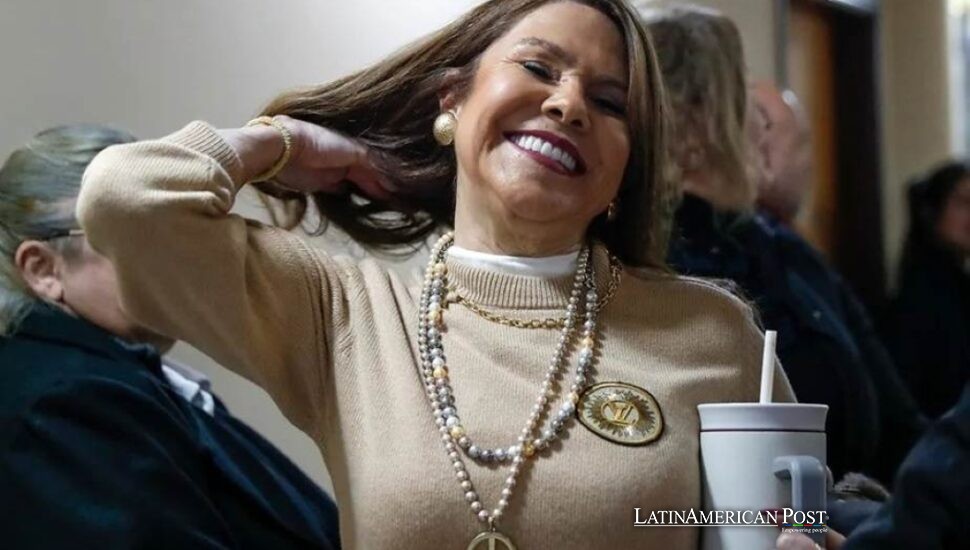
Paraguay’s World Cup defeat should have ended with exhausted players and earned applause. Instead, Senator Celeste Amarilla turned Kylian Mbappé’s ancestry into a racist spectacle, eclipsing her country’s achievement and exposing how casually power can still weaponize Blackness in Latin America.
A Handshake Becomes an Excuse
The game should have ended in the ordinary debris of a knockout loss: sweat, tape, replayed chances, and the dull knowledge that one goal changed everything.
Paraguay had fallen 1-0 to France in Philadelphia on July 4, beaten by Mbappé’s second-half penalty. It was a narrow exit, painful without being humiliating. Paraguay’s players had given their country a serious World Cup run.
Then Celeste Amarilla found a different story.
Angered that Mbappé apparently did not shake goalkeeper Orlando Gill’s hand after the match, the senator posted a torrent of abuse on X. She called the French captain a “brute” who had not learned to write, said that instead of breast milk he had “sucked coconuts,” and claimed the most educated sounds he heard were chimpanzees. Later she described him as “a colonized Cameroonian who pretends to be French,” then called him resentful, nouveau riche, arrogant, and ugly.
There is no ambiguity to rescue here. This was not sporting provocation, bad humor, or patriotic heat. Amarilla reached for primate imagery, mocked African origin, denied a Black Frenchman’s nationality, and wrapped it in contempt for his intelligence. Each phrase came from racism’s oldest toolbox.
Mbappé answered with more restraint than she deserved. He called Amarilla “despicable” and unworthy of her position, while insisting she did not represent Paraguay, a country whose players had shown passion and honor. He said her “brazen racism” had pushed their historic effort out of the world’s attention.
He was right. In defending himself, Mbappé showed greater care for Paraguay’s name than one of Paraguay’s senators did.

The Sentence That Indicts the Senate
The most revealing part of Amarilla’s outburst may not have been the zoological insult. It was her boast of power, which should make the audience feel moral outrage at the abuse of authority.
She urged Gill to show Mbappé his middle finger, then added: “I do it in the Senate, and nothing happens.”
That sentence should be read slowly. It presents the legislature not as a democratic chamber with standards, but as a refuge from consequence, urging the audience to feel the need for accountability.
Amarilla is no novice. She has been a member of the Authentic Radical Liberal Party since 1982, helped establish its youth organization, represented the capital as a deputy, and entered the Senate in 2023. She knows words carry extra weight when authority and salary come from citizens.
In 2020, the lower house suspended her without pay after she alleged that roughly 70 lawmakers had bought their seats. She later pressed to impeach a Supreme Court justice accused of troubling connections. She has built part of her identity on denouncing institutional decay.
Yet institutional decay also looks like this: a senator using office to make racial degradation louder, then joking that the chamber protects her.
Paraguay’s government rejected the remarks as contrary to human dignity. France’s federation called them abhorrent and announced criminal action. Emmanuel Macron backed Mbappé, invoking dignity, respect, and fraternity.
Those responses matter, but statements are the cheapest currency in politics. Institutional racism, exemplified by Amarilla’s actions, has long-term effects on societal trust and equality. An ethics process would not suppress debate. It would establish that public office is not a license to dehumanize.
When Whiteness Polices the Jersey
Amarilla’s comments did not arrive alone. Before the match, former Paraguayan goalkeeper José Luis Chilavert described France as “a squad from Africa.” French federation president Philippe Diallo called him a disgrace.
Two prominent Paraguayan voices, one a football legend and the other a sitting senator, turned the same idea into a weapon: Black players may wear France’s shirt, speak its language, and carry its hopes, but their Frenchness remains conditional.
This is bigger than football. Latin America has long comforted itself with mestizaje, the claim that racial mixture dissolved racism. Yet, incidents like Amarilla’s reveal that systemic biases persist, with Blackness still used as an insult and racial hierarchies remaining intact. Whiteness still signaled competence, beauty, and belonging.
Amarilla’s phrase “pretends to be French” exposes that logic. Citizenship, in her imagination, is not law, upbringing, or shared life. It should make the audience feel the urgency to challenge racial stereotypes that threaten social cohesion.
Paraguay is also a migrant nation. Its citizens build lives in Argentina, Spain, the United States, and elsewhere, often hearing that accent, surname, or face makes them permanently foreign. A state cannot demand dignity for Paraguayans abroad while tolerating a senator who denies it to a Black European.
Mbappé had seven goals in the tournament, level with Lionel Messi and Erling Haaland, when the controversy erupted. He scored the penalty that ended Paraguay’s campaign. Resentment after defeat is human. Racism is a choice.
Paraguay’s players deserved analysis of their defending, Gill’s performance, and the thin margin separating survival from elimination. Instead, Amarilla made herself the headline. She took a 1-0 loss and turned it into a moral rout.
The cruelest words in her posts were ultimately not about Mbappé. They were the ones who said nothing was happening in the Senate. They told citizens that contempt could sit behind a desk, collect authority, and laugh at consequences.
Paraguay’s answer should be equally public. This time, something must happen.
Also Read: Argentina’s Messi Magic Keeps Finding FIFA’s Convenient Blind Spots Again