Latin America Learns World Cup Size Has Outgrown Its Romance
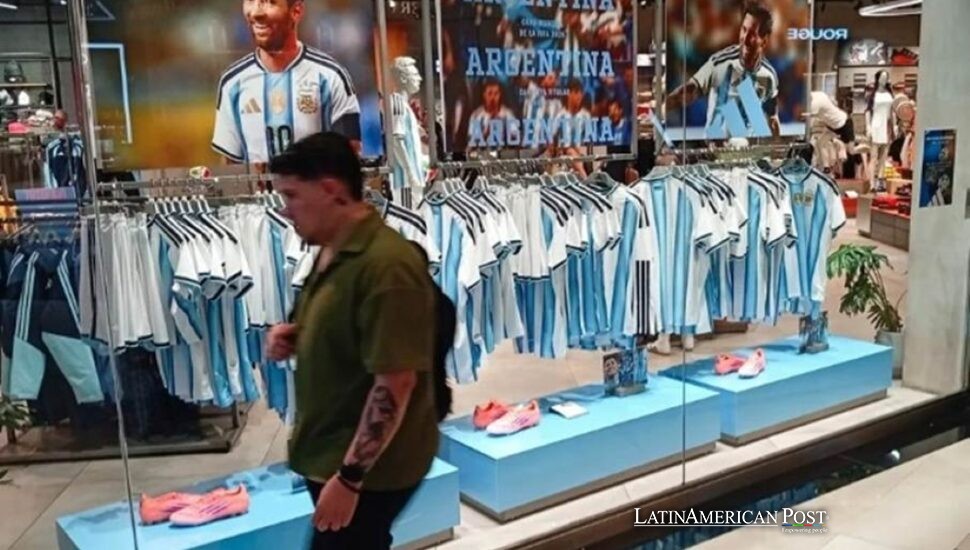
The 2026 World Cup’s vast scale, soaring costs and cross-border chaos are a warning for Latin America’s 2030 hosts, where Uruguay, Argentina and Paraguay must honor football history without inheriting FIFA’s expanding logistical burden.
The Tournament Got Too Big
At some point, the World Cup stopped feeling like a tournament and began looking like a continent with a bracket.
In 2026, that continent stretches across Canada, Mexico, and the United States, through 16 host cities, four time zones, and thousands of miles of airspace. Forty-eight teams, not 32, are moving through 104 matches. More players. More fans. More television inventory. More hotel nights. More airport gates. More police. More everything.
The American phrase says bigger is better. This World Cup is testing whether bigger is still recognizable.
For Latin America, the answer matters because 2030 is already waiting with history in its hands. Uruguay, Argentina, and Paraguay will host the centenary opening matches before the tournament crosses the Atlantic to its main hosts in Spain, Portugal, and Morocco. It is a symbolic arrangement, but symbolism is never cheap in football. Montevideo, Buenos Aires, and Asunción are not just staging games. They are being asked to hold the World Cup’s origin myth while FIFA sells the future at a scale that may no longer fit most football nations.
That is the quiet lesson of 2026. The tournament has become so large that only the richest countries, the largest countries, or cross-border coalitions can realistically host it. France, England, Germany, or Argentina once belonged naturally to the World Cup imagination. Now, even traditional football powers look too small on their own.
The numbers explain the shift. FIFA expects more than five million people to attend in person this year, up from 3.4 million in Qatar. It projects six billion interactions across television, streaming and digital platforms, up from five billion in the previous tournament. The commercial logic is obvious: more teams create more matches, more matches create more inventory, and more inventory protects soccer against the NBA in Asia and Africa, the NFL in Europe, and Formula One’s boom in North America.
But human logic is messier. A fan in 2026 does not merely buy a ticket. He buys a plane itinerary, hotel surge pricing, local transportation, food, mobile data, and the anxiety of crossing a tournament that does not behave like a city but like an airline route map. The notes estimate that the average visitor in U.S. host cities will spend about $5,400 before even counting flights between venues. In Qatar, visitors spent roughly $720 to $2,500.
That is not inflation. It is a different sport economy.
Fans Pay the Expansion Bill
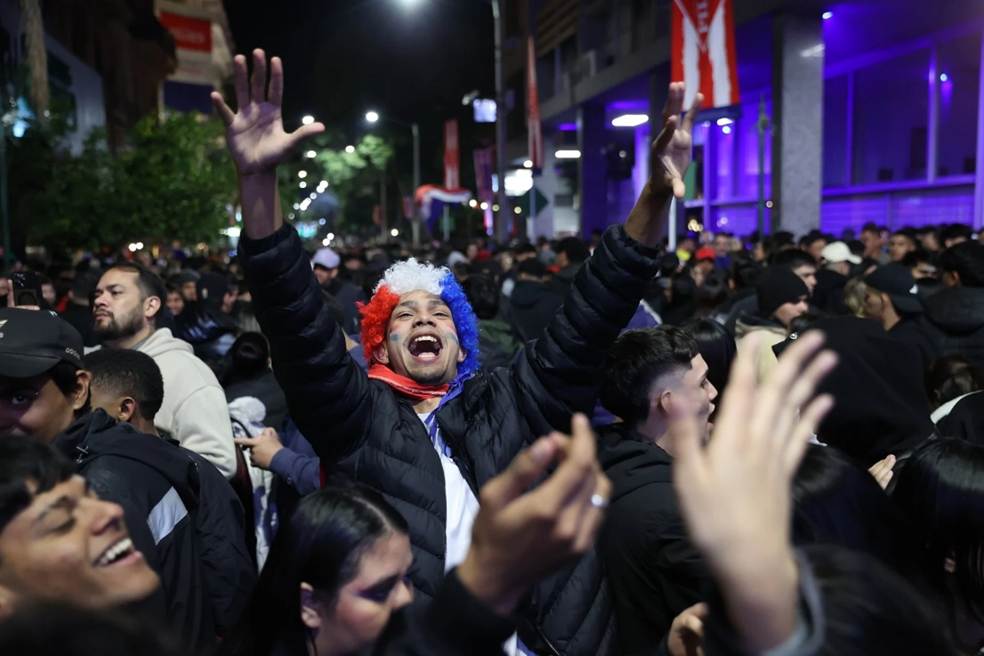
The moral discomfort begins at the turnstile. Ticket prices for 2026 have drawn global criticism, with FIFA accused of pricing ordinary supporters out of all but the least desirable seats. Hotels in host cities across Canada, the United States and Mexico have also risen sharply, even as some U.S. properties reportedly see weaker-than-expected bookings. Scale, it turns out, does not guarantee bodies in beds.
For Mexico, one of Latin America’s three 2026 hosts, the burden is already familiar. Host cities face excitement, yes, but also worry about traffic, cost of living, noise, pollution, and possible displacement. Those are not small complaints from people who fail to appreciate football. They are the predictable fears of residents who know mega-events often arrive wrapped in flags and leave behind higher prices.
Guadalajara may sell itself through mariachi, tequila, heat, and architecture that mixes tradition with modernity. Mexico City may turn into a planetary soccer capital. Monterrey may flex its industrial power. But each must ask the same question that Latin America has asked before, from the Olympics to the Pan American Games to Formula One weekends: who gets the party, and who gets the bill?
The answer often follows class lines. Wealthier visitors move through airports, hotels and curated fan zones. Local workers absorb congestion, police presence, rent pressure, and disrupted routines. A tournament marketed as a global belonging can, on the ground, become a sorting machine.
This is the warning for Uruguay, Argentina, and Paraguay in 2030. Their role will be smaller than that of the North American machine, but the pressure to look “World Cup ready” will be intense. Stadium upgrades, airport improvements, security contracts, hotel capacity, and broadcast demands can become a race to modernize under the world’s eye. In Latin America, modernization has too often meant polishing the route between the airport and the camera while leaving the rest of the city to improvise.
Uruguay will host the World Cup, which began in 1930. That is a sacred football ground. But Uruguay is also a small, cautious democracy with a strong public culture and limited appetite for waste. Argentina brings size, passion, and stadium mythology, but also chronic economic instability and a population weary of grand promises made in dollars. Paraguay brings regional pride and a chance to be seen, yet it faces sharper infrastructure gaps than its neighbors.
They cannot copy 2026. They should not try.
2030 Needs a Smaller Wisdom
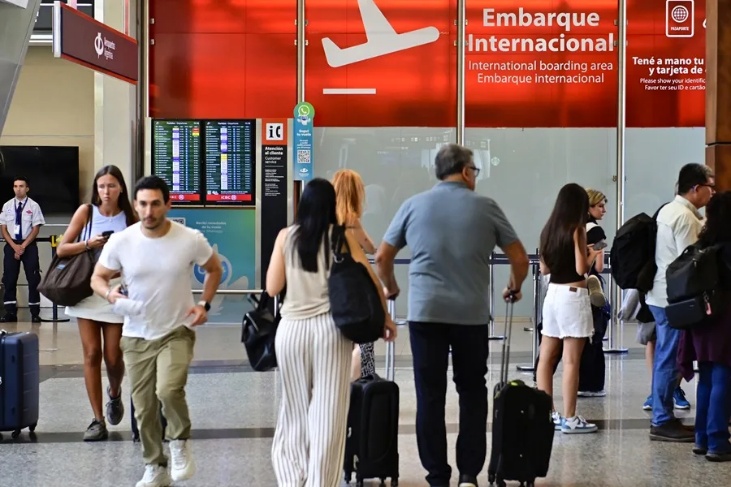
The transportation contrast is brutal. Qatar’s compact geography allowed fans to move by metro and make short trips. In 2018, Russia added hundreds of trains and free public transport. In 2026, flights will become the connective tissue. That raises costs and carbon emissions at the same time, a combination that sits uneasily in a Latin America already vulnerable to floods, heat, drought and fragile urban systems.
The 2030 South American openers must therefore be honest about distance. Montevideo, Buenos Aires and Asunción are closer to one another than Vancouver and Miami, but they still require cross-border coordination, airport capacity, customs planning and regional transit logic. A centenary celebration that depends only on flights would miss the chance to model something smarter.
Security is another lesson. The United States alone has directed $625 million in federal grants to host cities for security issues. The Department of Homeland Security has made more than $200 million available for anti-drone technology. Canada has granted about $104 million to Vancouver and Toronto. Together, Canada and the United States are approaching $1 billion in security investment, likely only a fraction of the true cost.
For 2030’s Latin American hosts, that figure is both impossible and instructive. Uruguay, Argentina, and Paraguay will not match U.S. spending. They need better coordination instead: intelligence sharing, fan-flow planning, emergency medicine, cyber resilience, drone rules, crowd communication, and security that does not turn public celebration into militarized spectacle.
The real challenge is interoperability, not pageantry. The 2026 World Cup involves multiple cities, jurisdictions, agencies, and technology systems. The problem is not merely how many systems exist, but whether they can exchange information fast enough when something goes wrong. Latin America’s 2030 hosts must treat that as the main event before the first whistle.
FIFA’s growth strategy may be rational from Zurich. It protects soccer’s market share and turns the World Cup into an always-expanding media engine. But from Latin America, the view is older and more intimate. Football is not just content. It is neighborhood memory, fathers and daughters at radios, bars full at noon, a shirt bought on credit, a country briefly hearing itself breathe together.
The 2030 centenary should defend that. Not by rejecting spectacle, because the World Cup has always been a spectacle, but by refusing to confuse bigness with greatness.
The South American hosts have a rare opportunity. They can show that the World Cup’s birthplace still understands something FIFA’s spreadsheets risk forgetting: the game’s power does not come from distance traveled, ticket prices paid, or digital interactions counted. It comes from proximity. From a city that can hold the crowd. From a country that can afford its pride. From a continent that remembers the first World Cup, it was not born huge. It became beloved first.
Also Read: Colombia Fans Flood Miami as World Cup Party Tests Police