Mexican Maracaná Dreams of Pele Magic in Tepito’s World Cup
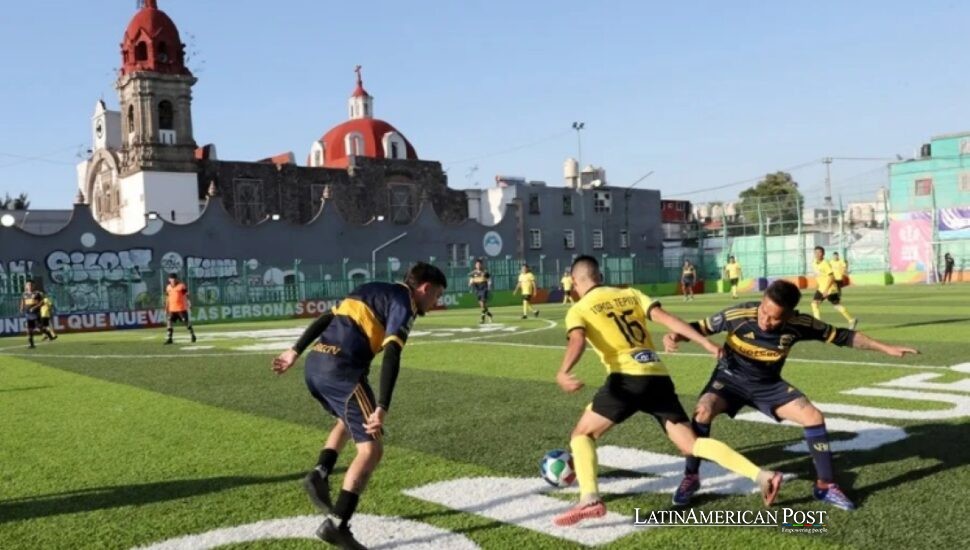
In Mexico City’s Tepito neighborhood, a community field named Maracaná is chasing Brazilian visitors for World Cup 2026, turning one old Pelé legend into a living argument about memory, stigma, football, and Latin América’s stubborn public spaces that still breathe.
A Legend Kicks Again
In Tepito, stories do not ask permission to survive. They lean against market stalls, pass through families, cross generations with a wink, and refuse to die just because nobody kept a photograph.
One of those stories says Pelé came here.
Not to the famous Maracanã in Rio de Janeiro, but to a rougher, smaller, more intimate Maracaná in Mexico City, a community field folded into the commercial thunder of Tepito. According to an EFE report, local lore holds that members of Brazil’s 1970 World Cup-winning team, Pelé among them, came to the neighborhood to shop and somehow ended up playing an informal pickup match with residents. A cascarita. Nothing official. Nothing framed in a museum. Just the kind of impossible afternoon Latin América loves to keep alive.
Salvador Antonio Gómez, the 39-year-old owner of the community league at Deportivo Maracaná de Tepito, knows the story has no photo to back it up. He also knows that in a barrio, memory often travels by witness, not archive.
“I am not the one to disappoint anyone,” Gómez told EFE.
That sentence carries more than charm. It understands the social job of legend. Tepito has been called dangerous for so long that outsiders often arrive already afraid, already certain, already watching their pockets and lowering their voices. The Pelé story reverses the gaze. It says the king of football may have come here. It says this place was not only a warning on the evening news. It was a destination.
Now, with the 2026 World Cup approaching across Mexico, the United States, and Canada, Gómez wants to revive that old magic. The goal is to bring Brazilian figures to the field, if not current national team players, then retired stars or Brazilians playing in Mexico’s league, to play another cascarita and return the legend to the grass.
Or rather, to the concrete heartbeat beneath the grass.
Tepito Keeps Its Own Score
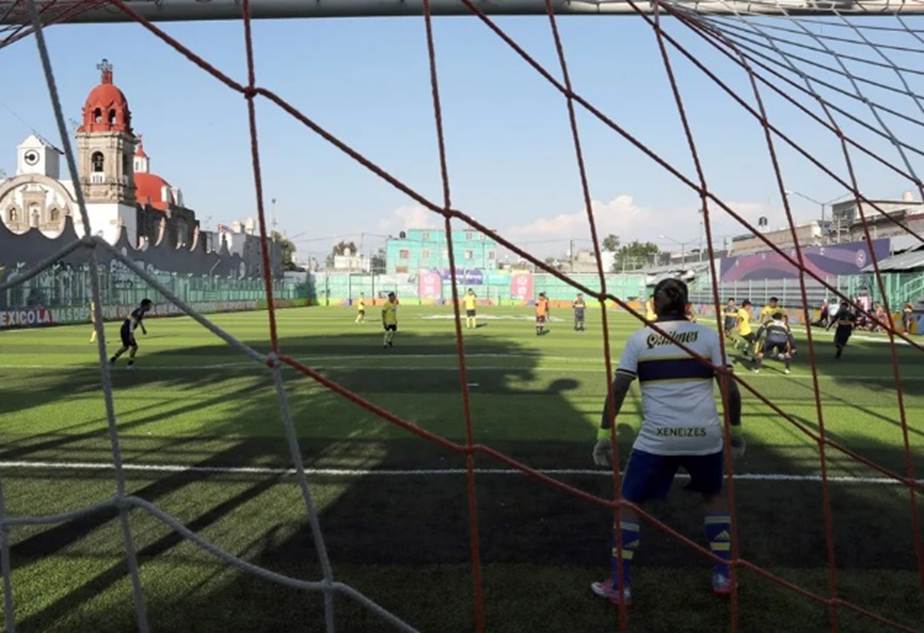
The Centro Social y Deportivo Tepito was founded in 1968, two years before Brazil won the World Cup in Mexico. Its nickname, Maracaná, grew from the Pelé tale and gained fresh force in the 1990s when Brazilian footballers linked to Club América visited the site.
For Gómez, known locally as “el Bebé,” the field is almost family property in the emotional sense. His grandfather helped found the sports center as a caretaker. His uncle later ran the league. His father inherited one of the stands beside the field. Gómez says he has been at the Maracaná for as long as he can remember.
That continuity matters because urban Latin América often erases working-class spaces in slow motion. First comes neglect. Then stigma. Then speculation. Then a politician with a rendering. A community court becomes a problem to clean up, not a social organism to support.
Between 2012 and 2018, EFE reported that the Maracanã fell into disuse and became a red zone for insecurity. Gómez and other neighbors began organizing matches to bring life back to the field. What started with eight teams grew to about 50.
That is not a minor statistic. It is a diagnosis of what people do when institutions leave. They make a league. They create fixtures. They paint lines. They schedule Sundays. They bring children, cousins, vendors, old players with bad knees, young players with too much swagger, and mothers who know the referee is blind because they have been saying so for twenty years.
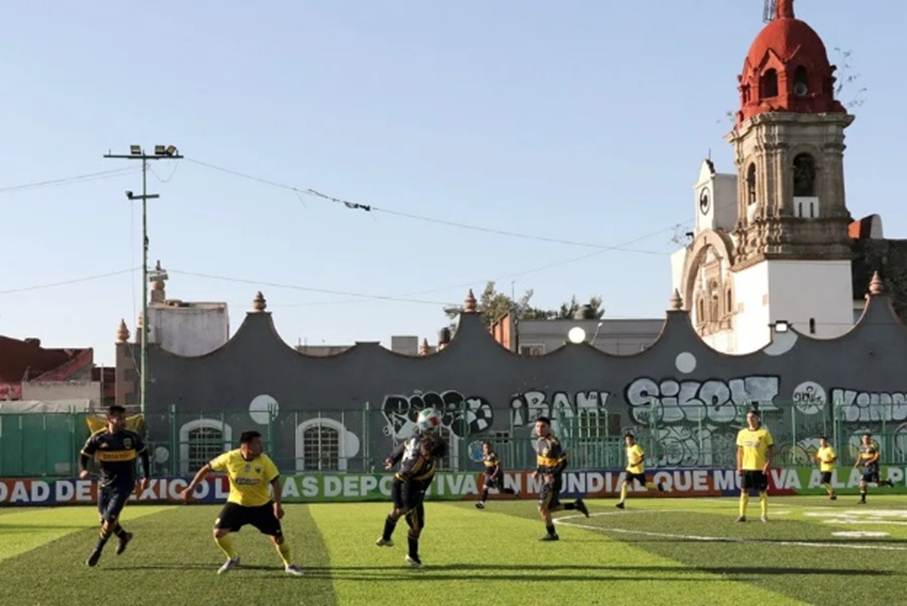
In Tepito, the field sits among stalls selling clothes, watches, cosmetics, and football jerseys. It is not isolated from the economy of the barrio. It is inside it. That is why calling it a sports facility feels too clean. It is a plaza with goals. A pressure valve. A family archive. A place where the neighborhood gets to see itself without the usual filter of police tape and scandal.
Gómez told EFE that this is the magic of the sports center: it stands in the middle of a neighborhood considered very dangerous, but those who live there know it is also beautiful. The Maracaná, he said, is the very heart.
There is a lesson here for Mexico City and for Latin América. Security is not only patrols, cameras, raids, and speeches. Security is also the ordinary right to gather without being swallowed by fear. It is a child learning that the street can host a game, not only a threat. It is the difference between abandonment and belonging.
The Barrio Wants the Cup Too
Ricardo Espinosa, who has played at the Maracaná since it was still a dirt field, called it a symbol of brotherhood for Tepiteños and told EFE that sport can help eradicate drugs and violence. His language turns almost lyrical when he describes the court. Some people’s legs tremble there, he said, but for locals the field is poetry, art, music, a cluster of emotions.
That may sound exaggerated to someone who has never needed a field to save a neighborhood’s reputation. It will not sound exaggerated in barrios from San Salvador to Buenos Aires, from Rio’s outskirts to Lima’s hillsides, where football has long served as civic glue in places the formal city treats as inconvenient.
The March visit by Portuguese legends gave Tepito a rehearsal. It showed that the Maracanã can attract international football memories not as charity but as an encounter. Now Brazil is the dream because Brazil is the origin myth of the field’s nickname and the country most capable of turning a casual touch of the ball into a ceremony.
If Brazilian players come during the 2026 World Cup, the event would be small compared with FIFA’s corporate machinery. No giant sponsor tunnel. No luxury suite. No sanitized fan zone built for cameras. But that is exactly why it would matter. The World Cup often arrives in Latin América through stadiums, contracts, security perimeters, hotel corridors, and official branding. Tepito is asking for something older and more intimate: come to the barrio, shop, play, sweat, listen.
This is also a challenge to how host cities present themselves. Mexico will showcase its monuments, restaurants, museums, and stadiums to visitors. It should also understand that the country’s football soul lives in places like this, where myth and survival share the same sideline.
Maybe Pelé played there. Maybe he did not. The truth may be less important than what the story has protected.
It protected a name. It protected pride. It gave Tepito a royal visitor in collective memory, while the rest of the city often met it with suspicion. Now the Maracaná wants another Brazilian afternoon, not to prove the past, but to enlarge the present.
Latin América understands that move. When history forgets to bring evidence, the neighborhood brings witnesses. And then it kicks off.
Also Read: Uruguay NOMA Carries a Small Nation’s Giant Football Tradition