Argentina Turns Naval Wake into Malvinas World Cup Thunder Again
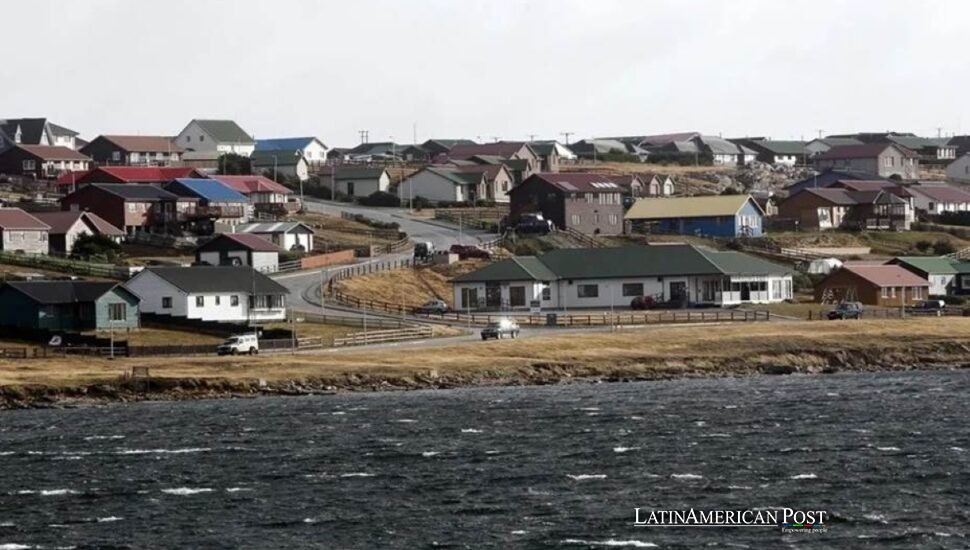
Argentina’s protest over HMS Medway collided with a World Cup semifinal against England, turning naval protocol into public memory. Behind the slogans lies a stubborn sovereignty dispute shaped by war, family grief, decolonization, and the rituals of Argentine football culture.
A Patrol Ship Becomes a Political Signal
In Buenos Aires, the Malvinas flare-up arrived in diplomacy’s dry grammar: a formal note and a complaint about notification. Far south, HMS Medway, a Royal Navy patrol vessel whose gray silhouette carried political weight, moved through the South Atlantic. Argentina said it entered waters under its jurisdiction after being “illegally deployed” to the islands Britain controls and Argentina claims.
The attached Argentine Foreign Ministry press release, the source of the ministry’s quotations, called the note Argentina’s “most energetic rejection.” It said Medway’s movements were not properly reported under bilateral declarations and involved passage through Argentine territorial waters.
In contested space, acknowledging the other government’s interest fosters a sense of shared respect, reminding Argentine readers of the emotional importance of sovereignty and the need for peaceful resolution.
Confidence-building rules followed the 1982 war because routines can turn dangerous. Declarations negotiated in Madrid in 1990, with understandings in 1991 and 1993, were meant to reduce surprises. Argentina says Britain treated those guardrails as optional.
No weapon was fired. Still, a patrol route can normalize control. A port call can reinforce administrative reality. A fishing license, survey, or military transit adds another layer to a status quo London considers settled, and Buenos Aires rejects.
The South Atlantic is not empty water. It holds fisheries, possible energy reserves, and routes important to Antarctica. Every maneuver carries strategic and symbolic messages. Britain demonstrates its presence. Argentina records an objection, building the paper trail of a claim it cannot enforce at sea but will not surrender in law.

A War That Lives Inside Families
The 1982 conflict, lasting about ten weeks and resulting in 649 Argentine and 255 British deaths, is often reduced to numbers. Yet, in Argentina, the war endures through veterans’ bodies, family stories, school ceremonies, and memorials, reinforcing its cultural significance beyond statistics.
Vice President Victoria Villarruel embodies the collision of office and inheritance. Her father, Eduardo Marcelo Villarruel, served in intelligence and combat and was later held by British forces. She invokes his service often. Calling the English “pirate usurpers” before the 2026 semifinal was political provocation, but it came from a household marked by war.
That history requires care because the war was launched by a murderous dictatorship seeking legitimacy. Argentina’s democratic sovereignty claim cannot be reduced to the junta’s invasion. Nor should nationalist rhetoric launder the dictatorship’s responsibility. Since 1983, the achievement has been to pursue the claim through democratic diplomacy, not military adventure.
Governments across Argentina’s ideological spectrum have maintained that line. Peronists, radicals, market liberals, and today’s libertarian administration disagree over nearly everything else. On the Malvinas, the language barely moves. The ministry again asserted “legitimate and imprescriptible rights of sovereignty” over the islands and surrounding maritime spaces.
That continuity framed Foreign Minister Pablo Quirno’s online exchange with Nile Gardiner, a former adviser to Margaret Thatcher. Gardiner said the issue was settled in 1982 and the islands would always be British. Quirno answered that the United Nations held that the war had not changed the legal nature of the dispute and that negotiations should resume.
Since democracy returned in 1983, Argentina has pressed that position in international forums. The UN General Assembly and Special Committee on Decolonization have repeatedly called for bilateral talks, while Britain has declined to reopen them. Buenos Aires also invoked Resolution 31/49, which urges both parties to avoid unilateral actions while sovereignty remains unresolved.
The ministry’s argument is cumulative. One ship movement does not decide sovereignty, but a succession of unconsulted acts can make British administration appear natural, permanent, and beyond discussion.
Across Latin America, the concern is familiar. Borders, islands, ports, and extractive zones were often fixed by imperial powers before regional democracies could speak for themselves. Support for Argentina’s claim, therefore, draws on decolonization as much as on bilateral rivalry. Any serious settlement, though, must reckon with islanders whose daily lives are reduced to an argument between distant capitals.
Football Gives Old Grievances a Stadium
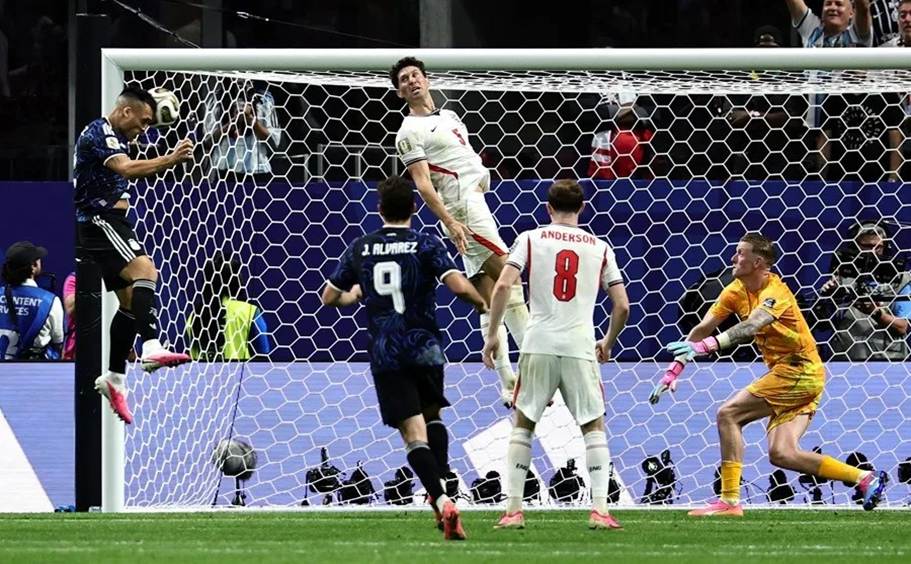
Then came England, under lights, with a place in the World Cup final at stake. Argentine authorities classified the semifinal as the tournament’s highest-risk match. Security officials coordinated with Britain, FIFA, and U.S. agencies to arrange separate entrances, increased policing, and restrictions on banners carrying political or hateful messages.
The precautions acknowledged what Argentine fans already knew: this fixture is never just football. England won the World Cup in 1962, 1966, and 2002. Argentina won in 1986 and advanced on penalties in 1998. The emotional center remains in Mexico City in 1986, four years after the war, when Diego Maradona scored the “Hand of God” and the “Goal of the Century.”
Football offered a moment of sporting revenge, a night when history seemed briefly reversible, inspiring pride and unity among Argentines despite unresolved sovereignty issues.
Villarruel deliberately reached for that archive. “It is Malvinas, it is Diego, it is Leo’s last one,” she wrote, collapsing war, Maradona, Lionel Messi, and the coming match into one patriotic sentence. The rhetoric was emotionally effective. It was also politically risky. When grief becomes a pregame weapon, complexity disappears first.
Argentina won the semifinal, and players displayed a flag declaring, “The Malvinas are Argentine.” Soon afterward, the government’s protest over HMS Medway became public. The diplomatic note had preceded the result, but football gave it oxygen. A matter of maritime procedure suddenly had a chant, a photograph, and a global audience.
The ministry’s release kept a different register. It accused Britain of deepening tensions and obstructing a peaceful, negotiated solution, yet Argentina’s chosen instrument was a written protest. That distinction matters. The language was sharp, but the action remained legalistic. For all the heat surrounding the match, Buenos Aires responded to a warship with paperwork.
That may look weak beside a naval patrol. In fact, it is the democratic lesson Argentina paid dearly to learn. The Malvinas claim is strongest when it rests on international law, regional solidarity, and patient diplomacy, not on the borrowed adrenaline of the stadium.
The ministry closed with a sentence designed for repetition: “For history, for law and for conviction, the Malvinas are Argentine.” Each phrase serves a different audience. History speaks to families and memorials. Law addresses the world. Conviction speaks inward, to a nation that sees the islands on every official map but cannot reach them.
HMS Medway’s wake will fade quickly in the cold Atlantic. The argument will not. Argentina’s protest refuses to let routine become consent, while the World Cup shows how a legal dispute becomes intimate, inherited, and loud. That discipline is quieter than victory, but it matters far longer afterward. Between communiqué and chant lies the challenge: remembering without mythologizing, claiming without dehumanizing, and insisting on negotiation after the cameras leave.
Also Read: Colombia Reclaims Paramilitary Ranch as Farm Workers Plant a New Future