Colombia Reclaims Paramilitary Ranch as Farm Workers Plant a New Future
At La Palmira in Córdoba, a scarred estate once tied to armed power is becoming farmland for nearly 100 families, testing whether Colombia’s agrarian reform can outlast political transition, legal resistance, and the violence that has long guarded rural inequality.
The Long Road Back to La Palmira
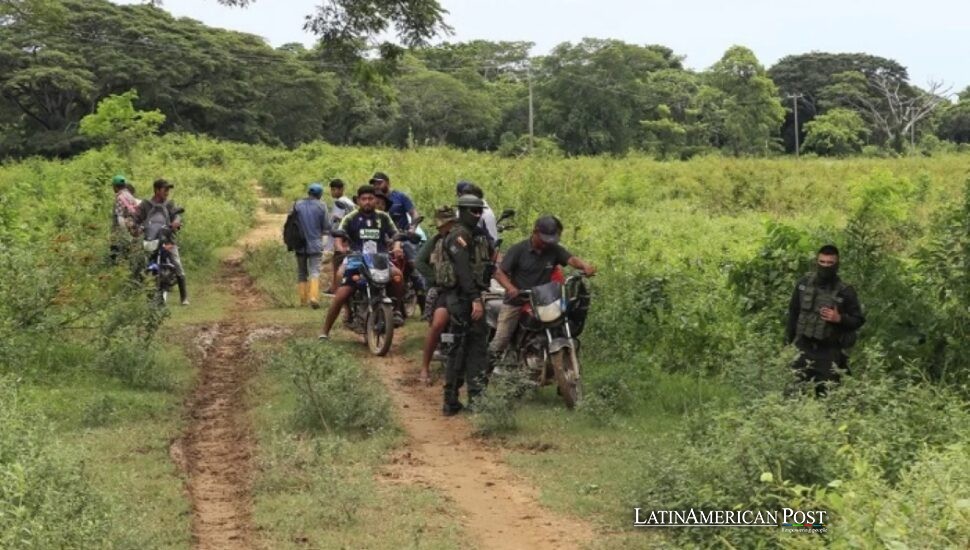
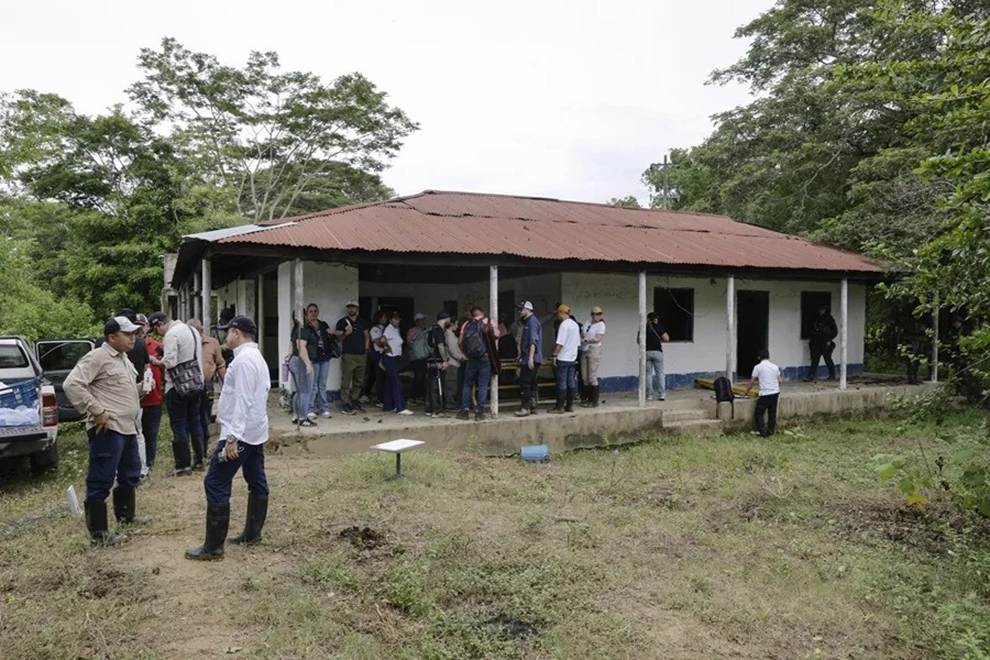
The road from Pueblo Nuevo takes more than two hours, much of it over dirt. Police vehicles, officials, and farmers move together toward a house that looks as if time stopped visiting. The zinc roof is rusted. White paint peels from the walls. Weeds have swallowed the gardens.
Inside, a satellite map lies across a wooden table. La Palmira covers almost 2,000 hectares. Beside the map, Felipe Harman, director of the National Land Agency, reads the resolution restoring state control over the estate.
The language is bureaucratic. The stakes are not.
For almost 100 farming families, the document offers a second chance to acquire land that had already been awarded to them but remained out of reach. Court actions, boundary disputes and reported threats blocked their occupation after the agency assigned La Palmira to peasant organizations in July 2025. The state had a title. Others still held the gate.
La Palmira entered the Victims’ Reparation Fund after former paramilitary commander Carlos Mario Jiménez, known as Macaco, identified it as one of the properties surrendered by the United Self-Defense Forces of Colombia. He said the estate had served as a base for the group’s armed and financial operations. Yet for years, private occupants continued exploiting it without owning it, while the state collected nothing for victims.
That contradiction is Colombia’s agrarian problem in miniature. The law may recognize an owner, yet armed or politically connected actors still decide who crosses the fence. Harman told EFE that La Palmira embodies a double-purpose investment: land for farmers and resources for conflict victims.
The agency returned to reestablish control, secure a right-of-way through a neighboring property, and guarantee community access. A passable road and recognized boundary determine whether reform exists beyond paper.
Santiago Manuel Arroyo Rivera looks across the overgrown pastures and imagines crops. He represents Raíces de San José de Cintura, a farming organization from a nearby village. “Cintura has not harvested for a long time because it had nowhere to do it,” he told EFE.
He and 97 other families hope to plant corn, yams, and rice. Evenly divided, the estate would offer roughly 20 hectares per family, though roads, water, and soil would shape the real allotment. The scale could support more than subsistence. Arroyo told EFE they want a regional food basket.
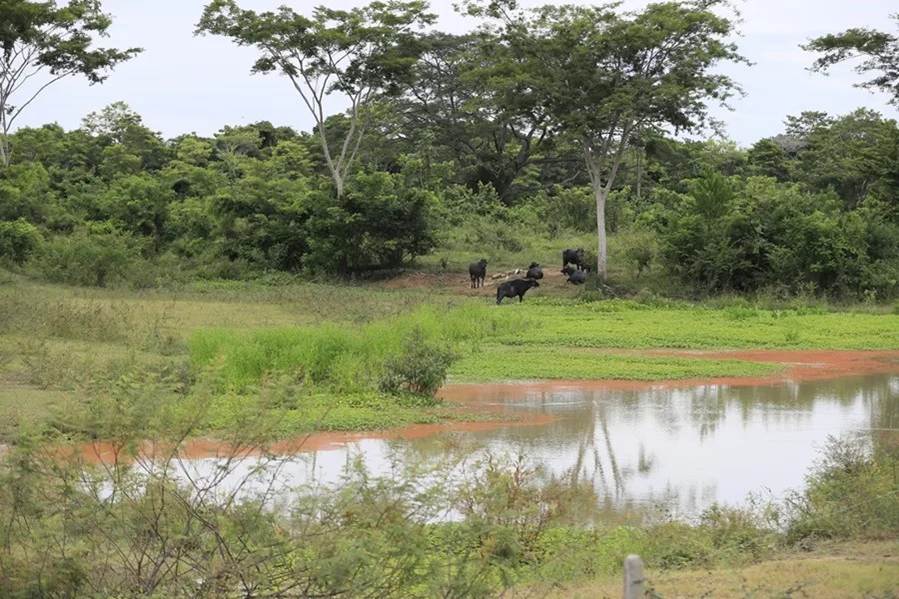
For now, much of La Palmira produces almost nothing. After touring more than 1,100 hectares, Harman said officials found only a few buffalo and horses among weeds. The emptiness is revealing. A vast estate sat idle while nearby families searched for ground.
A Reform Measured in More Than Hectares
The Petro administration presents La Palmira as a final emblem of its agrarian reform before leaving office on August 7. Official figures are substantial: more than 2.28 million hectares formalized through about 41,000 rural titles, 351,000 hectares delivered to peasant families and ethnic communities, and another 806,081 incorporated into the Land Fund.
Those categories describe different kinds of progress. Formalization recognizes people who may already occupy land. Delivery changes who can use it. Incorporation creates an inventory, but it does not mean a family is farming every hectare. Combining them into one triumphant total would erase the distance between a signed file and a planted field.
The administration also reports recovering more than 550 properties totaling about 109,000 hectares from drug traffickers, paramilitary networks, front men, and illegal occupants. It created 21 new Peasant Reserve Zones and seven Peasant Agro-Food Territories, while investing nearly 8 trillion pesos, about $2.47 billion, in land access and distribution.
The numbers show unusual state capacity and spending, as well as the size of the unfinished task. Harman told EFE, “We advanced substantially toward that purpose, but I insist again: it is not enough.” His bluntest formulation was political. “The large estate in Colombia does not have legal security; what it has is powerful friends,” he said.
That line reaches beyond Colombia. Across Latin America, the latifundio has rarely been only a large parcel. It has tied land to credit, local office, policing, labor, and prestige. Where institutions are weak, acreage becomes authority. Reform unsettles the networks deciding who gets hired, who is heard, and who is frightened into leaving.
Critics point to weaknesses. Peasant groups recently blocked roads in Cesar to protest delays in titles for properties already assigned. Opposition leaders say some land was announced as delivered before beneficiaries had final documents and guarantees to occupy it. These complaints matter. A reform that counts hectares faster than it secures possession creates vulnerable beneficiaries and inflated expectations.
But paperwork is only half the test. La Palmira shows why administrative perfection cannot, by itself, defeat territorial power. The estate entered a victims’ fund, was awarded to farmers, and still required another state operation to open the road. Each step offered delay, litigation, and intimidation, another chance to intervene.
The Next Government Inherits the Risk
A police officer guarding the estate is therefore not incidental to the story. He is evidence of the reform’s dilemma. Harman told EFE, “Violence does not ask for papers in Colombia. Violence arrives by force.”
The agency says five peasant communities on state-recovered properties in departments including Córdoba and Nariño have faced threats. Harman has urged President-elect Abelardo de la Espriella’s incoming government to state clearly whether it will continue land redistribution and protect communities already settled or preparing to enter.
That transition will determine whether the Petro government’s figures become durable rural change or a ledger of contested intentions. The properties remain registered to the National Land Agency. Yet legal armor depends on institutions willing to defend it. Budgets can be cut. Security can disappear. Cases can stall. Local officials can look away.
For Latin America, the lesson is familiar. Agrarian reform is often judged at the moment of purchase or delivery, when officials pose beside maps and families hold documents. The decisive phase comes later, when roads must be maintained, credit extended, crops insured, markets reached, and armed pressure resisted. Land without support can become a new geography of disappointment.
La Palmira carries a moral obligation because it belongs to victim repair. Turning a former paramilitary asset into productive land is more than redistribution. It reverses the direction of value. A place associated with coercion and illicit finance can generate food, income, and reparative resources. That promise is powerful because it remains uncertain.
Near the abandoned house, the farmers do not speak in abstractions. They speak of planting again. Corn. Yams. Rice. Crops with short names and long histories, staples that bind the Caribbean countryside to kitchens, markets, and family memory.
A resolution recovered the estate for the state. Police and surveyors reopened the route. But the deeper recovery begins only when families can enter without fear, stay through the season, and harvest what they sow. In Colombia’s countryside, that ordinary sequence would be something close to revolutionary.
Also Read: Cuba’s Blackouts Turn Five Years of Dissent Into Daily Defiance