Bolivia Arrest Pushes Mexico Deeper into Latin America’s Disinformation Reckoning
Fernando Cerimedo’s detention in Bolivia over an alleged attempted femicide has widened into a political scandal as Mexico’s president accuses his media network of manufacturing outrage through paid accounts, private money and the machinery of digital polarization across Latin America.
A Crime Case Breaks the Political Frame
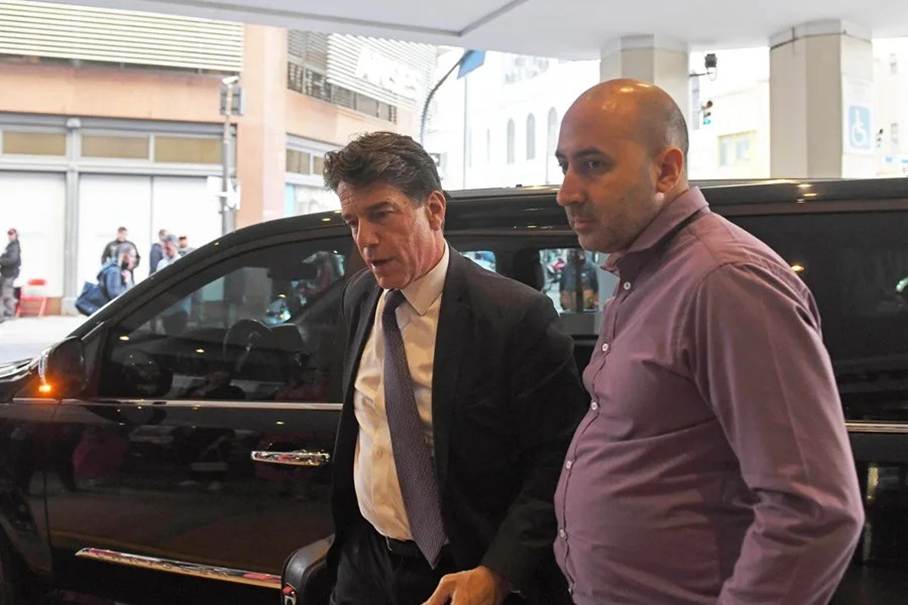
Fernando Cerimedo arrived at Viru Viru International Airport before dawn Tuesday and was arrested before Santa Cruz fully woke. Hours earlier, Nadia Beller, his former partner, had survived a shooting outside a hotel in the eastern Bolivian city.
Police and prosecutors say two men dressed as food delivery workers approached Beller. One allegedly fired several times. The other took her belongings. She lived, gave a statement, and became the center of a case now stretching far beyond the hotel entrance.
Bolivian prosecutors accuse Cerimedo of attempted femicide and will seek 180 days of pretrial detention. Departmental prosecutor Alberto Zeballos identified him as the principal accused. Prosecutor Yolanda Aguilera said investigators collected surveillance footage and other evidence, while Cerimedo declined to testify. The charge remains an allegation, and a judge must decide whether he stays in custody.
That legal distinction matters because politics rushed in almost immediately. Cerimedo is not simply an Argentine businessman facing a grave accusation. He helped shape Javier Milei’s 2023 presidential communications strategy, founded La Derecha Diario in 2021 and later worked around Bolivia’s 2025 campaign. His career has unfolded at the intersection of political consulting, partisan media, and digital influence.
The personal and political stories now sit uneasily together. Beller is a lawyer, activist, and analyst who survived an armed assault. She should not become a prop in a regional ideological contest. Yet the identities involved made that almost inevitable.
Bots, Patrons, and Manufactured Opinion
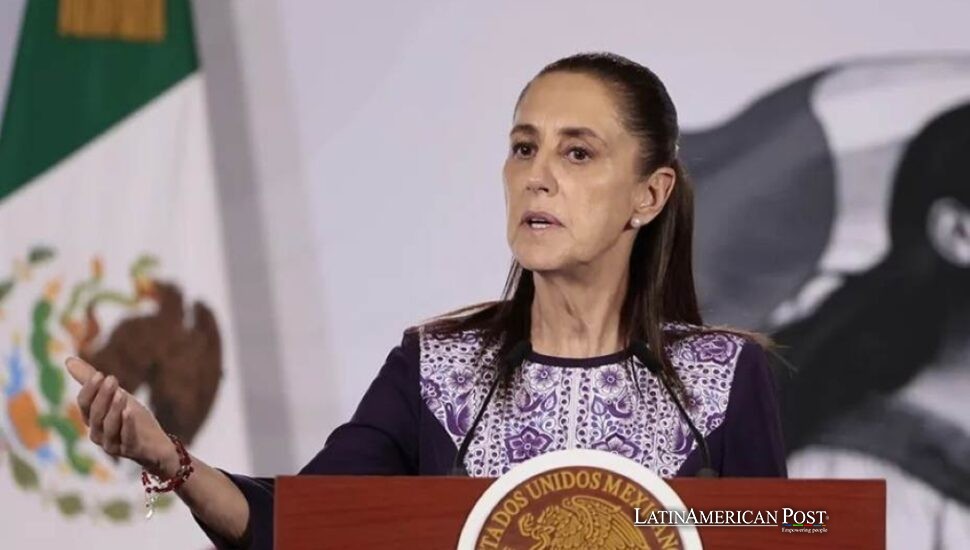
In Mexico City, President Claudia Sheinbaum used her morning news conference to widen the lens. She accused La Derecha Diario of operating a right-wing financed network that spreads falsehoods and manipulates opinion across Latin America. “Many robots, many bots” amplify content with money, she said, according to EFE, creating the appearance of public sentiment where coordinated distribution may exist instead.
Sheinbaum described a digital sequence. A provocative claim, often false or insulting, appears online. Paid or automated accounts repeat it. Volume becomes visibility, visibility becomes perceived consensus, and perceived consensus pressures journalists and politicians to respond. A manufactured wave begins to resemble spontaneous anger.
Her accusation is politically charged, but the mechanism she describes is increasingly central to Latin American campaigns. The region’s debate now travels through platforms whose algorithms reward repetition, outrage and speed. A consultant may not need to persuade a majority directly. It can be enough to make a message look unavoidable.
Sheinbaum also pointed to private sponsorship. She recalled statements by La Derecha Diario executive Javier Negre that Mexican businessman Ricardo Salinas Pliego had hired him. During the conference, she displayed a December 2025 photograph of Negre and Cerimedo posted with a taunting greeting directed at her morning briefing.
The image captured the new theater of regional politics. Media executives pose as combatants. Presidents answer from official podiums. Business money, campaign strategy, and editorial content blur together. Audiences are asked to believe they are witnessing public opinion, even when the architecture behind it remains hidden.
This is not merely a left-versus-right dispute. Latin America has a long history of newspapers aligned with parties, radio stations serving patrons, and governments using public advertising as leverage. The novelty is scale. Automated accounts reproduce the old patronage system at machine speed, across borders, without revealing who paid for the chorus.
The Allegations Outrun the Evidence
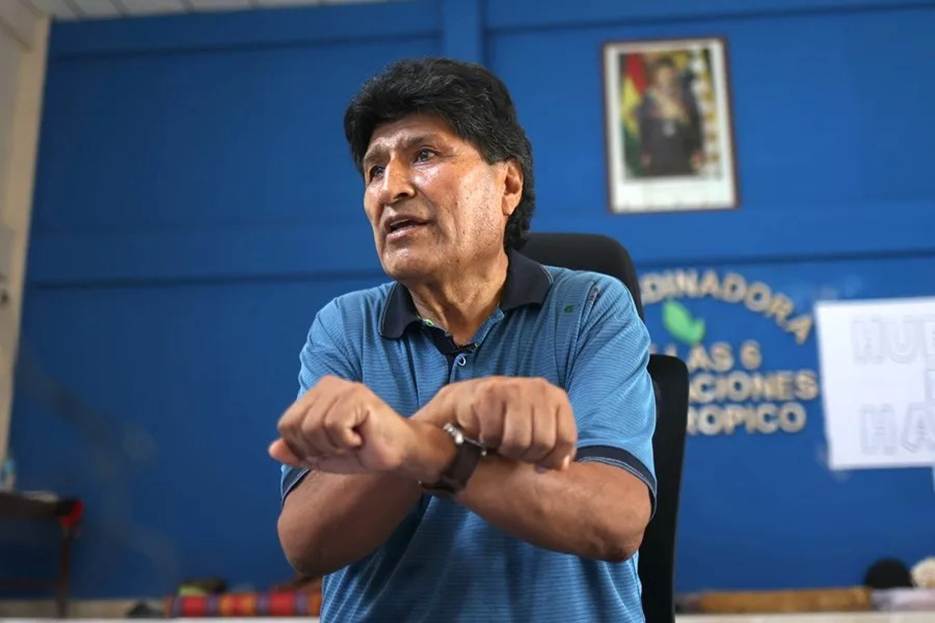
Former Bolivian president Evo Morales supplied the most explosive language. He called Cerimedo “an agent of the empire” and said his method was to create anger, hostility and polarization, according to EFE. Morales also repeated Beller’s alleged claim that Cerimedo was a CIA agent.
No public evidence has substantiated that accusation. It belongs in the record as a political claim, not a fact. In Latin America, allegations of intelligence ties carry historical weight, especially where memories of coups, covert operations, and foreign intervention remain active. History gives the charge emotional power. It does not make it proof.
Morales also described Cerimedo as President Rodrigo Paz’s private adviser. Bolivia’s government disputes that formulation. Presidential spokesman José Luis Gálvez said Cerimedo was a close campaign collaborator who continued assisting on specific communications matters, but never joined the state structure. That answer narrows the title, not necessarily the reach of his influence there.
The distinction is revealing. Modern influence often depends on remaining outside formal government. Consultants can shape messaging, contacts, and strategy without appearing on an organizational chart. Their power may be real while accountability remains diffuse.
Cerimedo also appears in Brazil’s investigation into the January 8, 2023 attempted coup, adding another layer to a career built across borders. Yet neither that inquiry nor Sheinbaum’s criticism proves the criminal charge in Bolivia. The temptation to combine every allegation into one seamless portrait should be resisted.
The case exposes a regional vulnerability. Political communication has become transnational, privately financed, and difficult to audit. Consultants cross borders faster than regulators. Partisan outlets behave like campaign arms while claiming journalism’s protections. Bot networks can imitate citizens, and governments can answer manipulation with accusations that are themselves politically useful.
At the center remains a woman who survived gunfire outside a Santa Cruz hotel. Around her, presidents, prosecutors, former leaders and media operators are constructing larger meanings.
Bolivia’s courts must determine responsibility for the attack. Mexico’s government should substantiate its claims about funding and coordinated disinformation. Latin American democracies must decide whether shadow campaign networks can continue shaping public life without disclosure.
The scandal began with bullets and an arrest. Its deeper story is about power that prefers not to leave fingerprints.
Also Read: Cali Rebuilds After Earthquake as Three-Year Recovery Clock Starts Ticking