Bolivia’s Snowbound Highlands Reveal the Hidden Cost of Climate Whiplash
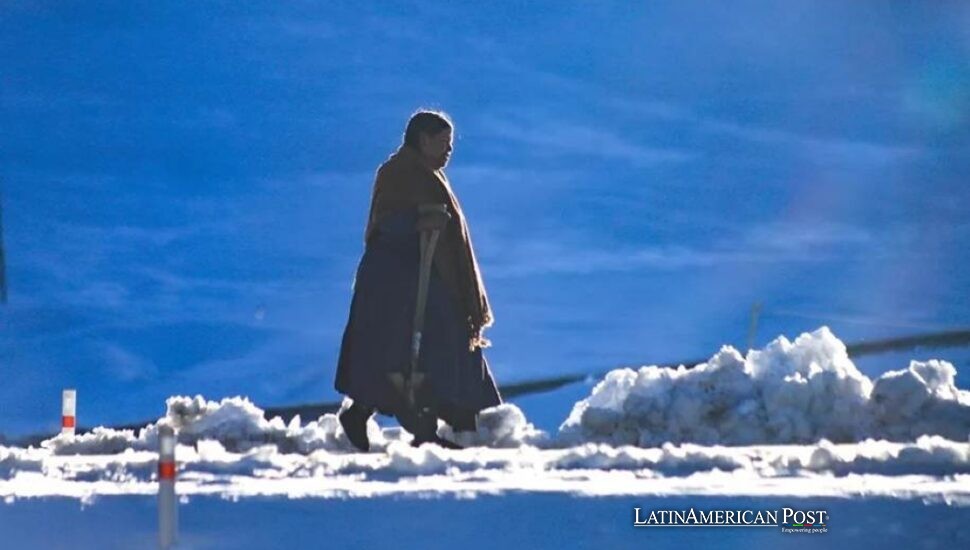
Heavy snow across Bolivia has stranded communities, threatened livestock, disrupted tourism, and exposed how climate volatility punishes the Andes unevenly, where a picturesque white landscape can mean lost income, hungry camelids, blocked roads, and families waiting beyond the state’s reach.
When Snow Becomes Isolation
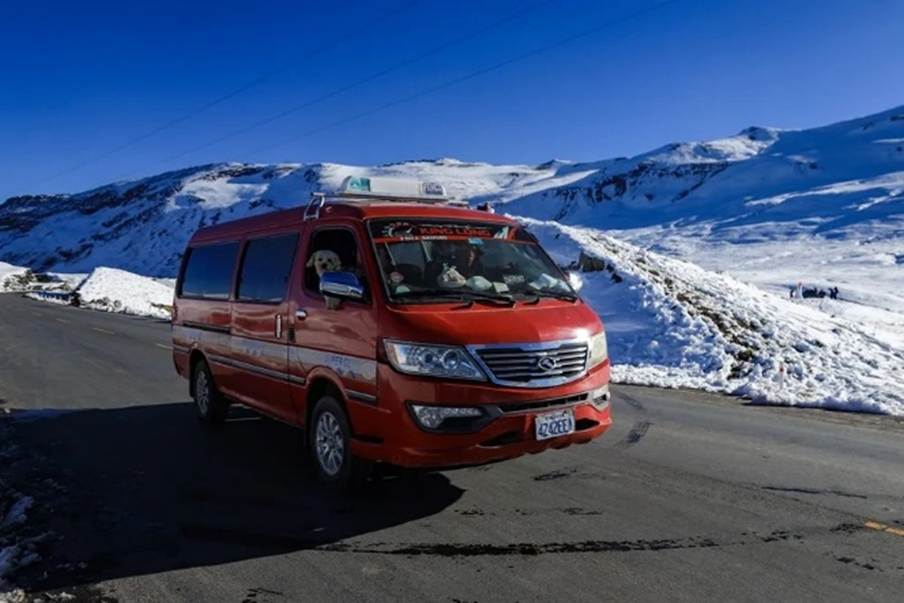
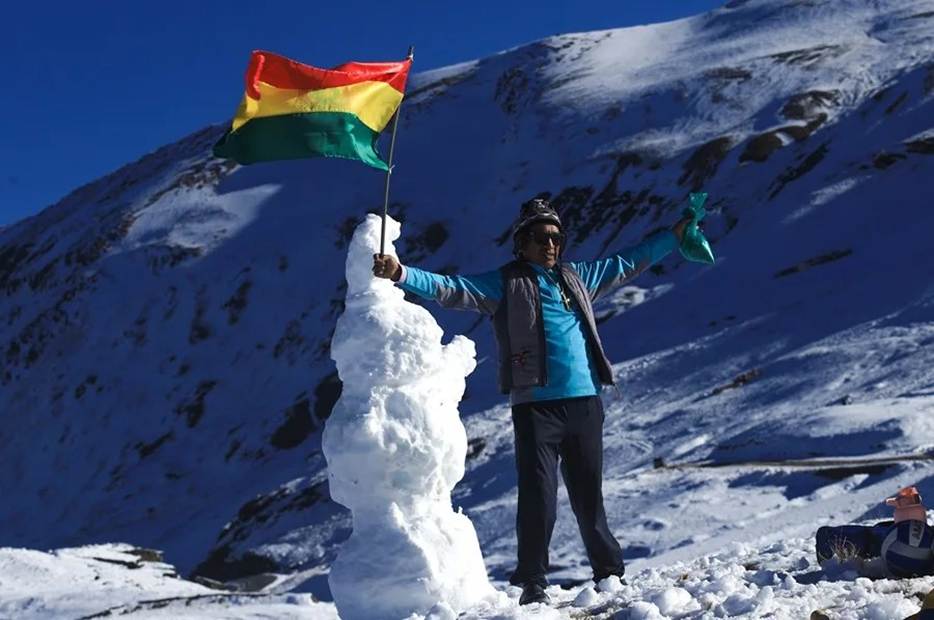
At La Cumbre, snow looked almost festive Wednesday afternoon. Families drove from La Paz after the highway reopened, parked near the 13,800-foot pass, and stepped into the white landscape for photographs and snowballs. Traffic moved again, cautiously.
Farther south, the same weather had become an emergency.
Across western Bolivia, intense snowfall has affected 26,220 families in 323 communities, according to Deputy Civil Defense Minister Roberto Rivero. Potosí has absorbed the hardest blow. Roads disappeared under snow, pastureland froze, and thousands of rural families were cut off from markets, veterinary supplies, and machinery needed to reopen mountain routes.
The numbers are enormous, but in the altiplano they become intimate. A llama weakened by cold is not simply an animal in a report. It may be a family’s savings, transport, meat, fiber, and protection against a poor harvest. With 78,755 camelids affected around Uyuni and 750 already dead, the crisis enters kitchens and household accounts before national statistics.
Civil Defense says communities urgently need fodder, vitamins, veterinary supplies, staple foods, blankets, heavy machinery, and support to restore productive infrastructure. The list reveals what snow does where survival depends on distance. It blocks the road, empties the feed shed, weakens the herd, then cuts off income. For isolated households, every delayed truck can turn a weather emergency into a season of debt.
Potosí’s government has declared a regional emergency. Yet declarations matter only if supplies travel beyond municipal centers. In Bolivia, geography often decides which citizens encounter the state first.
Uyuni’s White Economy Turns Fragile
Uyuni is known globally for whiteness. Tourists photograph the salt flat’s impossible horizon, where the ground becomes a mirror during the wet season and perspective dissolves. Now a different white landscape has disrupted the region’s economy.
In Uyuni municipality, officials reported 8,364 affected families and 2,350 classified as disaster victims. Snow has damaged the tourism circuit linking the salt flat, nearby communities, and the Eduardo Abaroa Andean Fauna National Reserve near Chile, more than 13,700 feet above sea level.
Last week, police and firefighters rescued three Americans trapped for more than 30 hours near Laguna Colorada. On Sunday, the Army assisted two French tourists stranded in Quetena. The rescues made visible a risk local families live with quietly. Travelers may lose a day. Residents can lose livestock, pasture, and a season’s income.
Tourism in southwestern Bolivia is not an isolated luxury. Drivers, guides, cooks, hostel owners, mechanics, artisans, and rural communities depend on visitors moving through seemingly empty landscapes. When roads close, losses spread from a stranded vehicle to a village store without customers and a family unable to buy feed.
The pressure extends beyond Uyuni. In Villazón, on the Argentine border, 85,000 livestock are at risk and roughly 55,000 hectares of grazing land have been affected. Atocha reports 7,433 affected families. Llallagua counts 73 communities hit by the storm.
Together, those figures describe a regional economy exposed at its most basic level. Mining dominates Potosí’s historical image, from Cerro Rico onward, but rural life still depends on animals, pasture, roads, and small-scale commerce. The snow shows how little redundancy exists when one link fails.
The human toll may be growing. The government is investigating the death of a woman struck by a falling tree in Oruro. Travel was restricted on several routes. The highway agency later confirmed a loss of road platform between Unduavi and Chulumani in South Yungas, forcing another closure.
The Andes Enter an Era of Whiplash
Heavy snow is not unknown in Bolivia’s highlands. Potosí sits at roughly 13,400 feet, and surrounding peaks regularly carry snow. But severe town-level accumulations are less common, and many homes lack built-in heating because cold, dry winters were managed without infrastructure for prolonged blizzards.
The memory of July 2011 still hangs over the southern highlands, when snow isolated remote communities and left thousands of llamas and alpacas trapped beneath deep accumulation. The present emergency echoes that history, but arrives in a less predictable climate.
The Andes are warming faster at high elevation than many lower regions. Glaciers are retreating, cloud patterns are shifting, and warmer air changes whether moisture falls as rain or snow. That does not mean every blizzard has one simple climate cause. It means conditions are becoming more volatile, with sharper swings between drought, intense precipitation, frost, and sudden storms.
That volatility is especially cruel because adaptation is unequal. A tourist with a vehicle can turn around. A government can reopen a highway by afternoon. A herding family cannot replace frozen pasture overnight. Nor can a small municipality instantly produce snowplows, heated shelters, veterinary stockpiles, and reliable communications across scattered communities.
The contrast at La Cumbre says almost everything. By afternoon, traffic had normalized, and families arrived to play. The scene was real, harmless, even joyful. But the same storm had buried routes, endangered tens of thousands of animals, and pushed thousands of households toward a longer emergency.
Bolivia’s snow is beautiful from a distance. Up close, it tests roads, institutions, and who can afford to wait for the thaw.
Also Read: Latin American and African Recruits Feed Russia’s Quiet War Machine