Caribbean Waters Turn Deadly Again as Washington Intensifies Drug War Militarization
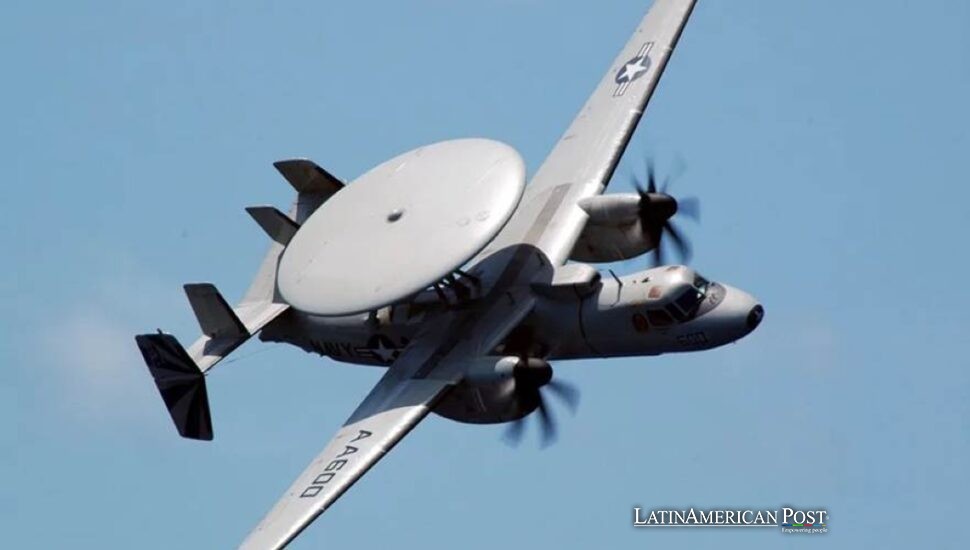
A new U.S. strike on an alleged drug boat in the Caribbean has killed two people, deepening regional alarm over lethal counternarcotics operations, international law, sovereignty, and whether Latin America is watching policing become open warfare at sea.
The Sea Becomes a Battlefield
The Caribbean has long been a corridor of movement, commerce, migration, memory, and empire. Now, in Washington’s language, it is described as a battlespace.
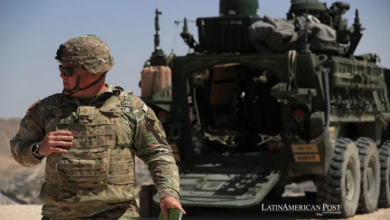
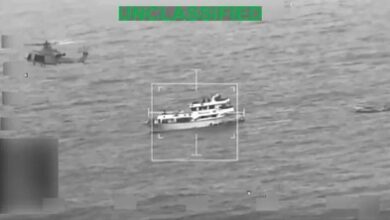
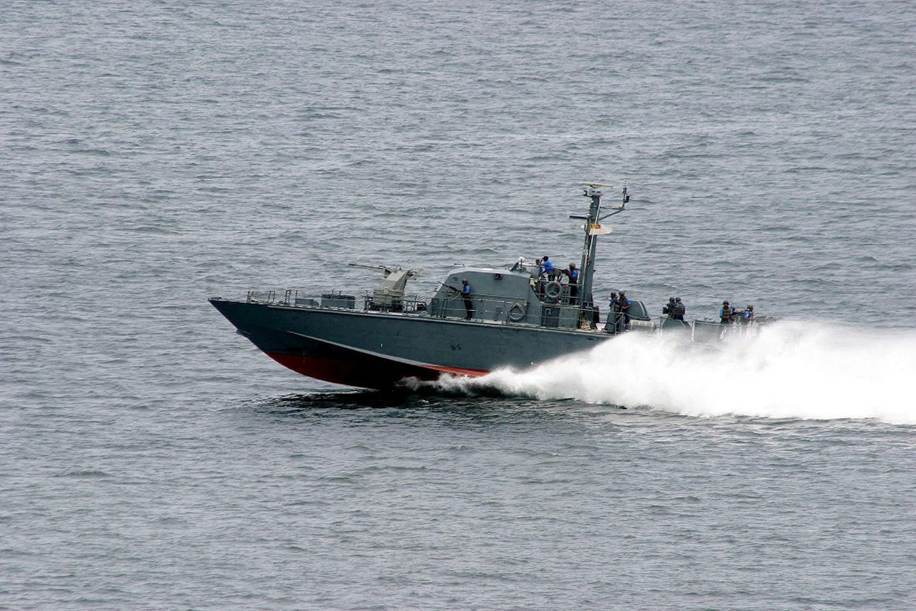
The United States Armed Forces announced Monday a new attack against a boat that allegedly carried drugs in the Caribbean, killing two people. According to a message published on X by U.S. Southern Command, under the command of General Francis L. Donovan, Joint Task Force “Southern Spear” carried out a lethal kinetic strike against a vessel allegedly operated by designated terrorist organizations.
Southcom said two male “narcoterrorists” died in the operation. It added that, according to U.S. military intelligence, the vessel was traveling along known drug trafficking routes in the Caribbean and was involved in narcotics operations. No U.S. military personnel were wounded or harmed, the command said.
Those are the official words. They are clean, compressed, and almost mechanical. But beneath them sits a much larger regional question. When does a drug interdiction become an execution? When does maritime enforcement become war? And who gets to decide, from the air or from a command center, that a small vessel in Caribbean waters is a legitimate target for lethal force?
For Caribbean societies, these are not abstract questions. Islands and coastal states already live with the pressures of narcotrafficking, poverty, migration, fragile institutions, exposed coastlines, and the long shadow of outside powers deciding what security should look like in their waters. A U.S. strike may be presented as a blow against drug routes. But in the region, it also lands as a reminder that Caribbean sovereignty can be squeezed between criminal networks on one side and military power on the other.

Washington’s Hard Line Expands
The administration of President Donald Trump defends the campaign as a necessary effort to stop the flow of drugs into the United States. Since August 2025, Washington has deployed military operations in the Caribbean, later extending them to the Pacific. According to the notes, these interventions have killed more than one hundred people in international waters.
That number changes the character of the policy. One strike can be framed as an operation. More than one hundred dead begins to look like a doctrine.
The language matters too. By calling alleged traffickers “narcoterrorists” and linking vessels to designated terrorist organizations, the United States moves the issue out of ordinary law enforcement and into the vocabulary of war. That vocabulary gives governments more room to kill, more room to act quickly, more room to say the threat was too dangerous for arrest, trial, or public evidence.
Latin America has heard this music before. The region has lived through decades of drug war logic, often written in Washington and paid for in local bodies. Colombia, Mexico, Central America, and the Caribbean have all seen how militarized security can produce short-term spectacle while leaving deeper economies of violence untouched. Cocaine routes change. Gangs adapt. Ports shift. Poor young men become disposable foot soldiers. The money, almost always, survives.
This is the Caribbean dilemma now. The sea is being treated as a frontier where suspected traffickers can be killed before the public sees proof, before a courtroom hears evidence, before families know who died and why. The U.S. says intelligence identified the vessel as part of drug trafficking operations. Yet the notes do not mention public evidence, names, cargo recovered, judicial review, or an independent account of the strike. That absence matters because lethal force without transparency produces fear even among those who despise the drug trade.
The Inter-American Commission on Human Rights has expressed concern over Washington’s lethal operations against suspected drug boats, warning that they violate international law. That reaction is not procedural fussiness. It reflects a core principle Latin America has learned through pain: states cannot simply label someone dangerous and erase them outside the law.
A Regional Warning in Blue Water
For the Caribbean and the wider region, the strike raises an old problem in a new form. The drug trade is real. The routes are real. The violence attached to trafficking is real. Coastal communities know the cost. Fishermen, port workers, border towns, and island police forces often face criminal economies with more money, better weapons, and fewer restraints than the state.
But the answer to criminal impunity cannot be state impunity. If governments normalize killing suspected traffickers in international waters without open evidence, they risk building a precedent that may not stay limited to drug routes. Today it is a boat. Tomorrow it may be a truck, a camp, a neighborhood, a port, a political enemy described through the convenient fog of security language.
Caribbean governments now face a difficult position. Many depend on U.S. cooperation for security, trade, disaster response, and migration management. Many also fear becoming passive spectators while foreign military operations redefine the rules around their maritime space. Silence may feel practical. Speaking up may carry diplomatic costs. But the region’s long history of intervention makes the silence dangerous too.
This also affects Latin America’s political imagination. The war on drugs has often promised salvation through force. It has rarely delivered lasting peace. Instead, it has expanded prisons, militarized police, strengthened emergency powers, and turned poor territories into laboratories of control. The latest Caribbean strike fits that larger pattern, with one difference: the ocean hides evidence better than the street. Bodies disappear into water. Debris drifts away. The official statement remains.
That is why the issue is not whether the region should tolerate narcotrafficking. It should not. The issue is whether democracies can fight organized crime while preserving the line between justice and vengeance. A lawful interdiction requires capture, investigation, evidence, and prosecution. A lethal strike offers finality without public accountability.
The Caribbean has always carried the footprints of empires, smugglers, navies, and traders. Its waters remember conquest, slavery, blockade, migration, and survival. Now they are being asked to absorb another chapter, one where anti-drug policy is written in missiles and official posts.
For the region, the warning is sharp. If the sea becomes a place where suspicion is enough to kill, Latin America will not only be fighting narcotrafficking. It will be fighting to keep the law from sinking with the boats.
Also Read: Colombia’s Newsrooms Face Their Reckoning as Women Break the Silence