Peru Bets on F-16s as Region Watches Its Skies Closely
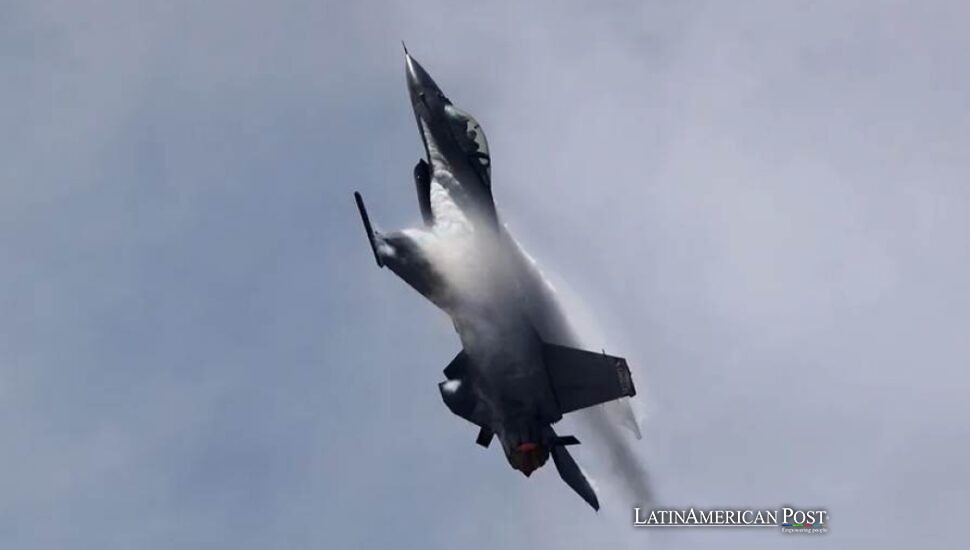
Peru’s disputed $3.5 billion F-16 purchase has become more than a defense contract. It exposes a region where aging militaries, U.S. influence, secrecy, and sovereignty politics collide as governments try to modernize without frightening neighbors or voters alike at home.
A Fighter Jet With Political Smoke
In Peru, even the sky now carries the smell of politics.
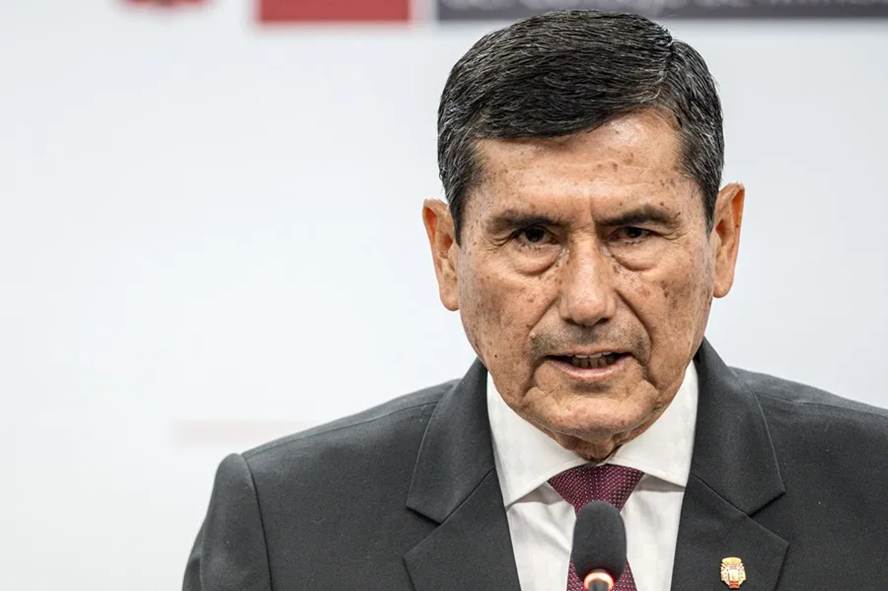
Prime Minister Luis Arroyo appeared before Congress on Monday to defend the government’s purchase of many F-16 fighter jets from the U.S. company Lockheed Martin, a deal valued at $3.5 billion and described by him as an “urgent necessity” for national sovereignty and state security. The phrase was meant to sound final. In Peru, it did not.
The acquisition has sparked a dispute in a country already accustomed to unstable presidencies, interim governments, and public suspicion over large state contracts. Arroyo told lawmakers that the payment schedule had been followed “scrupulously” from beginning to end, including the April 22 payment of the first $462 million. He said the decision was made in December during a session of the National Security and Defense Council, known as Cosedena, under former President José Jerí.
That explanation may satisfy part of the bureaucracy. It does not erase the political problem. The current interim president, José María Balcázar, has said he wanted the purchase left to the next government, which is expected to take office on July 28. He has also suggested that the deal favored one bidder directly, after the Swedish Gripen and French Rafale were allegedly excluded despite proposals from their manufacturers.
In other words, Peru is not only debating aircraft. It is debated who has the right to bind the state before power changes hands.
Sovereignty, Secrecy and the U.S. Shadow
Arroyo’s argument begins with a real defense concern. Peru’s combat aircraft, mostly French Mirage 2000s and Russian MiG-29s acquired during the 1980s and 1990s, are nearing the end of their service lives. Their operational availability is increasingly restricted. For any country with a serious air force, aging fighters are not just old machines. They are fading deterrence, rising maintenance costs, weaker training cycles, and fewer hours in the air.
That matters in South America, even if the region is not living through a classic interstate arms race. Air power remains a symbol of sovereignty. It signals that a state can patrol its borders, protect its airspace, and keep a seat at the table when neighbors modernize. A country without credible defense assets may not be invaded, but it can still look diminished.
Yet the choice of the F-16 ties Peru more tightly to Washington’s security orbit. That is geopolitically significant. The aircraft is not only an American platform. It brings maintenance chains, training systems, weapons packages, political relationships, and long-term dependence. Buying F-16s from Lockheed Martin is also buying into a strategic ecosystem.
For the region, that sends a message. Peru is choosing a U.S. defense lane at a time when Latin American governments often balance among Washington, Europe, China, and, in older inventories, Russia. The fact that Peru’s current fleet includes Russian MiG-29s makes the shift sharper. Moving away from Russian equipment toward U.S. aircraft reflects not just modernization but alignment, or at least a practical recognition of where spare parts, diplomatic favor, and military interoperability now sit.
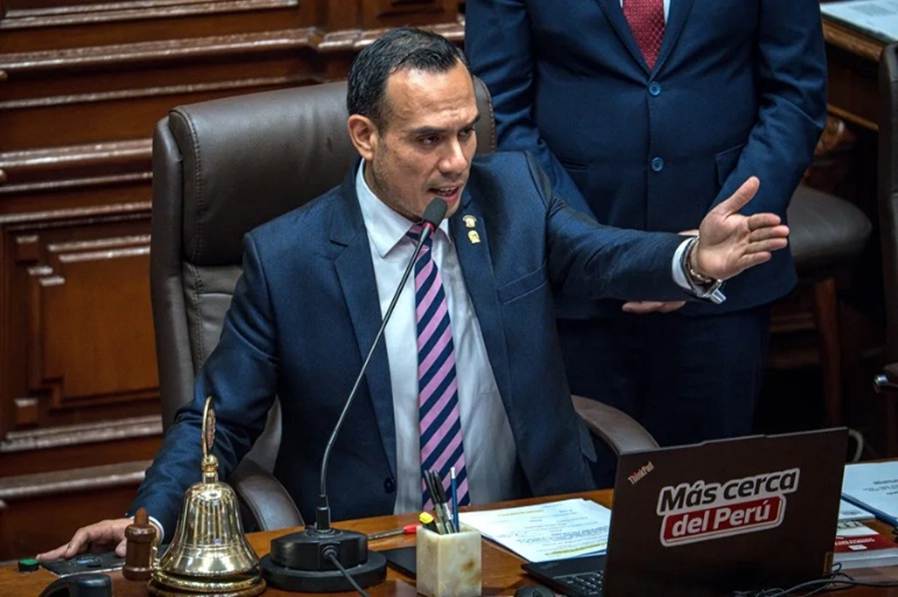
Still, secrecy complicates everything. Balcázar said the previous administration and the Air Force issued an internal secret provision indicating that the purchase would be confidential. He said this happened before he arrived at the Government Palace and that he did not know the details of the U.S. purchase finalized in April. Arroyo and Jerí deny that the process was improper. Jerí, now a right-wing legislator, called it correct and procedural, dismissing other claims as speculation.
But in Latin America, secrecy around defense spending carries historical weight. Military institutions have often claimed national security to avoid scrutiny. Civilian governments have often hidden behind uniforms when purchases became politically inconvenient. A closed process may be legally defensible in parts. It can still corrode public trust.
A Region Listening for Engines
The regional meaning of Peru’s F-16 purchase is not that war is coming. That would be crude and unsupported by the notes. The more serious point is that Latin America is entering a phase in which defense modernization, political fragility, and great-power influence are increasingly overlapping.
Peru’s neighbors will watch the deal because military acquisitions always speak beyond borders. Chile, Ecuador, Colombia, Bolivia, and Brazil do not need to panic; they need to take note. Fighter jets alter perceptions. They shape defense planning. They become part of regional calculations, even when governments publicly insist everything is routine.
The purchase also comes with a democratic question. Can an interim government commit billions of dollars to a strategic acquisition shortly before a new administration takes office? Jerí argues that Balcázar could have convened Cosedena to modify or postpone the process and that, by not doing so, he effectively validated it, beyond the supreme decrees he signed. That is a sharp political counterattack. It turns Balcázar’s complaint into a question about his own responsibility.
The Defense Commission’s decision to move ministers into a reserved session shows how sensitive the matter has become. Some defense details may legitimately require privacy. But the broad public questions do not disappear behind closed doors. Why F-16s? Why not Gripen or Rafale? What criteria were used? What will the full cost include over time? What does Peru gain strategically, and what dependence does it accept?
For Latin America, this is the familiar crossroads. States need capable institutions, including defense institutions. But when trust in politics is thin, even legitimate modernization can look like a deal made in smoke. Peru’s challenge is to prove that sovereignty is not being used as a slogan to rush a decision that citizens are asked to fund but not allowed to understand.
The F-16s, if the purchase holds, will eventually arrive as machines of speed and altitude. But the real turbulence is already here, inside Peru’s institutions and across a region watching how a divided democracy handles power, secrecy, money, and the old promise that the state must defend itself. In Latin America, the plane is never only a plane. It is a mirror with wings.
Also Read: Ecuador Bets on Curfew Politics as Cartels Move in Shadows