Venezuela Floods Expose How Rain Finds the Same Forgotten Streets
Six people remain missing after torrential rains flooded Caracas and neighboring states, turning rivers into traps, burying homes in mud and renewing a Venezuelan question: when the same streets drown each year, where does natural disaster end and neglect begin?
When Four Hours of Rain Become a Search
By Sunday morning, the rain had stopped, but the searching had not.
In Caracas, rescue crews were looking for a mother and her son after a swollen river swept them away. In neighboring Miranda state, teams searched for a couple whose vehicle fell into a stream in Guaicaipuro municipality. Their daughter was pulled out alive and taken to a hospital, Mayor Farith Fraija said.
Farther west, in Aragua state, another search unfolded along a river in José Félix Ribas. Mayor Juan Sánchez said two people remained missing after the current dragged away their vehicle.
The arithmetic was stark: at least six people gone in three places, all linked by water moving faster than roads, walls and human judgment could answer.
In Guaicaipuro alone, at least thirty-six homes were damaged after rain pounded the city for more than four hours. In a saturated urban landscape, it can be enough to alter a family permanently.
The storm was associated with tropical wave number forty, which, acting President Delcy Rodríguez said, caused serious damage across several Caracas neighborhoods. She ordered the civil protection system to be activated and warned again of the global climate emergency.
The warning is credible. Intense rainfall is becoming harder to treat as an isolated surprise. But in Venezuela, climate pressure hits infrastructure shaped by maintenance decisions, uneven investment, and neighborhoods built beside waterways.
The Flood Returns to Familiar Doorways
In La Vega, the disaster smelled of wet earth, garbage, and food that could no longer be sold.
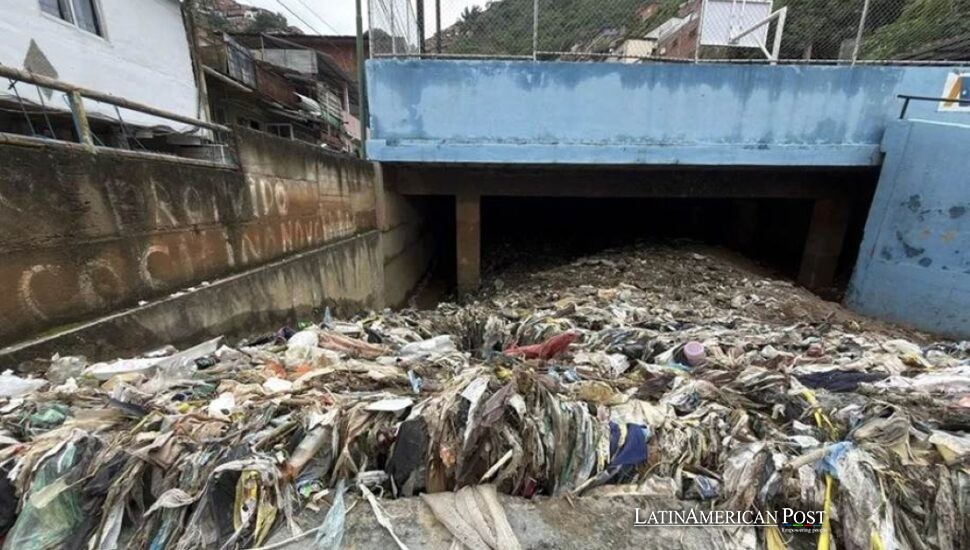
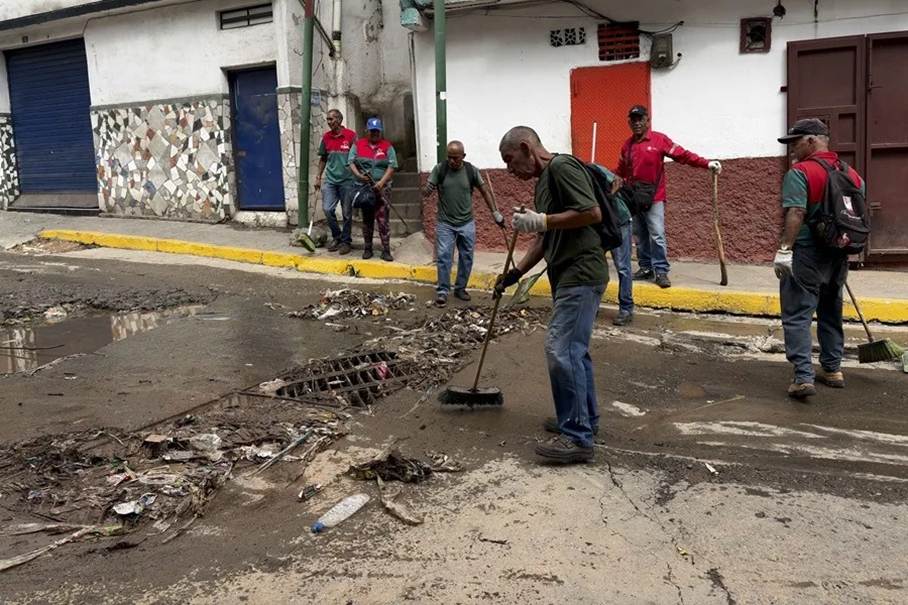
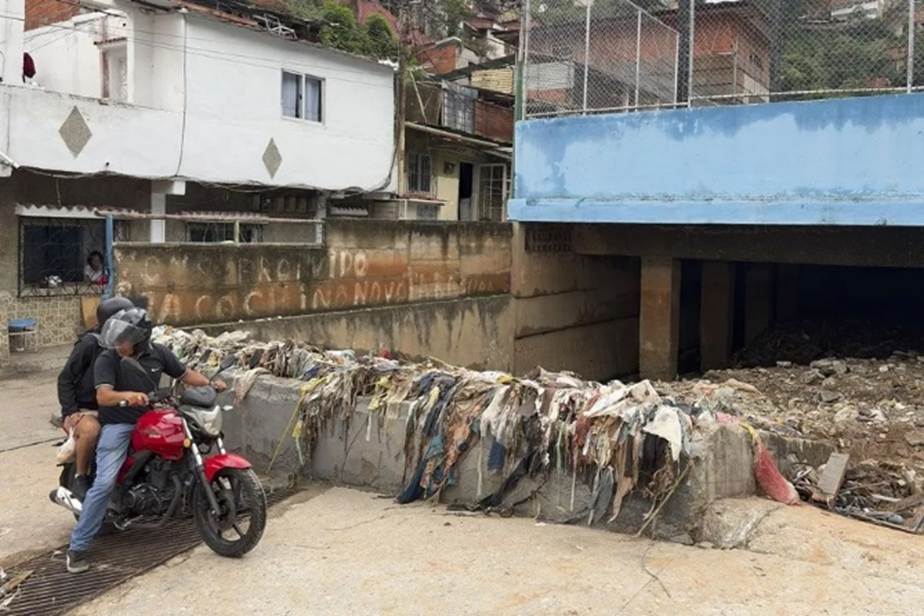
Residents spent Sunday pushing mud from homes and businesses after an overflowing stream carried debris into the neighborhood. Streets remained dirty. Drainage channels showed what the water had gathered and redistributed: trash, sediment, and evidence of an overwhelmed urban system.
Yanila Verdi, sixty, was cleaning her empanada shop when EFE spoke with her. She said residents had not seen so much water in years. The rain fell “extremely hard,” and for a long time, she said, flooding everything.
Then she added the part that complicates any simple story about nature. Verdi told EFE that there is not enough maintenance, and residents also throw garbage where they should not.
Her observation places responsibility in several hands. Litter can clog a channel. Only institutions can organize drainage maintenance, enforce land-use rules, clear waterways consistently, and prepare evacuations before a tropical wave arrives.
Derian Zamora, thirty, described a more familiar rhythm. No house collapsed, he told EFE, but the neighborhood floods whenever rain becomes intense. The stream overflows and can carry away vehicles.
“This is always happening,” he said.
Those words turn the event from an exceptional storm into a repeated civic failure. A disaster becomes something else when residents can predict which street will flood, which channel will overflow, and which corner will trap vehicles. However, public works still arrives mainly after the water.
On the Valle-Coche highway, between sixty and seventy vehicles were stranded when a river overflowed, according to Caracas government chief Nahum Fernández. Roughly twenty people were injured. By Sunday morning, soil still covered portions of the roadway.
A highway is designed to move a capital. For several hours, it became a holding basin filled with motorists who entered an ordinary route and found themselves in an emergency. The scene exposed how quickly Caracas can lose the distinction between transportation infrastructure and riverbed.
Climate Emergency or Maintenance Failure
The political argument arrived almost as quickly as the rescue crews.
Opposition lawmaker Stalin González said blaming nature was the easiest response. The deeper problem, he argued, was the lack of prevention, maintenance, and lasting solutions. “Year after year it rains and the same streets and avenues flood,” he wrote on social media.
The government’s climate warning and the opposition’s accusation are often presented as competing explanations. In reality, they describe different layers of the same danger. A more volatile climate can intensify rainfall. Neglected drainage, waste accumulation, vulnerable housing, and weak preparation determine how much of that rain becomes tragedy.
The distinction matters because governments cannot stop a tropical wave, but they can reduce the number of people placed in its path. They can clear channels before the rainy season, map recurring flood points, reinforce embankments and create warnings that reach people before water reaches their doors.
Venezuela faces that task while still recovering from the devastating June 24 earthquakes, which left at least 6,438 people dead, more than 17,900 without housing and an estimated $19.6 billion in material damage, according to the World Bank. That catastrophe strains public resources, emergency personnel, and families already living with loss.
Yet disaster recovery cannot become a reason to accept preventable flooding. It should make prevention more urgent. When one emergency follows another, institutional weakness compounds just as surely as saturated soil.
The missing mother and son in Caracas, the couple in Miranda and the two people lost in Aragua are not symbols first. They are people whose relatives are waiting for news. The rescued girl is a child who survived a vehicle falling into a stream while the adults beside her disappeared. Around them, dozens of households are scraping mud from rooms and deciding what can be saved.
By Sunday, much of the visible work was manual: shovels, brooms, buckets, hands. That is often how Latin American cities recover, through residents cleaning the same places they warned would flood.
The rain came hard. The water rose fast. But the most troubling part of Venezuela’s latest emergency is slower and more familiar. The same channels fill, the same roads disappear, and the same communities are left measuring government preparedness by how much mud they must remove themselves.
Also Read: Cali Rebuilds After Earthquake as Three-Year Recovery Clock Starts Ticking