Latin America Sweats as Air Conditioning Booms and Bills Bite

As heat waves harden into routine, Latin America is buying relief one humming machine at a time. Still, the air-conditioning surge is exposing old inequalities, weak housing, fragile grids, and the uneasy politics of who gets to cool down.
The New Sound of Survival
In the sticky dark of a Caribbean apartment, the first blessed sound is not music. It is the click, cough, and steady whir of an air conditioner fighting the night. A grandmother sleeps. A child stops sweating through the bedsheet. A shopkeeper in a Brazilian city center keeps customers inside for ten more minutes. Across Latin America, cooling has become less a luxury than a quiet survival strategy.
The numbers show a region rapidly turning toward mechanical relief. Brazil, Mexico, and Argentina account for 88 percent of Latin American air conditioning sales, according to the notes reviewed, making them the gravitational center of a market shaped by heat, cities, and a growing middle class. Yet the boom is uneven. Tropical coasts treat cooling as almost mandatory. Mountain cities and colder southern regions, including parts of Chile, still struggle more with insulation and heating than summer cooling. Latin America is not one climate story. It is many roofs under different suns.
That difference matters because air conditioning is not entering blank space. It is entering homes built with thin walls, informal extensions, poor ventilation, and little insulation. It is entering neighborhoods where electricity may be expensive, unreliable, or both. In Mexico, a 19 percent drop in residential electricity prices helped make cooling more accessible, showing how quickly behavior changes when cost barriers fall. The machine may sit in the bedroom, but the decision to buy it lives inside wages, tariffs, credit, urban design, and fear of the next heat wave.
EFE’s reported material captures the contradiction that now troubles policymakers far beyond Latin America. The World Health Organization has warned that air conditioning is not a sustainable answer socially or environmentally, while also calling it crucial for protecting people at greatest risk during extreme heat. That is not hypocrisy. It is the real world talking. When the temperature rises hard enough, theory melts.
Cooling Is Not Equal
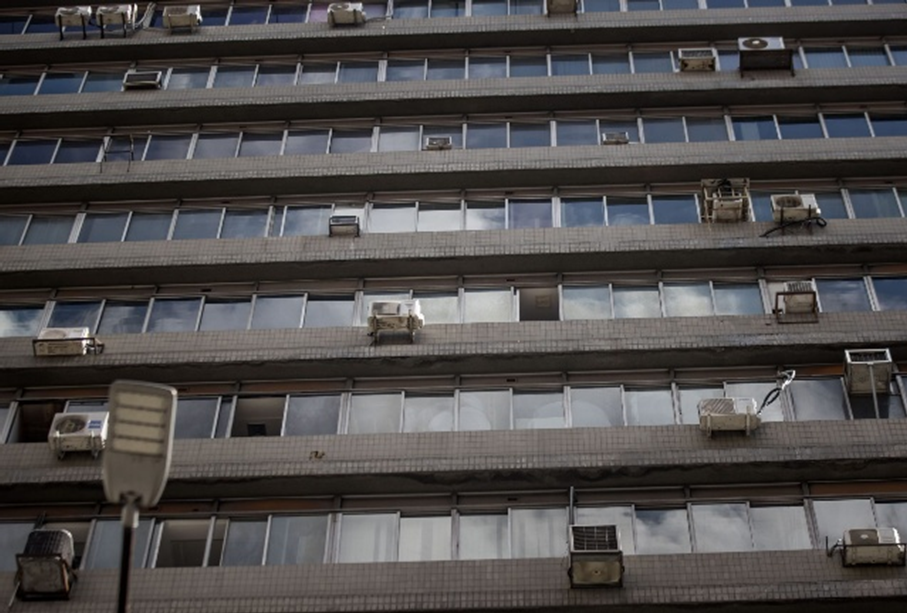
Latin America’s air conditioning boom looks modern, but its moral geography is old. The first people to cool down are usually those already protected by money, wiring, formal housing, and stable billing. The last are the elderly in crowded homes, street vendors, domestic workers, families in informal settlements, and rural communities where the grid is fragile or absent. Heat does not strike equally. Cooling does not arrive equally either.
The WHO’s warning is blunt: air conditioning can be unfair and unaffordable for low-income households, raise electricity demand, increase blackout risks, encourage overcooling, weaken heat acclimatization and feed both urban heat islands and climate change. In Latin America, that chain reaction has a particular edge. Cities such as São Paulo, Mexico City, Buenos Aires, Guayaquil, Barranquilla, and Monterrey already reveal how concrete, asphalt, and inequality trap heat differently from one district to the next.
A wealthy household can cool three rooms and complain about the bill. A poor household may run an old, inefficient unit for a few hours, then ration the rest of the night. In some places, the unit itself may be obsolete, imported cheaply, or resold into the region because stronger markets rejected it. The notes describe Latin America as a historical dumping ground for inefficient equipment and outdated refrigerants. That is not only a consumer problem. It is a development problem, one tied to trade, regulation, and the long afterlife of unequal globalization.
The commercial sector adds another layer. Hotels, malls, restaurants, clinics, and retail chains are driving demand in urban centers. Cooling is part of the promise of modern consumption. It keeps tourists comfortable, medicines stable, workers functional, and food safe. But every cooled lobby radiates heat elsewhere. Every compressor depends on a grid that may still run partly on fossil fuels. The private comfort of one building can become the public burden of a hotter street.
World Resources Institute estimates that without a faster shift toward clean energy, global cooling systems could generate 6.1 billion tons of carbon dioxide emissions per year by 2050, nearly a fifth of global emissions in many scenarios. For Latin America, the danger is not simply more machines. It is more machines attached to weak policy, dirty power, leaky buildings, and social exclusion.

The Politics of a Cooler Room
Governments are not blind to this. Brazil’s Ministry of Mines and Energy has implemented stricter minimum energy performance standards, pushing the market toward inverter systems that use less power than older models. Central American countries have moved to harmonize efficiency rules for inverter air conditioners. Split and room units still dominate, but the direction is clear: the region is trying to cool itself without cooking the future.
The question is whether policy can move as fast as heat. Inverter models are more efficient, but they often cost more upfront. Passive cooling can reduce demand, but it requires planning that Latin American cities often failed to do when they expanded rapidly. Reflective surfaces, shade trees, green roofs, better ventilation, and climate-adapted architecture are not boutique environmental ideas. They are public health infrastructure.
Manuel Ruiz de Adama, a researcher at the University of Córdoba, put the dilemma plainly in a recent briefing cited in the EFE material. The debate is not about air conditioning, yes or no, he explained, but about how to match existing building needs with systems that are as environmentally respectful as possible. That framing fits Latin America better than imported scolding. A family in a sweltering apartment does not need a sermon about carbon. It needs safe cooling, fair prices, and a building that does not become an oven by noon.
The WHO suggests combining shade with air conditioning and cool or green roofs to make cooling more energy-efficient and environmentally sustainable. WRI argues that passive cooling is essential as heat waves become longer, more frequent, and more intense. These ideas may sound technical, but they are really about dignity. Shade at a bus stop is dignity. A roof that reflects heat is dignity. A schoolroom where children can learn in March heat is a dignity.
Latin America’s cooling future will be decided in ministries, markets and kitchens. It will depend on whether governments block inefficient imports, whether utilities can handle peak demand, whether banks finance better units, and whether urban leaders plant trees in poor neighborhoods, not only pretty avenues. It will also depend on culture. For generations, many families endured heat as fate. Now they increasingly see relief as a right.
That right comes with a bill. Someone pays for it through electricity charges, taxes, infrastructure investment, or emissions. The fairest answer is not to deny cooling to those who need it most. It is to make cooling cleaner, smarter, and less dependent on desperate last-minute consumption. Latin America is buying air conditioners because the heat has become intimate. The next test is whether it can build cities where survival does not require every window to hum.
Also Read: Trinidad’s Quake-Raised Coast Turns Fool’s Gold into Warning Signs Today