Peruvian Suspect Extradited in Women’s House of Horror Livestream Murders
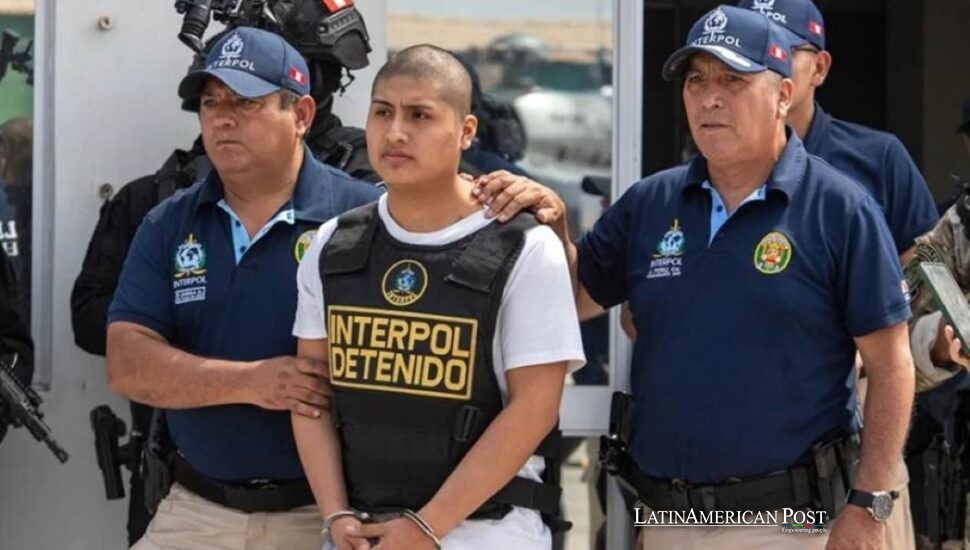
The extradition of Pequeño J puts a brutal Florencio Varela killing back before Argentina, where three young victims, a suspected drug message, and an alleged livestream forced a country to stare at femicide through the lens of organized crime.
The House Where Three Girls Vanished
They disappeared on September 19, 2025, after a promise that sounded cheap, dangerous, and ordinary enough to be believable: $300 to attend a party. Brenda del Castillo and Morena Verdi were 20. Lara Gutiérrez was 15. Reports say they were taken by van to a house in Florencio Varela, a suburb outside Buenos Aires, the kind of place where the capital’s noise thins into working-class streets, patched walls, backyard fences, and secrets that neighbors later replay in their minds.
Five days later, their bodies were found in the backyard.
By then, the case had already left the language of a missing-person search and entered a darker realm. Argentine authorities described torture, killing, and burial. The notes say the young women were beaten, mutilated, suffocated, and buried at the property. Investigators later said the crime was linked to an international drug trafficking gang and may have been intended as a warning, after one of the victims was accused of stealing a small package of drugs.
That alleged motive does not explain the crime. It exposes the cruelty of the world around it. In narco logic, a small accusation can become a death sentence. A body can be turned into a billboard. A girl’s terror can be used to discipline people who are still alive.
Now the man accused of being the mastermind, Tony Janzzen Valverde Victoriano, known as Pequeño J, has arrived in Argentina after being extradited from Peru. He is 20 years old, Peruvian, and accused of aggravated homicide with premeditation, cruelty, treachery, and gender violence. Argentina’s National Security Ministry said he landed Monday at the El Palomar air base, outside Buenos Aires, under a strict security operation.
Earlier that morning, Peruvian authorities had handed him over to Argentina’s Federal Police at a police air base in Callao, near Lima, before he was flown out from Jorge Chávez airport. That route, from the Peruvian coast to an Argentine air base, shows how quickly this case outgrew one neighborhood, one police file, one country.

A Crime Built as a Message
The details are difficult because they should be difficult. True crime often turns horror into rhythm, but this case resists entertainment. Brenda, Morena, and Lara were reportedly lured into a vehicle with the promise of payment. They were driven to a house. An examination concluded they were killed hours later. Their remains were found on September 24.
Authorities say parts of the torture were livestreamed to a closed group of 45 people on social media, though Meta has stated there is no proof that the livestream took place on Instagram. That uncertainty matters. But the allegation itself has become part of the terror of the case because it suggests violence staged not only to kill, but to be witnessed.
In the old underworld, a body left in a street could send a message. In the digital underworld, a closed group can become an alley. The audience does not need to be large. It only needs to be chosen. Forty-five people, if the allegation is proven, would be enough to transform a killing into a ritual of intimidation.
Investigators reportedly learned about the alleged livestream while questioning a suspect. Cellphone signals helped lead authorities to the bodies. Six suspects had reportedly been arrested in Argentina by late September, while authorities identified Pequeño J as the alleged organizer. Peruvian police captured him on October 1 in Pucusana, a coastal district south of Lima. His alleged right-hand man, Matías Agustín Ozorio, was also reported to have been arrested in Peru in a separate operation.
The timeline carries its own chill. The girls disappeared. Their phones helped tell what they could no longer. The backyard gave up the evidence. The suspects scattered. The alleged mastermind was found not in Buenos Aires, but on the Peruvian coast.
This is where the crime becomes more than a femicide case, though it is very much that. It becomes a map of how organized crime moves through Latin America. People cross borders. Aliases travel faster than warrants. Poor suburbs become operational zones. Young women become vulnerable at the intersection of money, coercion, misogyny, and the drug trade.
A Country Marches With Its Name
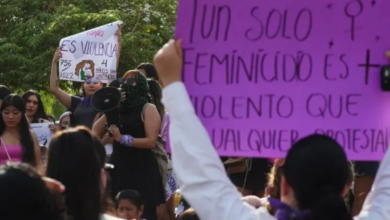
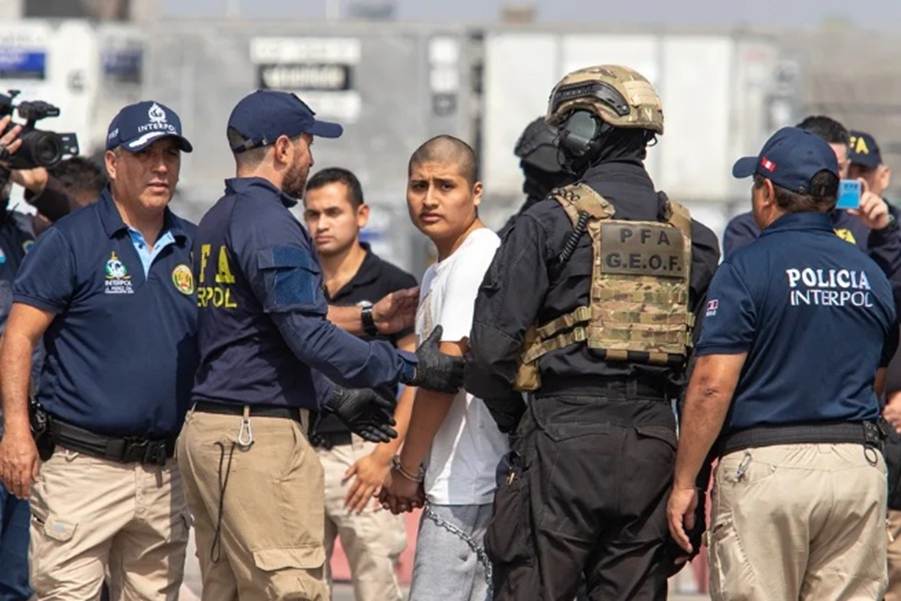
After the bodies were found, protests erupted across Argentina, especially in Buenos Aires. Marchers carried the victims’ names and photographs. Families, women’s groups, and human rights activists denounced femicide and drug violence. The country had seen terrible crimes before. It had marched before. But this case carried a particular sickness: the suspicion that the killings had been performed as punishment, and possibly shown to others as proof of power.
That is why the word femicide is not decorative here. It matters that the victims were young women and a girl. It matters that violence against them was used, reportedly, as public criminal language. In Latin America, women are too often made to carry the messages of men: revenge, ownership, humiliation, debt, and territorial control. Their bodies become the place where gangs, lovers, bosses, traffickers, and institutions write their threats.
Argentina’s women’s movements have spent years insisting that these deaths are not isolated tragedies. They are part of a pattern. The Florencio Varela case makes it even harder to separate that pattern from organized crime. It suggests that gender violence and narco violence are not parallel emergencies. They can become the same machine.
The extradition of Pequeño J gives Argentina a suspect to prosecute, but it does not give the country closure. A courtroom can establish responsibility. It can test evidence. It can hear defense arguments. It can separate allegation from proof. But it cannot restore the lives taken in that house, and it cannot by itself answer why three young people could be drawn into danger so easily.
The answer sits in the region’s exposed places. In the outskirts where jobs are scarce. In the informal promises that sound like survival. In the trafficking networks that use teenagers as bait, labor, girlfriends, messengers, witnesses, scapegoats, or warnings. In states that often arrive after the burial.
For Peru, Argentina, and the wider region, this case is a border alarm. Cooperation worked enough to capture and extradite a suspect. But the deeper challenge is preventing criminal networks from using regional mobility better than governments use regional justice.
The plane that carried Pequeño J to Argentina closed one escape route. It did not close the wound. Brenda del Castillo, Morena Verdi, and Lara Gutiérrez were not rumors, hashtags, or cautionary tales. They were young lives pulled into a house and never allowed to leave it. The rest is now evidence, grief, and a region forced to look.
Also Read: Why Latin America Still Marches When May Day Comes Around