Venezuela Buries the Nameless as Quake Grief Outruns the State
In La Guaira, Venezuela’s earthquake dead are filling emergency graves before many families get answers, turning a municipal cemetery into a ledger of loss, suspicion and survival after twin June 24 quakes devastated the coast and shook the nation’s trust.
A Cemetery Learns to Count
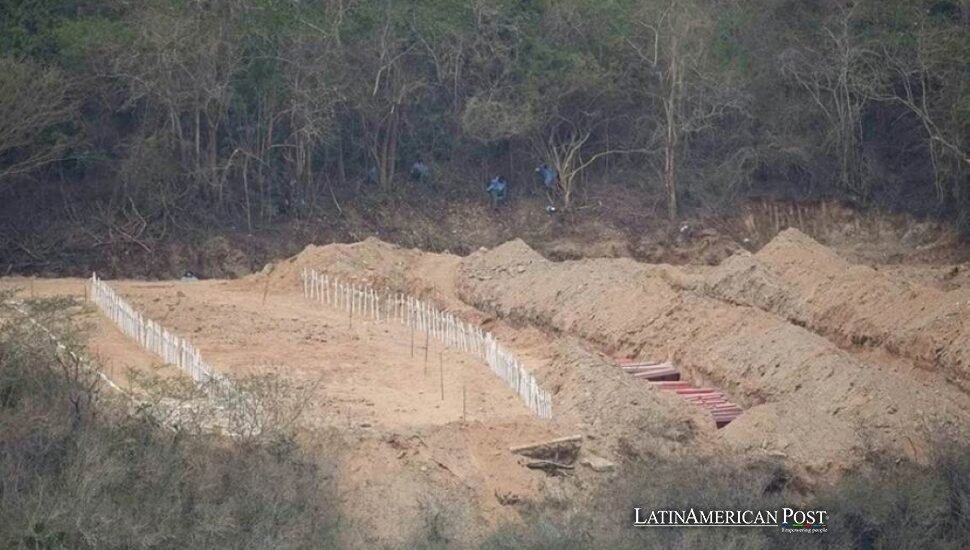
From a hamlet above the municipal cemetery known as La Esperanza, the new graves looked less like a resting place than a hastily opened frontier. Fresh trenches cut into a hillside. Coffins placed side by side. White crosses waiting under a tarp, then planted in the soil like punctuation marks after lives the state still had not named.
Witnesses in La Guaira told EFE they had seen trucks moving toward the cemetery for days. One cemetery worker, who requested anonymity, told EFE that three vehicles arrived Monday carrying about 30 bodies. The dead, he said, came without identification, but each was buried in a coffin marked by a white cross.
Between Saturday, June 27, and Wednesday, July 1, the worker estimated that about 10 trucks with bodies had arrived. By his count, at least 800 people may have been buried there. That figure is not an official tally, but it matters because disasters are often first understood by those who sweep, dig, carry, and watch. In Latin America, the unofficial witness is sometimes the first archive.
The official numbers are already staggering. Venezuela’s National Assembly president, Jorge Rodríguez, said Monday that the June 24 twin earthquakes, measuring magnitudes 7.2 and 7.5, had killed 3,535 people and injured 16,740. The death toll has been rising by 200 to 300 a day as bodies emerge from collapsed buildings. Behind each increase is a family that already knew, feared, or refused to accept what the number confirmed.
The Dead Without Names
The deepest wound in La Guaira is not only death. It is death without identification, death without a last touch, death processed faster than grief can follow. At La Esperanza, EFE observed from a nearby settlement as authorities worked across a wide tract of newly prepared ground. Several dozen trenches had been dug. The area appeared large enough to hold thousands more coffins.
By early afternoon, municipal police blocked media access to the cemetery, telling EFE that permission from the armed forces was required. That detail carries weight in a country where information has long been treated as a controlled resource. In emergencies, opacity becomes more than a political habit. It becomes another burden placed on mourners.
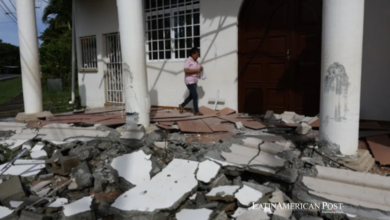
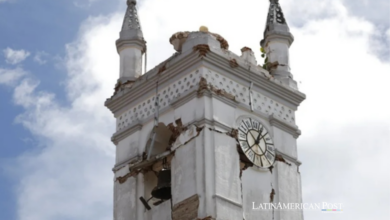
The data tell a story of scale and strain. Authorities have reported 856 damaged buildings and 190 collapsed structures. More than 17,300 people lost their homes, with 10,702 housed in 79 temporary camps. Those numbers show a disaster concentrated enough to destroy neighborhoods, but broad enough to exhaust the institutions meant to respond. La Guaira, already shaped by steep terrain, fragile infrastructure and memories of past coastal catastrophe, has become the country’s epicenter of loss.
There are also foreign dead and missing, a reminder that Venezuela’s crisis is never only Venezuelan. Spain’s Foreign Ministry reported 35 Spanish citizens killed, 140 missing and 11 found under rubble. Portugal confirmed 95 citizens dead, including 17 minors, and 58 still missing. Migration, return migration and family networks have made Venezuela’s coast a place where grief travels across the Atlantic.
The citizen initiative “Desaparecidos Terremoto Venezuela” has registered more than 31,000 people who have not been contacted. That does not mean all are dead or buried. Communications failures, displacement, and chaos inflate uncertainty. But the figure reveals the emotional geography of the quake: thousands searching names, faces, phone numbers, and rumors, while the ground keeps giving up bodies.
Rescue Gives Way to Memory
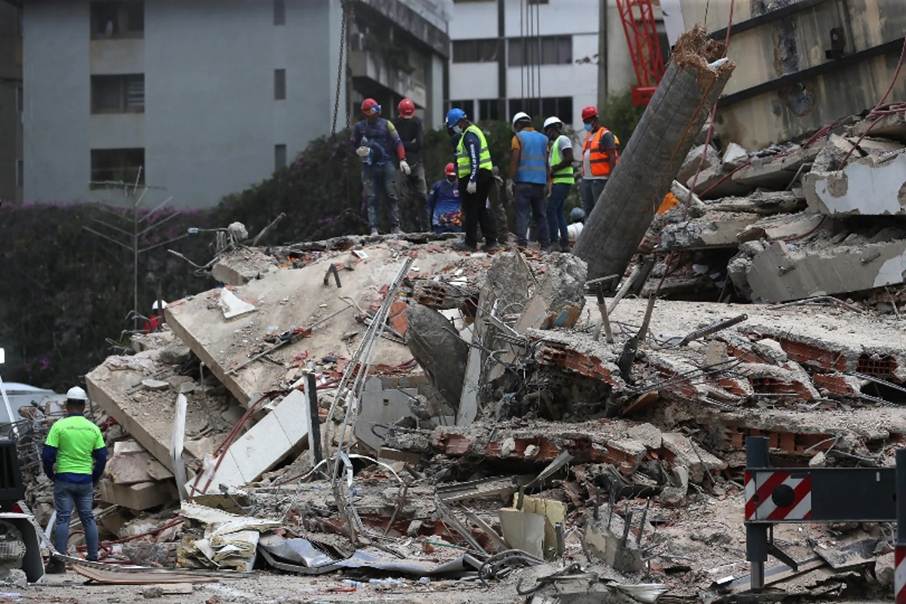
The rescue phase is fading. That is the brutal physics of time. The security forces and the army have 29,567 personnel deployed in the disaster zone, while 27,482 volunteers are assisting with essential tasks. Yet the large international teams have begun withdrawing. According to the United Nations Disaster Assessment and Coordination team, the last known survivor rescued by international teams was Hernán Gil, a security guard pulled out on July 2 after eight days under rubble. In all, international teams saved 14 people.
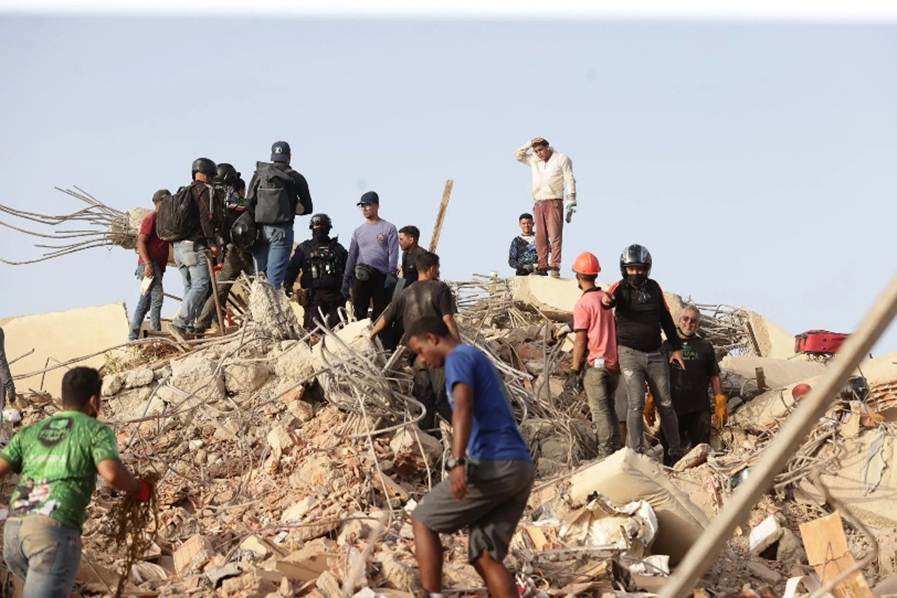
Now, in the collapsed buildings of La Guaira, many of those still digging are Venezuelans: relatives, neighbors, volunteers, people using grief as fuel. They lift debris because they have no other ritual available to them. They wait around ruined buildings because leaving would feel like abandonment. They search for bodies because, in much of Latin America, burial is not administrative closure. It is a sacred return to the community.
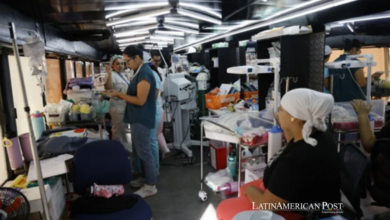
The humanitarian response is large but uneven. The United Nations says 25 of the 77 international teams that arrived from 31 countries remain active, while coordination has been handed over to Venezuelan Civil Protection. The government says 4,088 international rescuers are still in the country. Colombia deployed a field hospital, and Admiral Ricardo Hurtado, deputy director for disaster management, told EFE that the mission coordinated by Colombia’s disaster risk agency would operate for two and a half months. Argentina sent replacement rescue brigades. Mexico dispatched two naval vessels from Veracruz carrying 2,003 cubic meters of humanitarian aid. Panama City Mayor Mayer Mizrachi told EFE he was tracking aid donations sent to Venezuela, including the final aircraft carrying 16 tons of basic goods, so citizens could receive an accounting of their efforts.
That last word, accounting, is central. Disasters test concrete and institutions alike. They expose which buildings were weak, which agencies were prepared, and which neighborhoods were already living too close to danger. They also test whether the state can count its dead honestly, preserve their identities, and give families enough truth to mourn.
Nearly 1,000 aftershocks have followed the two great quakes, according to government figures, with more than a dozen small tremors reported in the previous 24 hours by Venezuela’s seismological foundation. The earth is still unsettled. So is the country.
At La Esperanza, the white crosses stand for the unnamed, but also for a national question. In a society worn down by economic collapse, migration, political mistrust, and daily improvisation, can the dead be treated as citizens rather than statistics? Venezuela’s recovery will not begin with cleared roads or reopened classrooms alone. It will begin when families are told who lies beneath each cross.
Also Read: La Guaira Quake Turns Deportation Flight Into Venezuela’s Cruelest Homecoming