Brazil’s Bolsonaro Family Learns Washington Is No Supreme Escape Hatch
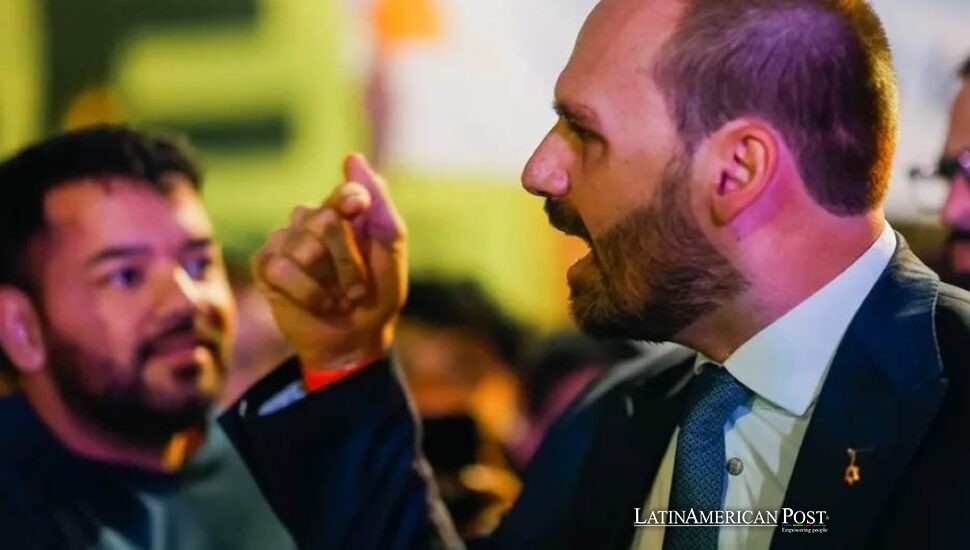
Eduardo Bolsonaro’s conviction for lobbying Washington over his father’s coup case turns a family legal drama into a sovereignty test, exposing how Brazil’s far right now fights at home, abroad, and inside the fragile machinery of democracy in Latin America.
A Family Trial Becomes a Sovereignty Case
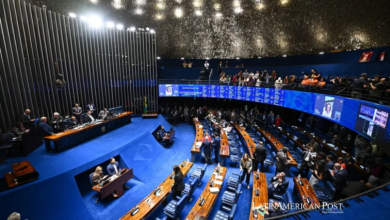
Brasília did not need smashed glass or chanting crowds this time. The confrontation arrived in the form of videos, filings, diplomatic pressure, and an empty chair. On Tuesday, the First Chamber of Brazil’s Supreme Court unanimously convicted former congressman Eduardo Bolsonaro, son of former President Jair Bolsonaro, of obstruction of justice for lobbying the United States to impose sanctions against Brazil. The four justices agreed on four years and two months in prison, plus 50 daily fines, each calculated at two minimum wages, bringing the penalty to more than $30,000. The numbers matter. The term is far smaller than Jair Bolsonaro’s 27-year sentence for plotting a coup after his 2022 defeat, but it lands on the family’s next generation. The fine is modest in national politics, yet symbolically exact. In a country where the minimum wage still measures survival, converting foreign pressure into wage-based punishment was not empty accounting.
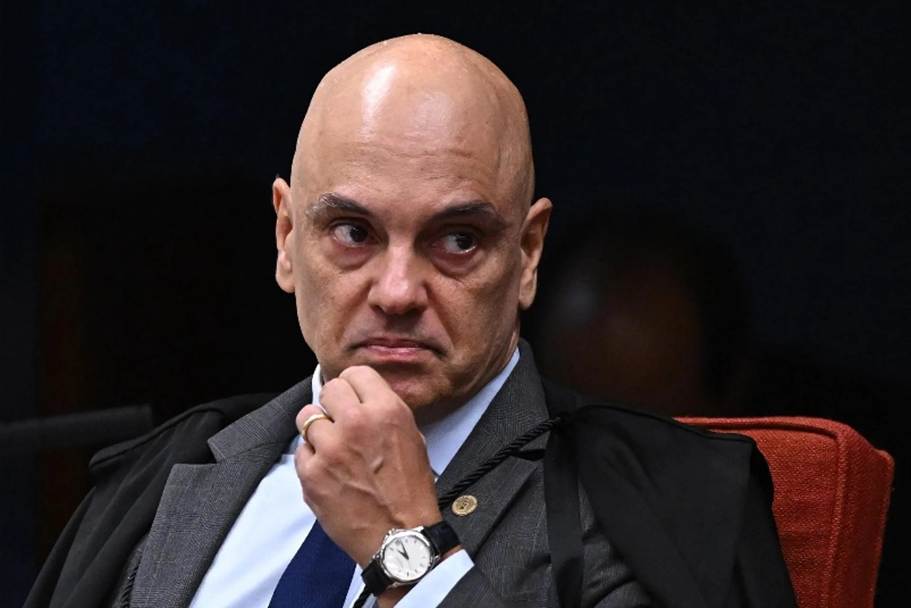
Justice Alexandre de Moraes, presiding over the case, said Eduardo Bolsonaro admitted traveling to the United States in 2025 to lobby for sanctions against the judges prosecuting his father, aiming to prevent a possible conviction. Moraes showed videos in which the former congressman described his efforts in Washington. “The threats materialized in the form of sanctions against justices of this Court, against the Attorney General of the Republic, and against Brazil, through tariffs,” Moraes said.
The Price of Importing Pressure
Eduardo Bolsonaro was not in the courtroom. He has remained in the United States since moving there in February 2025, giving the trial its strange, modern texture. The defendant was absent, but his project was not. His words were present on screens. His court-appointed lawyer, public defender Esdras dos Santos Carvalho, argued that the former congressman had merely engaged in “political dialogue” with the U.S. government, according to EFE.
Carvalho said Bolsonaro had “no decision-making power over U.S. foreign policy” and had not used violence or serious threats, circumstances he argued were required for coercion. It was a clean argument. But the justices rejected it because they saw the victim not as an individual judge, but as the judicial system itself.
That distinction matters. The court’s message was that coercion in the 2020s does not need tanks at dawn. It can arrive as sanctions, tariffs, viral clips, and a son with foreign allies. Washington imposed sanctions on Brazilian Supreme Court justices involved in Jair Bolsonaro’s case, while the U.S. government also linked tariffs on Brazil to proceedings Donald Trump described as a “witch hunt.”
For Brazil, this is not abstract talk about sovereignty. Tariffs land in ports, factories, supermarkets, and paychecks. Sanctions imposed on judges are read in Brasília, but they echo where politics is heard as dignity rather than doctrine. Eduardo Bolsonaro’s defense framed him as a speaker. The court framed him as a broker of pressure. Between those two images sits the future of Brazil’s right.
A Regional Warning From Brasília
The conviction exposes a tactical problem for Bolsonarismo. The movement has long thrived by saying institutions are captured and illegitimate. Yet every legal defeat creates a fork. It can deepen martyrdom politics or narrow the movement’s appeal among voters tired of a permanent crisis. Jair Bolsonaro’s sentence made him a prisoner of his own myth. Eduardo’s conviction risks making the family look less like rebels and more like a dynasty outsourcing its losses.
The decision comes as Eduardo’s brother, Senator Flávio Bolsonaro, is a presidential candidate and heir to the family machine. That makes Tuesday’s ruling campaign terrain. Lula’s camp will present it as proof that democracy defended itself after the 2022 rupture. The Bolsonaro camp will call it persecution. Both readings will find believers, because Brazil’s electorate is not merely polarized. It is exhausted, suspicious, and trained by scandals, impeachment battles, recession, pandemic grief, and street-level anger to distrust easy virtue.
The deeper Latin American lesson is older. For two centuries, the region has lived with the shadow of foreign pressure, from gunboat diplomacy to Cold War alignments to debt negotiations with moral lectures attached. Brazil is not a small state on the margins. It is the continent’s largest economy, a diplomatic weight in the Global South, and a cultural universe of its own. When a Brazilian political actor seeks outside punishment against Brazilian institutions, the act carries a historical charge.
That is why this case will travel beyond Brasília. In Latin America, the hard right has learned to speak a shared language of anti-communism, religious grievance, security panic, and anti-court fury. The left often underestimates how deeply those themes resonate, where the state is experienced as a slow line, a bad hospital, a violent police stop, or a missing job. A court can punish Eduardo Bolsonaro. It cannot, by sentence alone, repair the distrust that made his strategy plausible.
Still, the ruling draws a line. Brazil’s future politics will be fought not only over Lula’s popularity or Flávio Bolsonaro’s surname, but over whether electoral defeat can be converted into an international pressure campaign. Latin America will be watching because the template is portable. Lose at home, claim persecution, seek allies abroad, punish the referees. On Tuesday, Brazil’s Supreme Court answered with a conviction, a prison term, a fine, and a warning that democracy cannot survive if players treat sovereignty as just another campaign expense.
Also Read: Venezuela Gang Strike Shows Crime Now Crosses Every Border Line