Ecuador Bets on Curfew Politics as Cartels Move in Shadows
Ecuador’s expanded nighttime curfew is being sold as a strike against criminal gangs. Still, its deeper test is whether a state battered by homicide, displacement, and narco-routes can reclaim public life without normalizing emergency rule across Latin America’s fragile democracies.
Night Falls Earlier in Ecuador
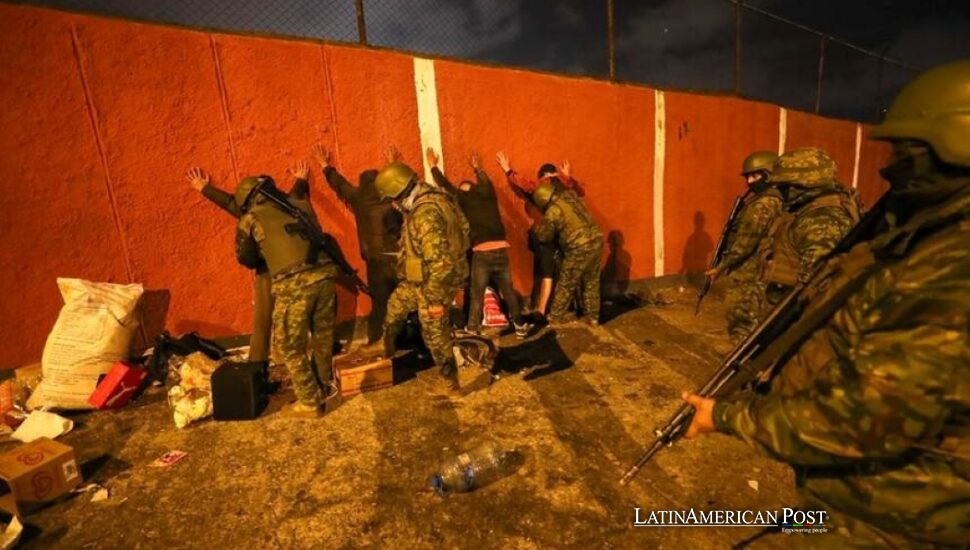
By Sunday night, Ecuador had entered another kind of darkness. Not the ordinary night that comes over Guayaquil’s port, Quito’s hills, or the humid roads leading toward Colombia and Peru, but the official kind, measured by decree, enforced by soldiers, and announced as a necessary answer to a country that has watched violence climb beyond recognition.
For fifteen days, until May 18, the government of President Daniel Noboa imposed a nighttime curfew from eleven at night to five in the morning across nine of Ecuador’s twenty-four provinces, plus selected municipalities elsewhere. The sweep is large enough to feel less like a targeted measure and more like a map of national anxiety. Guayas, Manabí, Santa Elena, Los Ríos, Santo Domingo de los Tsáchilas, Pichincha, El Oro, Sucumbíos, and Esmeraldas now live under the restriction, along with La Maná, Las Naves, Echeandía, and La Troncal.
The geography tells its own story. These are not random places. They include Ecuador’s two largest cities, Quito and Guayaquil. They include provinces bordering Colombia and Peru. They include corridors that officials consider crucial to narcotrafficking routes. According to government figures cited in the notes, these territories account for 90 percent of the country’s violence and 86.70 percent of its registered crime. In other words, the curfew is not merely about empty streets. It is about control over the arteries of the state.
The government says the logic is operational. Police and soldiers began leaving their barracks hours before the curfew, moving with armored vehicles toward city streets and highways. Their task was to stop anyone without authorization, inspect vehicles, search for weapons and explosives, and identify people wanted by justice authorities. In Guayaquil alone, twenty-five checkpoints were installed. In Quito, police set up 17 and said they hoped to affect about 40 criminal profiles during the 15 days.

A State Chasing a Moving Enemy
This is not Ecuador’s first curfew of the year. Noboa used the measure between March 15 and March 30 in Guayas, El Oro, Los Ríos, and Santo Domingo de los Tsáchilas. The government later reported that homicides fell nationally by twenty-eight percent in March and that at least 1,283 people were captured in the intervened territories. Yet the same official account carries the weakness inside the victory. Most of those detained were arrested for violating the mobility restriction, not necessarily for belonging to the criminal structures driving the crisis.
That distinction matters. Latin America knows the difference between visible enforcement and structural power. A checkpoint can slow a motorcycle, seize a weapon, frighten a lookout, or reassure a frightened neighborhood for a night. It cannot, by itself, dismantle the logistics, prison networks, port corruption, money laundering, recruitment pipelines, and territorial economies that allow gangs to regenerate after every raid.
Ecuador’s own security forces reportedly detected this problem after the first curfew. They did not see “structural neutralization,” but rather a displacement of criminal activity to areas where movement remained normal. That sentence is the heart of the dilemma. The gangs moved. The state followed. Now the curfew has expanded.
This is why the measure feels both understandable and incomplete. In neighborhoods where families have learned to read gunfire the way farmers read weather, any reduction in homicides can feel like oxygen. A mother closing a shop before dark may not care whether criminologists call the policy sustainable. She wants her son home. She wants the bus terminal open long enough to return from a holiday weekend. She wants the street to belong, for a few hours, to ordinary people again.
But emergency measures come with their own memory in Latin America. Curfews have a history. Military patrols have a history. The sight of armored vehicles at dusk has a history. In countries where the state has too often arrived in uniform before it arrived with schools, courts, jobs, or clean institutions, security policy is never only security policy. It also becomes a question of citizenship. Who is protected? Who is searched? Who is presumed suspicious? Who gets to move?

The Regional Warning Inside the Curfew
Ecuador’s crisis is no longer just an Ecuadorian story. It is a regional warning. The country sits between Colombia and Peru, two historic cocaine-producing centers, and its ports, roads, and border provinces have become strategic terrain for criminal organizations fighting over routes, markets, and influence. The notes point to Los Lobos, described as the country’s largest criminal gang, and Los Choneros, its oldest, locked in disputes for control of zones in Quito where drugs are sold. That detail is chilling because it places the conflict not only in ports or borderlands, but inside the capital’s urban fabric.
For Latin America, the lesson is stark. Organized crime now behaves regionally, while many states still respond nationally, province by province, curfew by curfew, raid by raid. Criminal economies cross borders with the logic of business. They search for weak ports, vulnerable prisons, frightened neighborhoods, corruptible officials, and young men with few options. Governments, meanwhile, face pressure to prove strength quickly, especially after homicide records and public fear become political facts.
Ecuador closed 2025 with 9,269 homicides, according to the notes. That number is not just a statistic. It is a rupture in national self-image. Ecuador was once spoken of as relatively peaceful compared with its neighbors. Now, its crisis is measured in military deployments, mass fear, cartel-style violence, and a president betting heavily on emergency authority.
The political risk is that a curfew can become a symbol easier to repeat than to solve. It offers visible action. It produces images of soldiers, checkpoints, and quiet streets. It may even reduce killings temporarily. But if the deeper networks remain intact, the violence waits, adapts, or relocates. Then the state faces pressure to expand the exception again.
What Ecuador needs, and what Latin America should watch closely, is whether this curfew becomes a bridge to institutional recovery or a substitute for it. The difference is everything. A bridge would mean intelligence-led operations, judicial capacity, prison control, anti-corruption pressure, regional coordination, protection for civilians, and economic alternatives in places where gangs recruit from abandonment. A substitute would mean more nights under orders, more soldiers in the streets, more fear managed rather than resolved.
For now, Ecuador is moving through the dark with armored headlights and official urgency. The government says it is tightening the circle around criminal bands. Many citizens may hope it succeeds because the alternative is unbearable. But the deeper question remains open across the Andes, the Pacific coast, and the wider Latin American map: can a democracy at war with organized crime defend life without teaching its people that normal life only returns when rights are suspended?
Also Read: Latin America’s Far Right Turns Feminism Into Its Favorite Enemy