Peru’s Bus War Turns Election Into a Fight for Survival
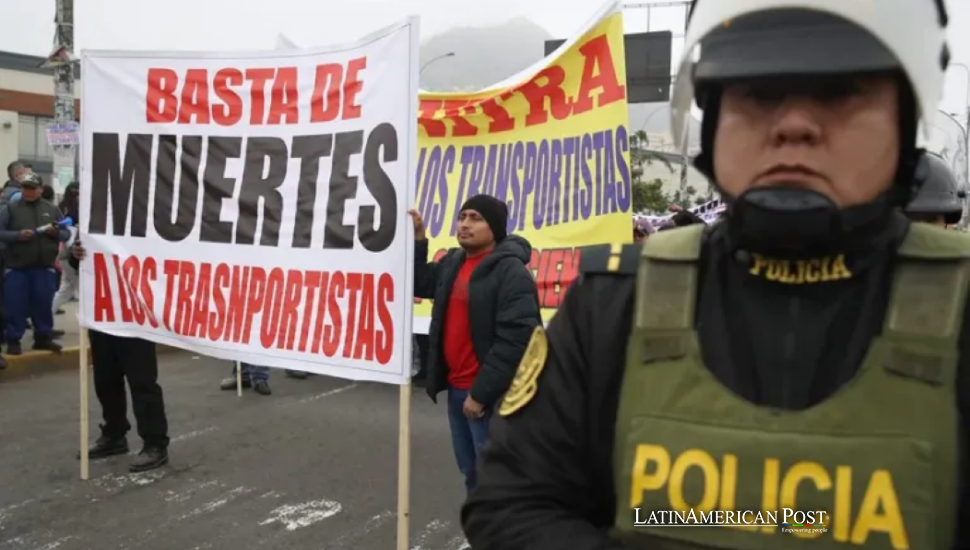
Peru’s crime wave has made Lima’s buses moving targets, turning extortion, homicide, and political paralysis into the defining test for voters choosing between Keiko Fujimori and Roberto Sánchez on June 7, with Latin America watching closely for answers and stability.
The Route Now Runs Through Fear
The men who keep Lima moving have learned to speak softly. Not because they have nothing to say, but because saying too much can get a person killed. On the city’s bus routes, where drivers once worried about traffic, fuel prices, and the daily grind of informal work, another calculation now rides beside them: who is watching, who is collecting, who might shoot.
Peru’s next president, to be chosen Sunday, June 7, between right-wing candidate Keiko Fujimori and leftist Roberto Sánchez, will inherit a country where public insecurity has hardened into the central political fact. According to EFE’s reporting, quotes, and interviews, the crisis has struck with particular cruelty in Lima’s urban transport sector, especially among the informal operators that carry much of the capital’s working class.
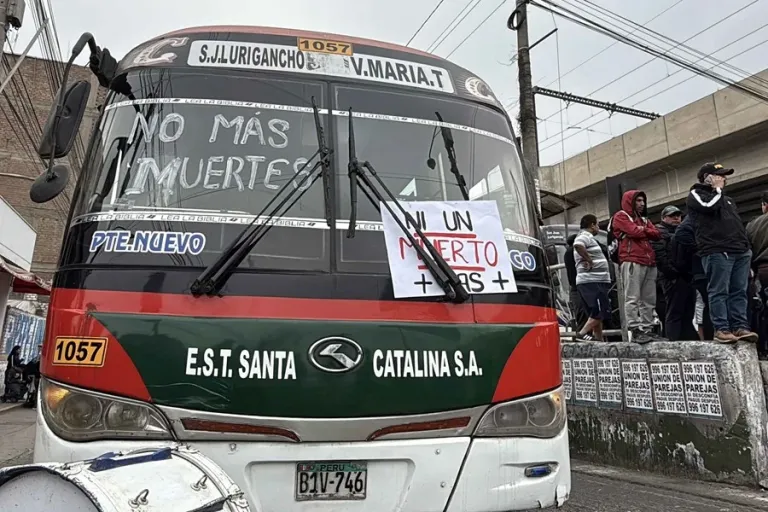
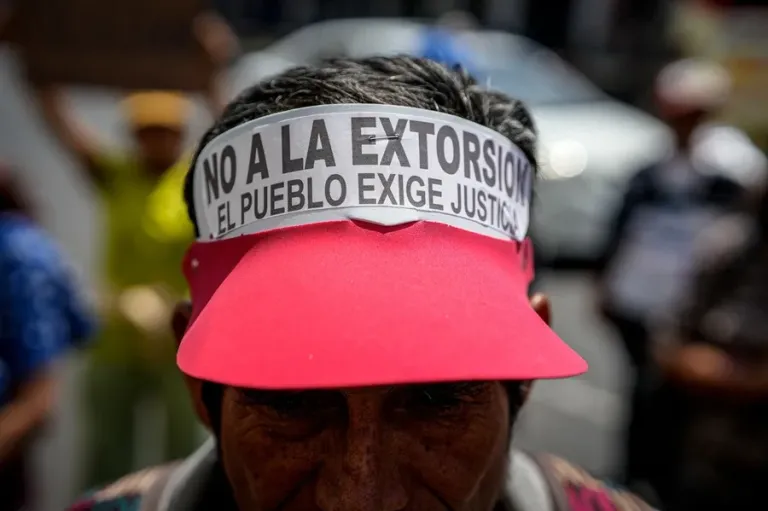
In the past two years, criminal bands have expanded extortion across popular neighborhoods, demanding payments from businesses, transport companies, and local operators under threats of death. The result is not only fear. It is blood. Between August 2024 and December 2025, Lima and neighboring Callao recorded 93 killings linked to public transport. The informal sector, which represents more than 70 percent of all transport activity, has been especially exposed.
That number is more than a police statistic. It is a map of state absence. It tells passengers that the bus stop is not just a place to wait for work, school, or home. It is part of a contested economy where criminal organizations tax the movement itself.
“Things are very difficult,” a transport representative who requested anonymity told EFE. “All the leaders are threatened. We cannot show our faces as if nothing were happening. They are killing those who report.”
In another country, such a sentence might sound like wartime testimony. In Peru, it has become campaign-season background noise.
Extortion Becomes a Daily Fare
The transport worker, identified as J.C., went with colleagues to a police station in central Lima to demand that authorities not release one of the alleged leaders of a group of police called Los Gallegos de Huacho. The organization, he said, has extorted them for months. His anger was not theatrical. It was the anger of a man who believes the machinery of law has become too slow, too compromised, or too frightened to protect ordinary people.
“We are completely abandoned,” J.C. told EFE. “While the government ignores us and does not listen, the population keeps bleeding, continues suffering extortion, and there is no political will to repeal the pro-crime laws.”
Those so-called “pro-crime” laws, approved in Congress with support from Fujimorismo and other conservative forces, have become a bitter phrase among transport workers and critics of Peru’s security policy. The accusation is not that lawmakers openly favor criminals. It is that legal changes meant to fight crime have weakened investigations, complicated prosecutions, or created loopholes that criminal groups exploit faster than the state can close.
J.C. described demands that begin with initial payments of 50,000 soles (about $14,700), followed by monthly or even daily fees. Those threats may come with bombs sent to homes or workplaces. The message is primitive and precise. Pay or mourn.
“We are tired of them continuing to kill us,” he said. “They no longer steal a cellphone. They have become organized bands of extortionists.”
This is where Peru’s crisis becomes larger than a policing problem. Extortion has become a parallel fiscal system. Criminal groups collect revenue from bus companies, shopkeepers, construction crews, market vendors, and anyone who cannot afford private security. In poor districts, it resembles a tax imposed by violence. In economic terms, it raises the cost of doing business. In social terms, it destroys trust. In political terms, it makes the elected state look optional.
The repeated states of emergency declared since 2024 have not stopped the killings. Transport strikes have shut down routes and exposed workers’ desperation, but they have not forced a durable state response. Emergency rule in Peru has become almost ritualized: soldiers on the streets, police operations, order speeches, then another body.
Latin America knows this pattern well. Governments under pressure reach for militarized security because it is visible and fast. But gangs often survive the spectacle. They adapt to curfews, bribe local actors, move through prisons, and exploit the same informality that allows millions to earn a living outside formal protections.
Peru’s problem is sharpened by its own political instability. Years of presidential turnover, congressional confrontation, corruption scandals, and distrust have hollowed public faith. Crime expands in that hollow. It does not need to defeat the state everywhere. It only needs to convince citizens that calling the state will not save them.
Two Ballots, One Broken State
Fujimori has placed “recovering citizen order” at the top of her platform. Her proposal leans heavily on force and technology: more motorized and aerial patrols with GPS-enabled drones, military and police operations at the Ecuadorian border to control organized crime, financing for 1,000 smart patrol vehicles, 10,000 interconnected cameras, and four maximum-security “mega-prisons.”
It is a message designed for a frightened country. Order first. Force now. Investment later. For voters who feel abandoned, the promise of hard power can sound like oxygen.
But Peru’s history complicates that language. The Fujimori name carries the memory of authoritarian security politics, centralization, and a bargain many Latin American societies know all too well: rights narrowed in exchange for promised safety. The danger is that a state already weak in courts, oversight, and legitimacy may become harsher without becoming more effective.
Sánchez has built his campaign around a new constitution, decentralization, and poverty reduction. On security, he has proposed restructuring the National Police and incorporating rondas campesinas, rural self-defense, and community justice groups into primary prevention efforts in rural areas.
That vision speaks to another Peru, the Peru beyond Lima, where central authority has often arrived late or not at all. The rondas campesinas have deep roots in rural self-organization, especially in Andean regions where communities created their own systems to confront cattle theft, local violence, and insurgency-era disorder. Bringing them into prevention could strengthen local legitimacy. It could also raise hard questions about coordination, due process, and uneven justice if not carefully designed.
The election is therefore not simply right versus left. It is a referendum on how a fractured country imagines protection. Fujimori offers the visible state: patrols, prisons, cameras, border operations. Sánchez offers the re-founded state: constitutional change, decentralization, police restructuring, and community prevention. Peru may need parts of both, but neither slogan alone can solve a criminal economy that feeds on informality, weak prosecution, prison networks, and political mistrust.
Geopolitically, Peru’s insecurity matters because the country sits inside a Latin American corridor of overlapping crises. Ecuador has been shaken by gang violence. Colombia’s criminal economies remain adaptive. Chile has watched public anxiety rise over organized crime and migration. Peru’s ports, informal markets, mining zones, and transport routes are not isolated. They are nodes in regional systems where money, weapons, people, and fear move faster than policy.
If Peru cannot protect its buses, the message travels. It tells criminal groups that urban mobility can be monetized through terror. It tells investors that logistics are vulnerable. It tells citizens that democracy can hold elections even as everyday sovereignty slips away, street by street.
The next president will not only govern from the palace. They will be judged at dawn, on a bus route in Lima, when a driver starts the engine and wonders whether today’s fare includes his life.
Also Read: Bolivia Roadblocks Turn Paz’s Promise into a High-Altitude Stress Test