Peru’s Overseas Ballots Turn Expat Privilege into Election Suspense Again
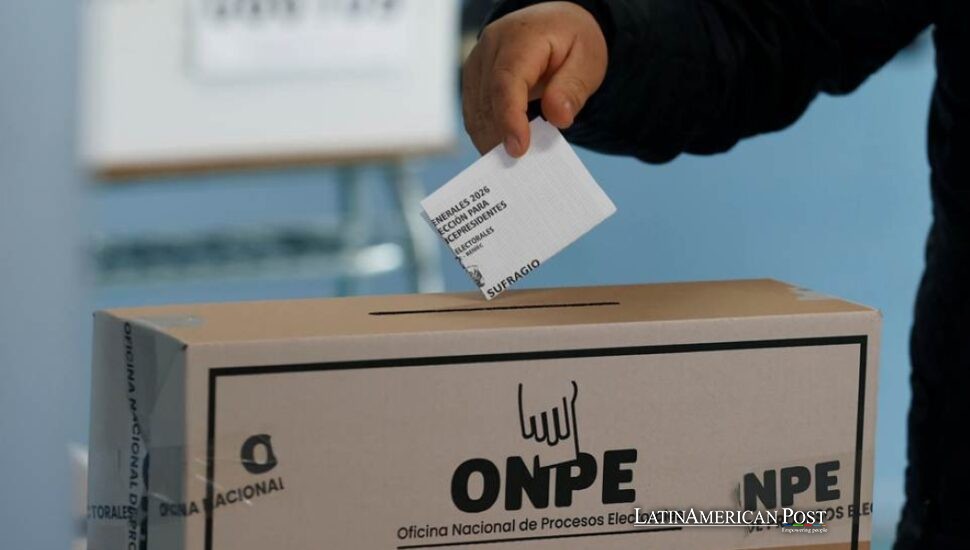
Peru’s presidential runoff may hinge on overseas ballots, isolated Amazon communities, and disputed tally sheets, raising an uneasy democratic question: how much should citizens abroad influence a country whose daily hardships they may no longer directly endure at home?
The Vote Arrives by Air
The strangest sound in Peru’s election may not be the chant outside a party office or the nervous clicking of television anchors refreshing vote totals. It may be the quiet arrival of envelopes, actas, and ballot records from abroad, coming by plane into a country that has already voted but still does not know who won.
According to EFE reporting, with 96.23 percent of the count completed, leftist Roberto Sánchez holds a thin advantage over right-wing candidate Keiko Fujimori, 50.10 percent to 49.89 percent. That is not a mandate. It is a held breath. It is a national future balanced on decimal points, river routes, signatures, missing forms, and the political preferences of Peruvians who may be watching the crisis from Miami, Madrid, Santiago, or Milan.
There is nothing illegitimate about that. Let us start there, because democracy demands it. Citizens do not cease to be citizens simply because they cross a border. Latin America itself was built by departures, exiles, remittances, forced migrations, economic escapes, and family separations that left one child in Lima, another in New Jersey, a mother in Spain, and an uncle sending dollars from Chile. The ballot abroad is a recognition of that wounded geography.
Still, it is at least strange.
Strangely, a presidential race fought over insecurity, food prices, mining taxes, rural neglect, corruption, police reform, and the exhaustion of living under one collapsing government after another could be decided in part by voters who may not ride the same buses, wait in the same clinics, face the same extortion, or watch the same local mayor make promises in the same dusty plaza.
EFE notes that 1,945 tally sheets remain pending, of which 250 correspond to votes inside Peru and 1,695 come from abroad. Another 1,550 observed or challenged tally sheets must be reviewed by special electoral juries. The foreign vote count had reached only 31 percent by Tuesday afternoon, and Fujimori was leading those valid votes by 65 percent to 34.9 percent over Sánchez. In the United States, home to the largest Peruvian community abroad, she was reportedly winning 77.8 percent, with roughly half the vote still uncounted.
That data is not neutral in its social meaning. It suggests class, geography, memory, and distance are all voting too.
Distance Has a Candidate
The overseas Peruvian electorate is not one single body. It includes domestic workers, students, professionals, restaurant staff, entrepreneurs, political exiles, undocumented laborers, and second-generation families trying to keep a passport tied to a grandmother’s kitchen. But expatriate voting populations are often uneven in terms of income, paperwork, mobility, and access. The person able to register, travel to a consulate, follow campaign news, and vote abroad is not always representative of the person waking before dawn in Puno, Loreto, Villa El Salvador, or the VRAEM.
That does not make the vote less valid. It does make the vote socially particular.
Fujimori’s apparent strength abroad is not surprising. The diaspora often leans toward candidates promising order, market confidence, and a familiar anti-left vocabulary, especially when memories of inflation, insurgency, or institutional chaos are passed down across generations. From abroad, a hardline security pitch can sound like discipline. From inside the country, it can also sound like a checkpoint, a raid, a prison policy, or the return of a family surname with a long shadow.
Sánchez’s strength, by contrast, has reportedly depended more on rural and interior votes. That is where Peru’s old fracture opens again. Lima and the exterior often speak one language of risk. The highlands, Amazon, and cocalero valleys speak another. One side fears instability and capital flight. The other fears another five years of being treated as raw material, cheap labor, or folklore brought out for campaign photography.
This is the Latin American dilemma in miniature. Migration gives families oxygen, then complicates the democratic body. Remittances pay bills in the homeland, but ballots sent from abroad can help choose policies whose direct consequences fall first on those who stayed. A Peruvian in Florida may vote with sincere love for Peru. A Peruvian farmer in Cusco votes with mud on the shoe, and the state is absent from the road. Both are citizens. Only one lives the next morning under the elected government without the buffer of another country.
That tension should not be censored. It should be admitted.
The Forgotten Actas Speak
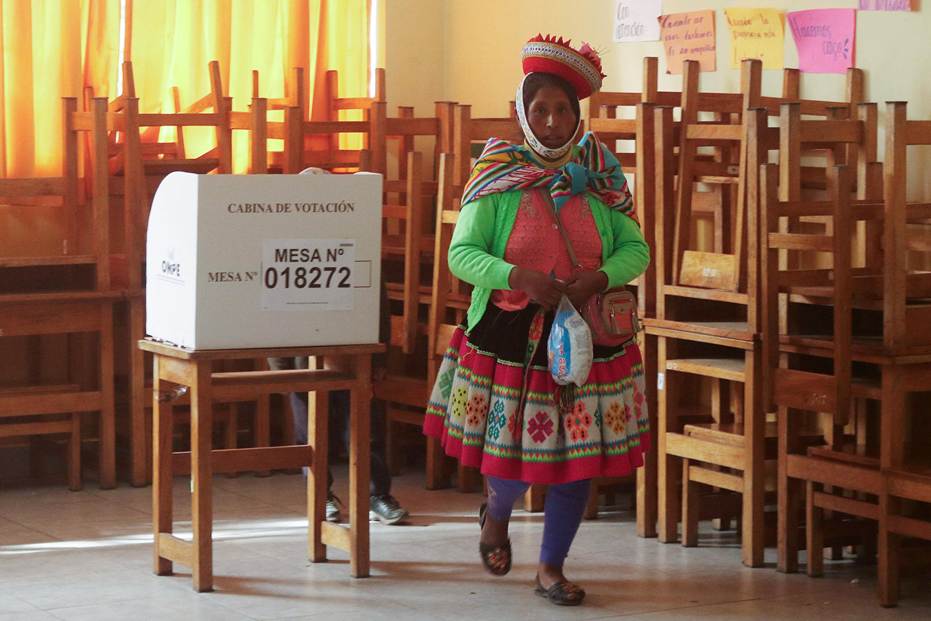
Inside Peru, EFE reports that almost all regions are near 100 percent counted, leaving mostly challenged tally sheets. However, Cusco, Loreto, and Ucayali still have pending records because geography itself resists speed. In La Convención, Cusco, about 50 tally sheets remain from districts in the Apurímac, Ene, and Mantaro river valley, Peru’s largest coca-growing basin, where the last remnant of Shining Path still operates. In Loreto, around 160 tally sheets have not been counted from remote provinces reachable only by river or air, including Datem del Marañón, Alto Amazonas, Putumayo, and Requena. Ucayali, on the Brazilian border, faces a similar delay with about a dozen pending sheets.
Those votes have a different moral texture. They come from places where the republic often arrives late, if it arrives at all. In the Amazon, democracy may travel by boat. In the Andes, it may depend on a teacher carrying civic memory through a community that has seen politicians promise roads for decades. In the coca valleys, it arrives under the double gaze of poverty and security forces.
So yes, overseas votes matter. But remote domestic votes matter in another way. They remind Peru that the country is not just Lima plus airports. It is a river, a mountain, a border, an informal economy, a mining camp, a market stall, a Quechua, a Spanish, an Asháninka, a ship engine, a military outpost, a schoolhouse, and a family WhatsApp group waiting for a result.
Then come the observed tally sheets. These are not decorative paperwork. They are democracy’s cracked pottery: illegible writing, missing signatures, numeric errors, party complaints, material inconsistencies. EFE reports that special electoral juries must evaluate each case, recount votes if necessary, issue resolutions, and allow appeals to the National Jury of Elections. Most of these observed records, 915 out of 1,550, come from Lima, where Fujimori received 63.49 percent.
That matters because a tight race turns procedure into drama. Every signature becomes a suspicion. Every delay becomes a conspiracy. Every plane carrying foreign actors becomes, to one side or the other, a rescue or a theft.
Peru has been here before, and worse. It has made a habit of turning presidents into temporary tenants. The winner of this election will inherit not just a palace but also distrust, with the furniture already inside. Whether Sánchez or Fujimori prevails, half the country will be tempted to see arithmetic as aggression.
The only responsible position is uncomfortable. Count every vote, including those abroad. Respect the expatriate citizen. Also, say plainly that a democracy decided by expatriate margins must confront who left, who stayed, who benefits, who pays, and whose daily reality becomes policy.
That is not anti-democratic. It is democracy growing up enough to look in the mirror.
Peru’s election is not merely close. It is revealing. The country’s borders stretch beyond the map, but its consequences remain painfully local.
Also Read: Peru’s Bus War Turns Election Into a Fight for Survival