Latin American Approval Fever Crowns Bukele, Tests Sheinbaum, Exposes Fractures
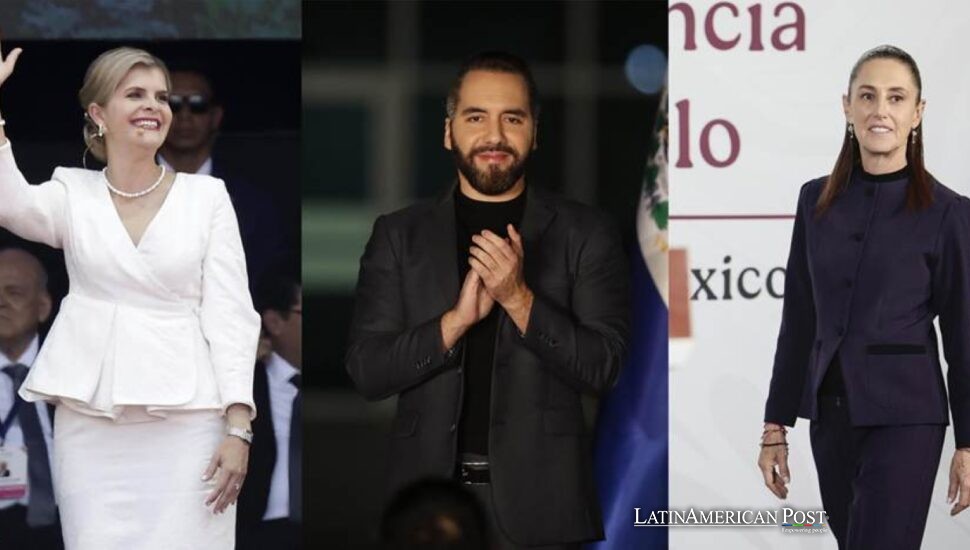
CB Global Data’s June survey shows Latin America rewarding security, stability, and political theater, with Nayib Bukele, Claudia Sheinbaum, and Laura Fernández rising above a region where approval is increasingly less about ideology than about survival, daily trust, and fear.
The Numbers Have a Street Corner
In Latin America, presidential approval is never just a number. It is the price of beans remembered at breakfast, the bus ride taken before sunrise, the empty clinic, the soldier at the corner, the rumor that crime is down, the worry that rights are shrinking, the old question asked in a new voice: who still feels in control?
That is the story inside CB Global Data’s June report, which places El Salvador’s Nayib Bukele at the top of the regional table with 69.1 percent approval and 27.6 percent disapproval. Mexico’s Claudia Sheinbaum follows with 65.5 percent approval and 31 percent rejection. Costa Rica’s Laura Fernández completes the leading trio with 56.1 percent favorability and 37.1 percent negative image, according to the report.
The podium looks orderly. The region underneath it does not.
Bukele’s lead is the most revealing figure because it is also the most contested political model. Since March 2022, El Salvador has lived under a state of exception tied to its campaign against gangs, a policy that, in public opinion terms, has converted fear into loyalty and security into a national brand. His approval rose from 67.5 percent in May to 69.1 percent in June, a modest gain, but enough to show that his security-first formula still has social oxygen.
The arithmetic matters. Bukele’s net approval, approval minus disapproval, stands at 41.5 points. That is not simply popularity. It is a distance. It separates him from leaders governing in countries where citizens may vote, complain, march, post, and still feel that the state arrives late to the most ordinary emergencies.
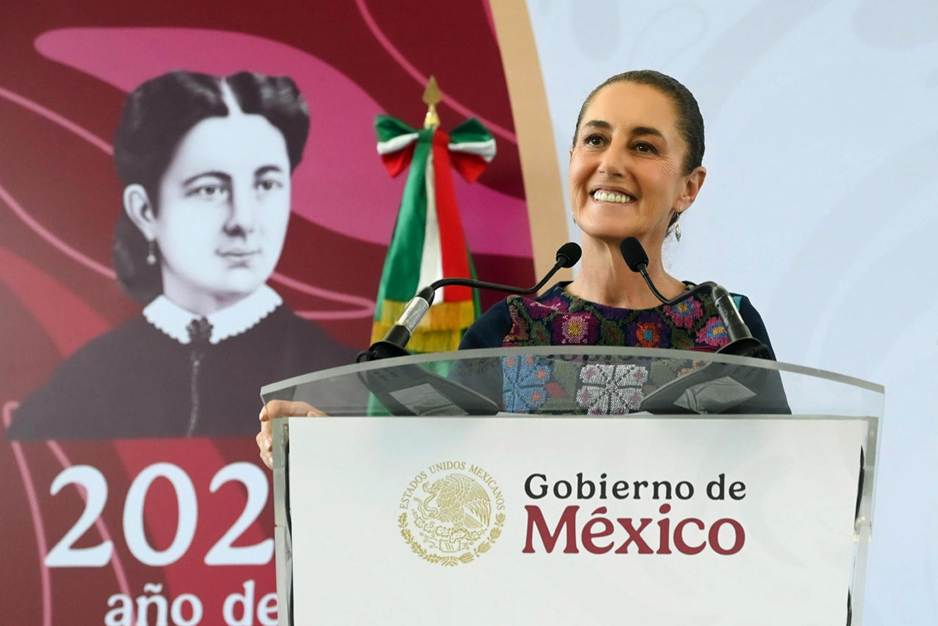
Sheinbaum’s number tells a different story. Her 65.5 percent approval remains high, but it is down from 67.8 percent in May. As Mexico’s first woman president, she carries the symbolic force of a historic breakthrough, yet symbols in Latin America age quickly when the price of peace, fuel, wages, and security comes due. Her net approval is still a strong 34.5 points. But the slide suggests that Mexico’s great test is not whether the public admires the office. It is whether continuity can feel like protection rather than inertia.
Central America Becomes the Laboratory
The most striking regional clue in the June survey is Central America’s visibility. Bukele and Fernández sit in the top three. At the same time, the Dominican Republic’s Luis Abinader ranks fourth with a 54.8 percent positive image, down from 60.2 percent in May. Paraguay’s Santiago Peña follows with 48.3 percent approval and 48.2 percent disapproval, nearly a tie between patience and irritation.
That cluster says something uncomfortable for the larger republics. Small and mid-sized countries, often treated as footnotes in continental politics, are now producing some of the region’s strongest approval stories. In part, scale helps. A smaller territory can make a state’s presence feel closer. A president can become a daily character, not a distant portrait.
But there is a deeper Latin American pattern here. Citizens are not rewarding ideology in a clean left-right line. They are rewarding perceived governability. Bukele’s punitive security state, Sheinbaum’s institutional continuity, and Fernández’s early Costa Rican honeymoon do not belong to one doctrine. They belong to one public demand: make the country feel less abandoned.
Fernández’s rise from 52.7 percent to 56.1 percent is the fresh, polished number of a new presidency. It may be confidence. It may be curiosity. It may be the forgiving grace period that Latin American voters still grant before the first hard scandal, tax fight, strike, or crime wave attaches itself to a new administration. Her 19-point net positive is healthy, but not Bukele-sized. It is less a fortress than a bridge.
The middle of the table is where the region sounds most like itself. Brazil’s Luiz Inácio Lula da Silva records 47.6 percent approval and 48.1 percent rejection. Bolivia’s Rodrigo Paz falls to 46.4 percent approval and 52.3 percent disapproval after losing 9.2 points from May, the sharpest monthly decline in the survey. Chile’s José Antonio Kast sits at 45.2 percent approval and 50.5 percent rejection, while Honduras’s Nasry Asfura posts 44.5 percent positive image against 49.5 percent negative.
These are not collapses. They are warnings. They show countries divided almost down the middle of the kitchen table, where one relative sees order. Another sees cruelty, where one sees reform, and another sees betrayal. Latin America has lived this split before, under populists, technocrats, generals, priests, guerrillas, bankers, outsiders, and redeemers. The costume changes. The hunger for rescue does not.
Disapproval Is the Shadow Government
At the bottom, the numbers harden. Peru’s interim president José María Balcázar registers only 18.2 percent positive image against 71.7 percent disapproval. The math cuts through any soft phrasing: that is a net negative of 53.5 points, and it is lower than the 20.5 percent support reported for May.
Peru’s figure is not just one leader’s problem. It is the residue of a political system that has trained citizens to expect vacancy, impeachment, improvisation, and fatigue. In such a climate, approval does not fall like rain. It evaporates before it reaches the ground.
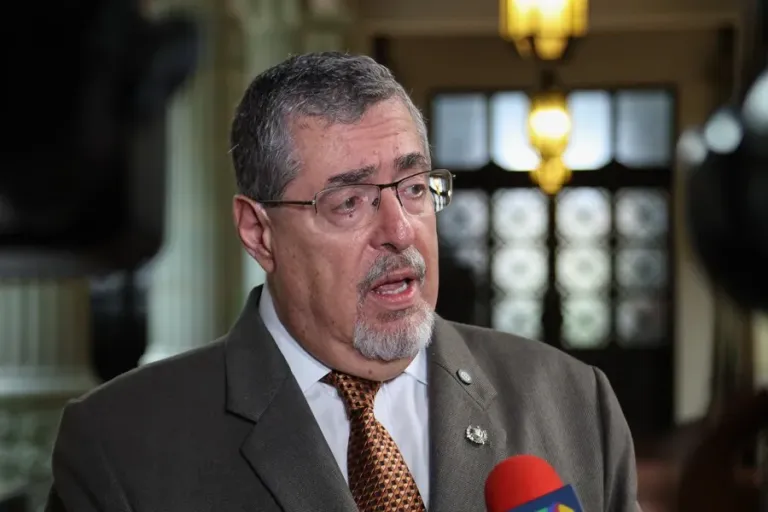
Venezuela’s Delcy Rodríguez, described in the report as acting president since January, records 29.5 percent approval and 64.8 percent rejection, even after gaining 5.4 points from May. Guatemala’s Bernardo Arévalo stands at 33.1 percent approval and 63 percent negative image, down from 36.9 percent in May. Argentina’s Javier Milei sits at 37.9 percent approval and 59.6 percent rejection. Colombia’s Gustavo Petro, whose mandate is reported to end on August 7, posts 36.5 percent favorability and 61 percent disapproval.
The lower half shows a region where opposition often governs emotionally, even when it does not govern institutionally. Disapproval becomes a shadow cabinet. It frames every speech before it is heard. It turns policy into suspicion. It makes presidents campaign while governing and govern as if campaigning never ended.
CB Global Data says the survey was conducted from June 2 to June 7, 2026, among 40,517 people in 18 Latin American countries, with national samples ranging from 1,993 to 2,671 respondents, a 95 percent confidence level, and margins of error between plus or minus 1.9 and 2.2 percentage points.
That sample gives the report weight, but not prophecy. Approval is a photograph, not a destiny. Still, this photograph is sharp enough to see the continental mood. Latin America is not asking only for democracy as a ritual. It is asking for results that can be felt on the skin. Safer streets. Predictable money. Less corruption. Some dignity at the counter, the checkpoint, the hospital, the courthouse.
The danger is that this desire can bless very different kinds of power. It can reward competence. It can reward the theater. It can reward pressure. It can reward fear if fear comes wrapped as order.
That is why the June ranking matters beyond the names. It shows a Latin America tired of sermons and allergic to excuses. The region is not moving in one ideological direction. It is moving toward whoever can make tomorrow feel less fragile than today.
Also Read: Cuba Talks Test Washington as Prisoners Become Democracy’s Hardest Currency