Honduras Sees Cedeño Disappear as Global Climate Injustice Comes Ashore
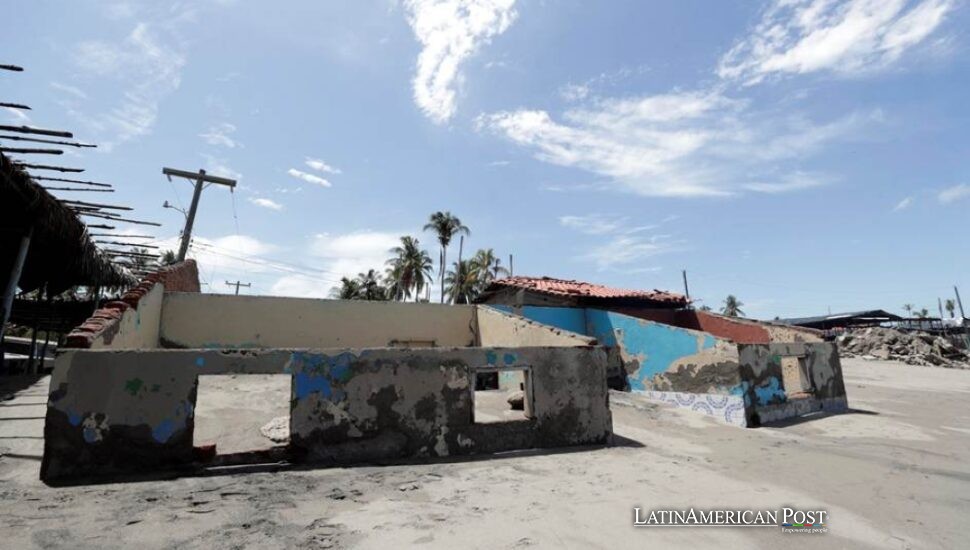
On Honduras’s Pacific coast, Cedeño has lost homes, streets, businesses, and buildings to three decades of erosion. Residents are no longer asking whether to move. They are demanding that relocation preserve community, livelihoods, memory, and dignity before the tide decides.
The Sea Has Already Drawn the New Map
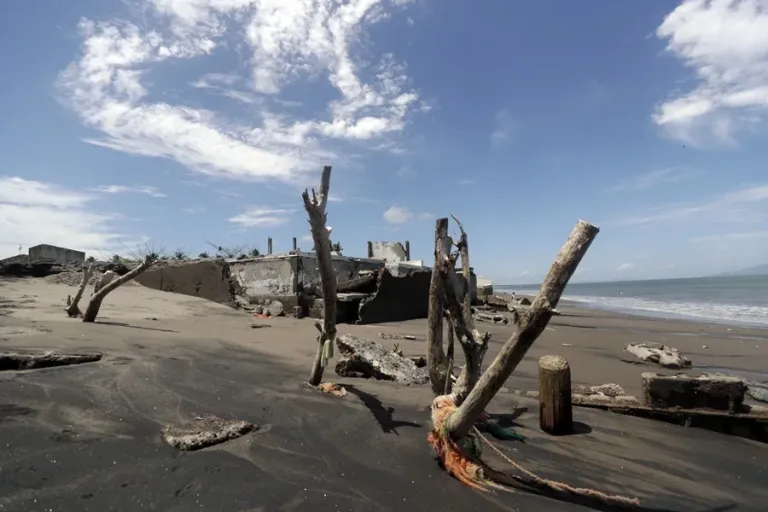
In Cedeño, people point into the water to show where life used to be. Delmis Yanira Amaya, 40, told EFE that her house once stood 100 meters from today’s shoreline, where children swim. A surge destroyed it five years ago. She has nowhere inland to rebuild.
Sandra Reyes has lost three homes. “The storm surges have swallowed Cedeño,” she told EFE, describing nine neighborhoods fighting for a dignified and just relocation. Her words carry the exhaustion of rebuilding, watching, and rebuilding again, with less room between the front door and the Pacific.
The coastline retreated by approximately 135 meters between 2004 and 2026, according to Amnesty International’s report “Honduras: Cedeño Does Not Disappear, It Relocates and Remains.” That averages 6.13 meters yearly. But averages soften catastrophe. The ocean does not take six neat meters every December. It waits, surges, and removes a road, kitchen, or income in a single night.
Over three decades, hundreds of people have been evacuated. Hotels, food businesses, houses, a school, a health center, a soccer field, and beachfront infrastructure have disappeared. For a village of 5,000 residents in Choluteca, on the Gulf of Fonseca, these are not isolated property losses. They dismantle a local economy and shrink the public realm.
When a health center disappears, care becomes harder to access. When a school is lost, children absorb the cost in travel and interrupted routines. When restaurants and hotels collapse, families lose buildings and customers. Coastal erosion leads to unemployment, food insecurity, and debt. It turns geography into a household bill.
Relocation Is More Than Moving Houses
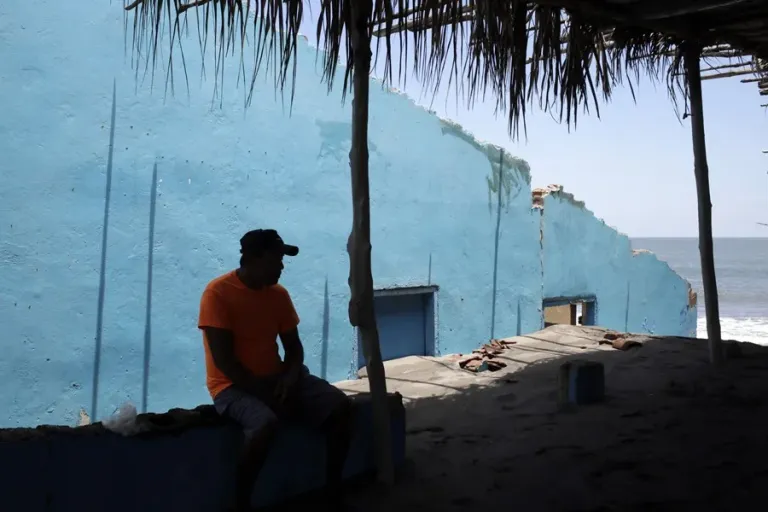
José Luis Medrano, a 62-year-old artisanal fisherman, remembers building his first home after marrying at 20. The sea took the lot. “There was a road here,” he told EFE while showing damage to the place where he stores his fishing gear. “The sea already ate it.”
A second house, given to him by tourists and home for about eight years, vanished too. Not damaged. Gone. His story explains why official advice to move can sound cruelly incomplete. Medrano’s livelihood remains tied to the water, even as it destroys the conditions that make work and family life possible.
Amaya works in tourism. Medrano fishes. Their need for safety is inseparable from access to the coast. Relocating families miles inland without transportation, legal land titles, schools, water, health services, and routes back to fishing or tourism would exchange climate exposure for economic abandonment.
That is the central demand of Cedeño’s Climate Justice Roundtable, formed three years ago by local organizations. Residents are not asking to be scattered into anonymous housing projects. They want to remain a community. The distinction matters across Latin America, where displacement has often been administered as a logistical problem rather than experienced as the loss of neighbors, livelihoods, rituals, and political voice.
The government of President Nasry Asfura has recently created an interagency working group, coordinated by the Permanent Contingency Commission (Copeco), to work with Cedeño’s representatives. It is a necessary opening. It is also arriving after decades of visible loss, which raises the harder question of why the state required years of organizing before treating a slowly advancing emergency as an emergency.
Honduras has long managed disasters through evacuation and relief. Cedeño exposes the limit of that model. A storm can be answered with shelters and food packages. A shoreline moving inland year after year demands land policy, housing finance, infrastructure, livelihood planning, and binding timelines. It requires the government to act before the next photograph of rubble is taken.
A Climate Debt With a Human Address
Ana Piquer, Amnesty International’s Americas director, said the crisis reflects years of climate inaction by both Honduras and the international community. The consequences, she argued, now threaten rights to water, food, housing, and a dignified life. The phrase “international community” can sound distant in Tegucigalpa. In Cedeño, it has an address.
Honduras contributes little to the forces driving global warming compared with wealthy industrial economies, yet communities such as Cedeño encounter the damage through lost land and repeated reconstruction. That imbalance is the core of climate justice. Responsibility is global, but the bill arrives locally, usually at homes with the least savings, insurance, and political leverage.
Still, blaming the world cannot excuse national paralysis. Climate vulnerability becomes a disaster through weak planning, delayed investment, insecure land tenure, and institutions that respond only after residents create pressure. The state cannot stop the Pacific, but it can decide whether relocation is orderly or desperate, participatory or imposed.
The data point most worth remembering is not 135 meters. It is Reyes’s three lost houses, Medrano’s two, and Amaya’s missing home beneath children at play. Together, they show that Cedeño has already been financing climate adaptation privately, one destroyed dwelling at a time.
Its residents now ask for something more serious than rescue. They want a safe place that keeps work, family, and community within reach. Cedeño’s future should not be measured by whether people survive the next surge. It should be measured by whether they can move once, rebuild once, and remain together.
Also Read: Colombian Masked Star Corridos Del Rey Makes Faith Go Viral