Venezuela Quakes Expose the Fault Lines Beneath Latin America’s Resilience
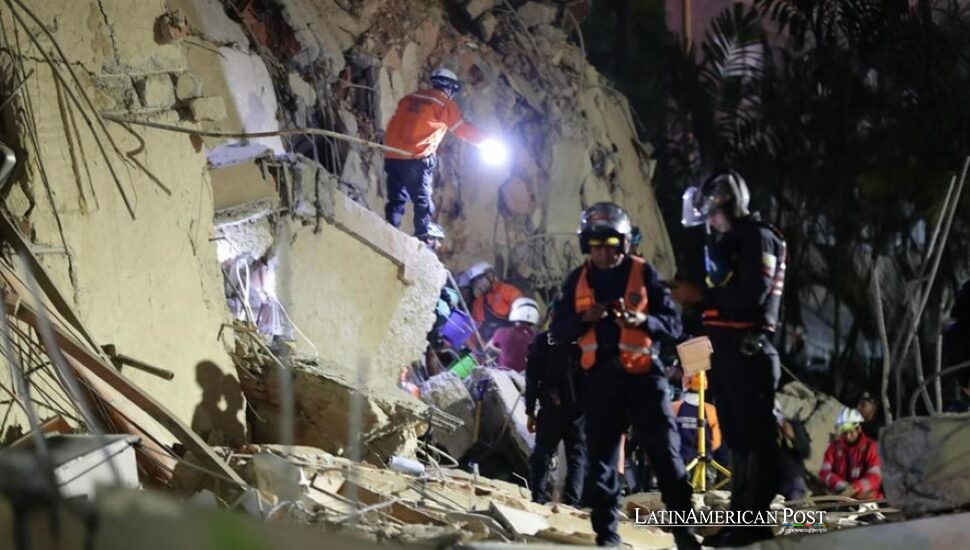
Two earthquakes struck Venezuela 39 seconds apart, killing at least 164 people and injuring 971. Beyond collapsed buildings and darkened streets, the disaster tests a battered state, a divided hemisphere, and Latin America’s capacity to turn solidarity into real preparedness.
Thirty-Nine Seconds Changed the Country
In Caracas, people did what city dwellers do when the floor stops behaving like a floor. They ran. Some reached the street barefoot. Some carried children, documents, dogs, whatever their hands found first. Then came the dust, the lost phone signals, and the long look back at apartments split open to the evening air.
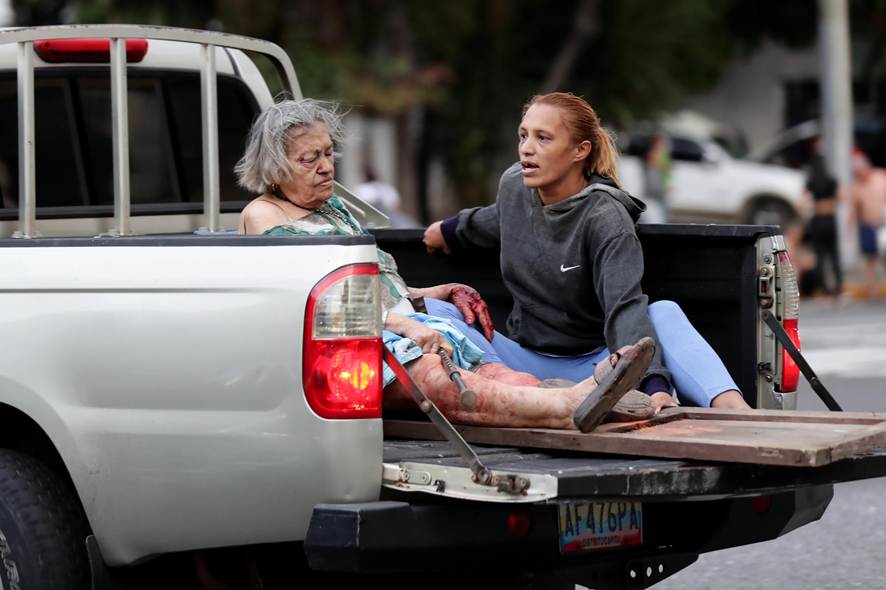
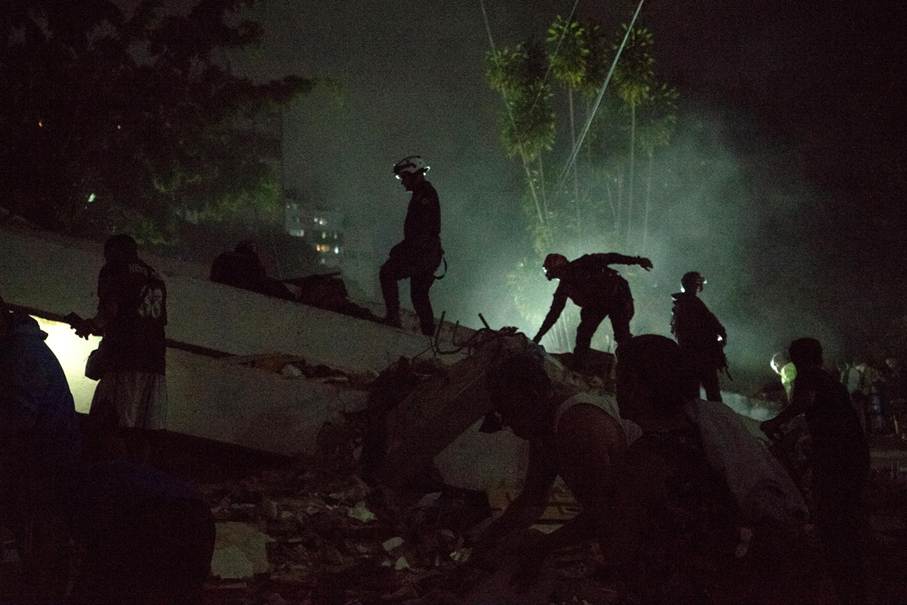
By Thursday, Acting President Delcy Rodríguez said at least 164 people had died, and 971 were injured. La Guaira, the coastal state pressed between the Caribbean and the mountains north of Caracas, was declared a disaster zone. State television showed three children emerging alive from rubble. Elsewhere, relatives waited beside collapsed buildings while rescue workers and neighbors dug through concrete. The count remained provisional because crews had not fully reached the hardest-hit communities.
The earthquakes arrived at about 6:04 P.M. local time on Wednesday, during a national holiday. The first measured magnitude was 7.2, and it ruptured roughly 22 kilometers underground. Thirty-nine seconds later, a magnitude 7.5 quake struck nearby at about 10 kilometers deep. More than 20 aftershocks followed. Shaking was felt in Colombia and Brazil, while tsunami warnings were issued for Venezuela, Aruba, and Bonaire and later canceled.
Scientists call this sequence a doublet. Unlike a single large earthquake followed by many smaller aftershocks, a doublet involves two distinct, similarly powerful ruptures occurring close together in time and space. The first quake probably shifted stress onto a neighboring fault, or its waves disturbed another fault already near failure. Northern Venezuela sits where the Caribbean Plate slides eastward past the South American Plate, loading several major fault systems.
Geology explains the shaking. It does not explain the death toll on its own. Earthquakes release energy. Buildings, institutions, and inequality decide where that energy becomes a catastrophe.
The worst damage in Caracas was reported in Los Palos Grandes and Altamira, neighborhoods also scarred by the 1967 earthquake that killed hundreds. That repetition should trouble the region. Memory survives in family stories and engineering reports, yet risk often fades from budgets until walls move again. Venezuela is 89 percent urban, according to the World Bank, and much of its population lives in the seismically active north. One rupture can therefore strike homes, hospitals, transportation, and communications at once.
A Disaster Meets a Weakened State
The visible emergency is concrete and dust. The deeper emergency is systems failing together. Simón Bolívar International Airport at Maiquetía closed after sustaining damage. Metro and rail services stopped. Gas was shut off in Caracas. Power and cellular coverage failed in parts of the capital. Schools were suspended, and some became shelters and donation centers. Rodríguez announced a $200 million reconstruction fund for damaged homes and hospitals and asked private companies to lend heavy machinery.
A hospital cannot function normally without power, water, roads, communications, and staff who can reach it. An airport closure slows foreign rescue teams and the deployment of specialized equipment. A cellular blackout separates trapped people from rescuers and relatives abroad. Disaster plans divide infrastructure into sectors. Families experience it as one chain.
Venezuela entered this earthquake with little spare capacity. At the start of 2026, the United Nations estimated that 7.9 million people already needed urgent humanitarian support. By May, the national humanitarian response plan had received only about 14 percent of the $632 million requested. The quake did not create shortages in health care, water systems, or household savings. It landed on top of them.
This is why “natural disaster” can mislead. The hazard was natural. Vulnerability was constructed through deferred maintenance, weak inspection, uneven code enforcement, and the daily compromises of poverty. The notes identify reinforced brick masonry and adobe blocks among common vulnerable construction types. In neighborhoods where families expand homes room by room, professional engineering can be a luxury. A cracked column may be the physical record of wages that never covered the cost of safer housing.
The burden will remain unequal after the cameras leave. Owners with savings can relocate, hire engineers, and replace documents. Renters may return to unsafe buildings because no alternative exists. Informal workers lose income each day transportation is suspended. Women often shoulder more caregiving when schools close. Older residents and people with disabilities face evacuation systems built around speed and stairs. Reconstruction money can narrow those gaps, or deepen them, depending on who can prove ownership and who gets heard.
Then there is the Venezuelan family stretched across borders. Nearly 7 million Venezuelan refugees and migrants lived elsewhere in Latin America and the Caribbean as of May 2026. For them, a failed phone call becomes its own emergency. Remittances may shift from food and rent toward funerals, shelter, and repairs, carrying the quake’s economic shock into households from Bogotá to Lima and Santiago.
The diaspora can also mobilize doctors, engineers, funds, and community networks. But generosity cannot replace verified information. Authorities will need public damage maps, transparent spending, and regular casualty updates. In a politically polarized country, trust determines whether people obey evacuation orders, report missing relatives, and believe a building is safe to enter.
Latin America’s Solidarity Test
The first international response crossed familiar ideological lines. The United States said it was deploying search teams, medical resources, and humanitarian aid. Mexico, El Salvador, and Qatar sent rescue personnel, while Ecuador, Brazil, the Dominican Republic, and Chile offered assistance. The European Union activated satellite support. Rodríguez thanked Washington, an unusual note of warmth after years of hostility.
That opening could matter beyond rescue. Disasters sometimes create brief diplomatic clearings where governments cooperate without pretending their disputes have vanished. The test is whether solidarity becomes an operating system rather than a burst of presidential posts. Regional governments should be able to move certified rescue teams, field hospitals, engineers, and satellite data across borders under standing protocols, not improvised permissions.
Latin America already knows the cost of relearning the same lesson. Mexico and Chile have extensive experience with earthquakes. Central America and the Caribbean live with hurricanes, volcanoes, and landslides. Yet expertise remains unevenly financed and politically fragmented. A Venezuelan doublet, felt more than 1,000 kilometers away, is a reminder that risk ignores the ideological blocs through which the region often organizes its diplomacy.
The practical agenda is not mysterious. Governments need to enforce seismic codes, require retrofits for schools and hospitals, conduct neighborhood drills, maintain redundant communications, and maintain honest inventories of unsafe buildings. They also need financing before a disaster, when prevention is politically quiet, rather than only afterward, when rubble guarantees attention. Resilience should not be measured by how bravely people sleep in the streets, but by whether they have to.
For Venezuela, the next hours belong to rescue. The next months will be spent on mourning, engineering, and arguments over money. The $200 million fund will be judged building by building, family by family. Who received help? Which hospital reopened? Which contractor was paid? Which neighborhood disappeared from the ledger?
For Latin America, those questions are regional. The quake exposes a shared fault line between the continent’s impressive culture of mutual aid and its thinner culture of prevention. Neighbors arrive with shovels. Governments promise reconstruction. Then memory recedes, inspections lapse, and vulnerable walls remain standing until the earth moves again.
In La Guaira and Caracas, people are still listening for voices beneath rubble and for aftershocks beneath their feet. The final toll is not yet known. What is already clear is that Venezuela’s disaster will be measured in more than magnitudes and casualties. It will measure whether a region famous for its survival can finally invest in becoming safer.
Also Read: Ecuador’s Teddy Bear Hitmen Reveal a Gang War Without Borders