Chile Faces El Niño Fury as Deadly Storms Close In
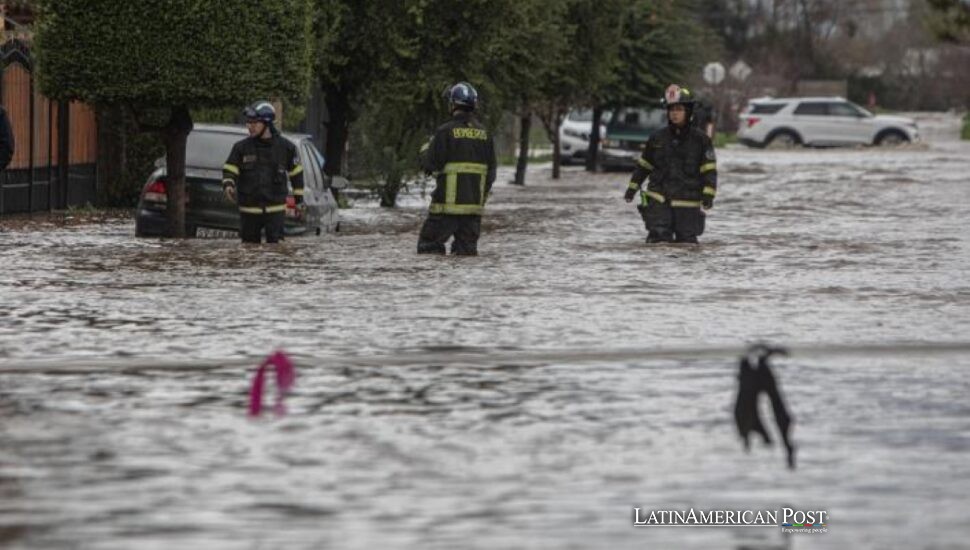
Chile’s first hours under a powerful El Niño-linked storm brought three deaths, mass evacuations and darkness for nearly 500,000 homes. With three frontal systems converging, officials warned that the hardest rain and wind had not yet arrived across ten affected regions.
The Storm Before the Storm
By Thursday afternoon, rain had rewritten ordinary routines across Chile. Roads were being cleared, gutters scraped, and power lines watched nervously. None sounded heroic. Each had become dangerous.
In Biobío, a worker died when a tree fell as he cleared a roadway. In La Araucanía, a man slipped while cleaning the gutters on his roof. In Santiago, another man was killed by an electrical discharge. Three deaths, in three settings, tied together by the intimate hazards of a storm: work, home maintenance, and the invisible current running through a wet city.
Disasters are narrated through satellite images and rainfall totals, but people meet them up close, with a ladder, a chainsaw, a flooded socket, or a blocked road. The first casualties were not swept away in a cinematic torrent. They were keeping daily life functioning.
“Today, one of the main tools we have to confront this emergency is self-care and compliance with authorities’ instructions,” Interior Minister Claudio Alvarado said at a news conference, according to EFE.
His warning carried an air of urgency and a familiar political tension. Self-protection is indispensable during extreme weather. Still, “self-care” places a heavy burden on households and workers when electricity networks fail, roofs leak and public roads become dangerous. Vulnerability is built collectively.
Three Deaths, Three Everyday Risks
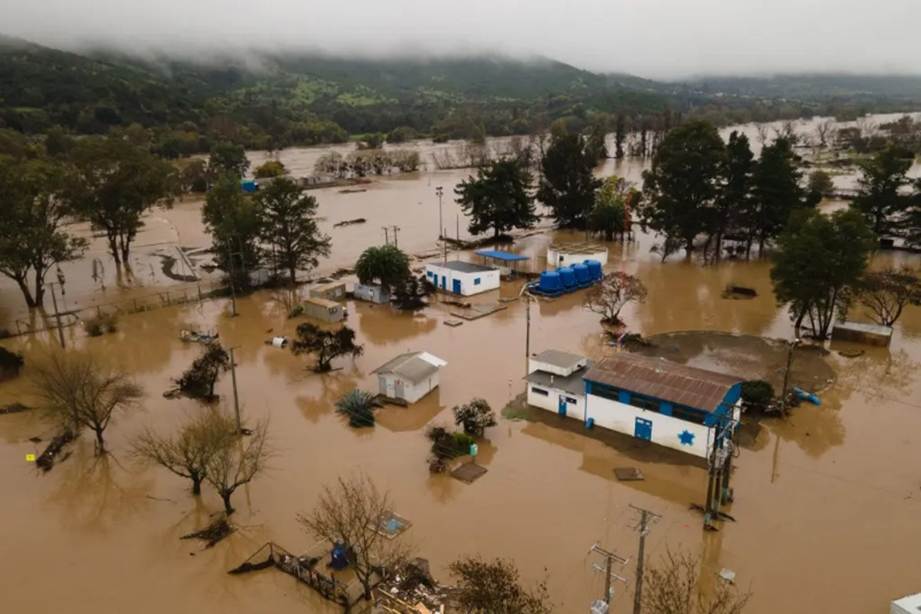
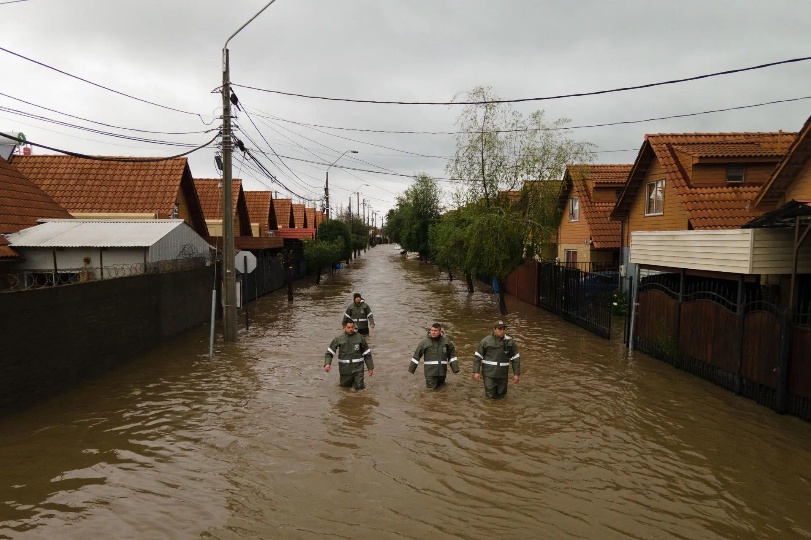
The government said more than 200 people had been evacuated as a precaution. Around 20 homes were destroyed or suffered major damage. Nearly half a million households lost electricity, with La Araucanía and Biobío taking the hardest blow, 740 and 520 kilometers south of Santiago, respectively.
Those figures reveal the storm’s geography. Chile’s population and political power are concentrated around Santiago, but emergency needs stretch across a narrow territory more than 4,000 kilometers long. A response announced in the capital feels different in a southern town with blocked roads and no lights.
The blackout count may be the clearest measure of disruption. Five hundred thousand homes mean more than dark rooms. It means food beginning to spoil, medical devices losing power, phones becoming harder to charge, and families struggling to receive official alerts. For isolated communities, an outage can turn caution into confinement.
The government suspended classes Friday across most affected regions. That reduced travel and kept children away from risky routes, but moved the emergency indoors. In many Latin American households, school closures force parents to miss work, older siblings to provide care, or families to improvise. A necessary measure can still expose inequality.
A Long Country Goes Dark
Chile’s weather service described a train of three frontal systems entering from the south and advancing toward the center. Some localities could receive 250 millimeters of rain within 48 hours. Wind gusts reached 100 kilometers per hour, while heavy swells struck the Valparaíso coast.
In Coquimbo, 460 kilometers north of Santiago, a crane collapsed onto homes. No injuries were reported. The lucky outcome sharpened the warning: the storm was not confined to riverbanks or rural roads. Construction sites, coastal neighborhoods, and urban utilities were exposed.
Alvarado cautioned that Chile had not yet reached the system’s most intense phase. “Precisely for that reason, we must act in advance,” he said, according to EFE.
That is the government’s hardest test. Officials must persuade people to leave before water enters, cancel classes before streets become impassable, and interrupt commerce before damage is visible. Move late, and the state appears negligent. Move early, and warnings can feel excessive after a warm, dry autumn made the deluge difficult to imagine.
Chile has deep experience with catastrophes, but experience does not guarantee equal safety. Earthquakes, fires, and coastal emergencies have shaped a public vocabulary of evacuation and alert. Yet resilience depends on sturdy housing, maintained drainage, reliable electricity, and trusted institutions.
El Niño Meets a Warmer Baseline
Authorities linked the storm to El Niño, the warm phase of the Pacific’s recurring climate cycle. El Niño does not manufacture every cloud over Chile or explain each fatal accident. It shifts atmospheric odds, helping to create conditions in which unusual rain becomes more likely or more severe.
The name comes from the Pacific coast of South America, where Peruvian fishers centuries ago noticed warm waters arriving near Christmas and called the current El Niño, the little boy. Local knowledge became a global scientific framework, reminding us that coastal communities read climate signals before international agencies formalized them.
This storm arrived after an especially warm and dry autumn across much of Chile. Dry months can harden soils, leave drainage systems underused, and encourage a sense that winter has failed to arrive. Then the weather changes quickly, and accumulated rain tests everything at once.
The deeper lesson is not that El Niño has made Chile unlivable. It is that climate variability now meets cities, power grids, and households already strained by unequal investment and warming conditions. The danger lies in the collision.
By nightfall, the official message remained simple: stay alert, follow instructions, prepare before the worst arrives. Beneath it sat a harder national question. How much safety can Chile ask individuals to create for themselves when the storm is falling on shared roads, shared wires, and a profoundly uneven map?
Also Read: Colombia Reclaims Paramilitary Ranch as Farm Workers Plant a New Future