Why Latin America’s Wealthy Neighborhoods Miss the 15-Minute City Promise
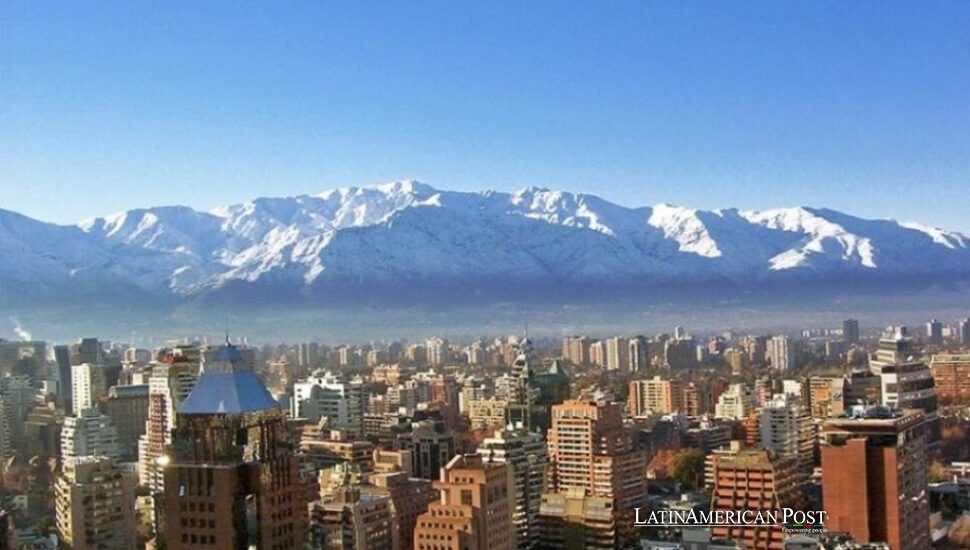
In Santiago, the dream of groceries, parks, schools, and clinics within a short walk collides with a stranger reality: middle-income districts often offer more everyday variety than luxury enclaves or the poorest edges of Chile’s sprawling capital can reliably provide.
The Map Refuses the Usual Story
A report published in Transportation Research examines Santiago block by block, asking an ordinary question: What can a resident reach on foot from home? The researchers mapped green spaces, health centers, schools, cultural venues, government offices, sports facilities, and shops across 34 communes, then measured what lay within roughly 500 meters of each block’s center.
Walking accounts for a reported 55.2 percent of daily travel events, and it matters even more for lower-income residents, whose feet often substitute for money, cars, and reliable connections. A clinic that looks nearby on a metropolitan map can still feel far when sidewalks are broken, hills intervene, or a parent is moving with a child, groceries, and limited time.
The broadest result is almost reassuring. The total number of destinations available per resident does not rise neatly with land values. Across most socioeconomic categories, only about 20 to 30 percent of residents live in neighborhoods with above-average destinations per capita. Wealth does not automatically buy a fuller street life.
But variety tells the more revealing story. Nearly 65 percent of residents in areas valued below $500 per square meter had above-average amenity variety. The share reached about 68 percent in lower-middle areas and remained above half in middle-high districts. In neighborhoods above $2,000 per square meter, it collapsed to roughly 22 percent.
Santiago’s richest districts, in other words, may contain excellent schools, private clinics, landscaped parks, and polished shopping centers. Yet many residents cannot meet their daily needs within a short walk. Their comfort is real, but it is often centered on the automobile.
Segregation Has Two Ends
The finding makes sense once Santiago’s history comes into view. During Chile’s 1973 to 1990 dictatorship, poorer families were pushed from central and near-central settlements toward distant peripheral housing. Market-led planning and reduced state capacity continued shaping the city afterward, producing overcrowded public housing zones in the south and west, intense high-rise growth along central transit corridors, and wealthy, self-segregated enclaves toward the northeast.
Those forces created two different forms of distance. Poor households were separated from opportunity by displacement, underinvestment, and limited mobility choices. Affluent households often chose distance as insulation, trading urban mixture for larger properties, gated streets, mountain views, and social homogeneity. One group was excluded. The other withdrew. Both ended up farther from the everyday diversity that makes walking practical.
The middle of the city inherited an urban texture. Public services and cultural institutions remain concentrated near the center. Schools are distributed more evenly. Sports facilities appear more often toward the periphery. Commercial uses, apartments, transit routes, offices, and older neighborhood grids overlap in central and lower-middle districts, creating the messy, useful mix that planners market as proximity.
That is the paper’s Latin American insight. A neighborhood can be poorer than an elite enclave yet more functionally complete. It can have a bakery, a school, a pharmacy, a park, a government counter, and a bus corridor within reach, even if each is crowded or unevenly maintained. Meanwhile, a wealthy subdivision can look ideal and remain impractical without a car.
Quantity is not quality. The study does not measure whether a park is safe, shaded, or well-maintained, whether a clinic has appointments available, or whether a school has sufficient capacity. A deteriorated plaza and a large landscaped park both register as green space. That limitation matters because inequality in Latin America is hidden not in the absence of a service, but in its condition, cost, and dignity.
A Latin American Test of Proximity
For cities from Bogotá to São Paulo, the lesson is not to discard the 15-minute city. It is to stop treating fifteen minutes as a magic number imported from Paris. Latin American planning must begin with who walks, who drives, who waits for buses, who works informally across town, and who can afford to move when a neighborhood improves.
A proximity policy that simply adds attractive amenities can raise land values and push renters outward, reproducing the very segregation it claims to solve. Real reform would pair local services with affordable housing protections, dependable public transit, safer sidewalks, cycling infrastructure, and public investment in neglected districts. Specialized hospitals, universities, and major job centers will never be found in every neighborhood, so the local city must connect intelligently to the metropolitan area.
Santiago also shows why affluent isolation should not be mistaken for urban success. Car dependence in wealthy districts still produces congestion, emissions, and fragmented public life. Yet the burden is unequal. A rich household can compensate with vehicles, delivery services, and private institutions. A poor household cannot compensate so easily when the nearest quality clinic, stable job, or safe park lies beyond walking distance.
The 15-minute city can become a serious Latin American project only when proximity is treated as a social right rather than a real estate slogan. Santiago’s map offers a warning and a possibility. The most useful neighborhoods already exist, often in overlooked middle and lower-middle zones. The task is to protect their mixture, improve their services, and extend that ordinary abundance without pricing out the people who made it work.
* Published report here:
https://www.sciencedirect.com/science/article/pii/S0965856425004227
Also Read: Latin American Thrill Tourism Faces Its Deadliest Safety Reckoning Yet