Ecuador’s Immunity Gamble Puts Latin America’s Sovereignty on the Line
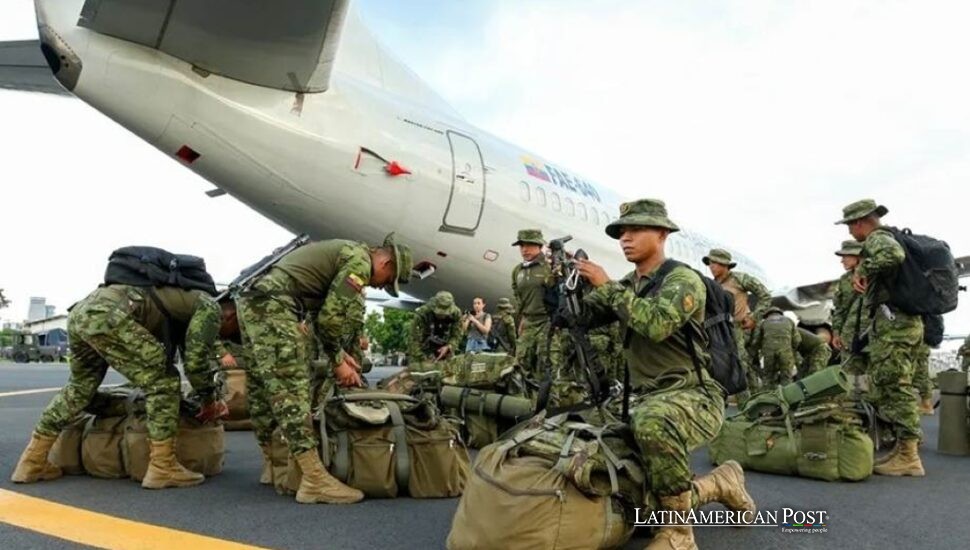
President Daniel Noboa’s promise of immunity for foreign personnel fighting Ecuador’s criminal groups may deepen security cooperation. It also risks weakening accountability, normalizing permanent emergency rule, and turning a sovereign nation’s desperate search for safety into a regional alarm bell.
Safety Without a Legal Exit
At Guayaquil’s airport, security became brutally concrete. Gunfire erupted outside the international arrivals. One man died, two people were wounded, and travelers and workers stared at the bodies on the pavement. EFE reported that police arrested two teenagers, 15 and 16, as suspects. Authorities identified the dead man as Carlos Alberto Suástegui Villanueva, an alleged leader of Los Águilas, a Los Choneros faction.
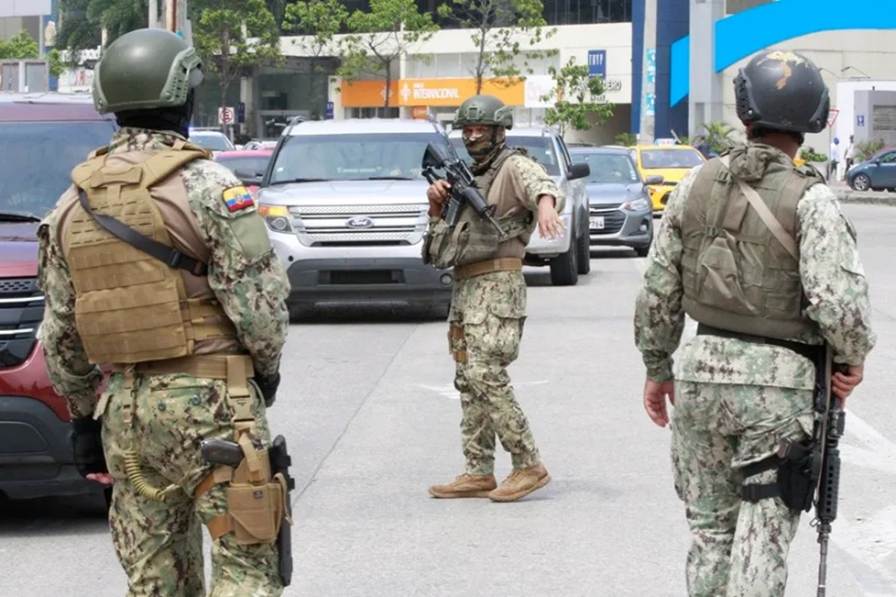
That scene explains why Ecuadorians hear almost any promise beginning with the word ” order. Extortion, drug trafficking, illegal mining, prison violence, and contract killings have invaded ordinary life. Noboa says the country remains in the “internal armed conflict” he declared in January 2024, alongside another 60-day emergency across ten provinces and three municipalities.
Now the government is moving beyond domestic militarization. A new decree states that foreign personnel from cooperating states who participate in operations related to the conflict will enjoy immunity under applicable international agreements. It also promises pardons, sentence reductions, or commutations for military, police, and civilians who act in defense of the state, while urging the National Assembly to grant amnesties.
The decree is legally hedged because immunity is tied to existing instruments. Politically, its message is broader: fight first, and the state will help build a shield around those who pull the trigger. In a democracy living under repeated emergency powers, exceptional force feels routine.
The Bodies Beneath the Doctrine
The problem is not Ecuador seeking international help. States under criminal pressure need intelligence, technology, training, and cross-border cooperation. The problem is attaching foreign participation to immunity while domestic forces are already accused of grave abuses.
Amnesty International says prosecutors have registered about 43 cases of alleged forced disappearance since 2023. One searing case involved four Afro-Ecuadorian boys, ages 11 to 15, detained irregularly by two military patrols in Guayaquil in December 2024. Their burned, bullet-scarred bodies were found near a military base. Courts convicted participating soldiers of forced disappearance.
Those children are not a footnote to the security debate. They are in the debate. A state’s legitimacy is measured not only by whether it captures gang leaders, but by whether a mother can demand the truth when agents take her child. Immunity can complicate that demand by blurring jurisdiction, chains of command, access to evidence, and the victim’s path to a remedy.
Ecuador’s government can insist that international agreements contain safeguards. It should publish those safeguards, define who investigates foreign personnel, identify which courts retain authority, and guarantee victims access to records and witnesses. Without that architecture, “immunity” sounds less like cooperation and more like a warning that uniforms may stand beyond the reach of Ecuadorian families.
The results demand deeper skepticism. Ecuador recorded 9,281 killings in 2025, more than 50 homicides per 100,000 people, despite two years of armed-conflict rhetoric and emergency decrees. That does not prove military deployment is useless. It does show that escalation has not delivered the safety it was used to justify, and that there is still more escalation.
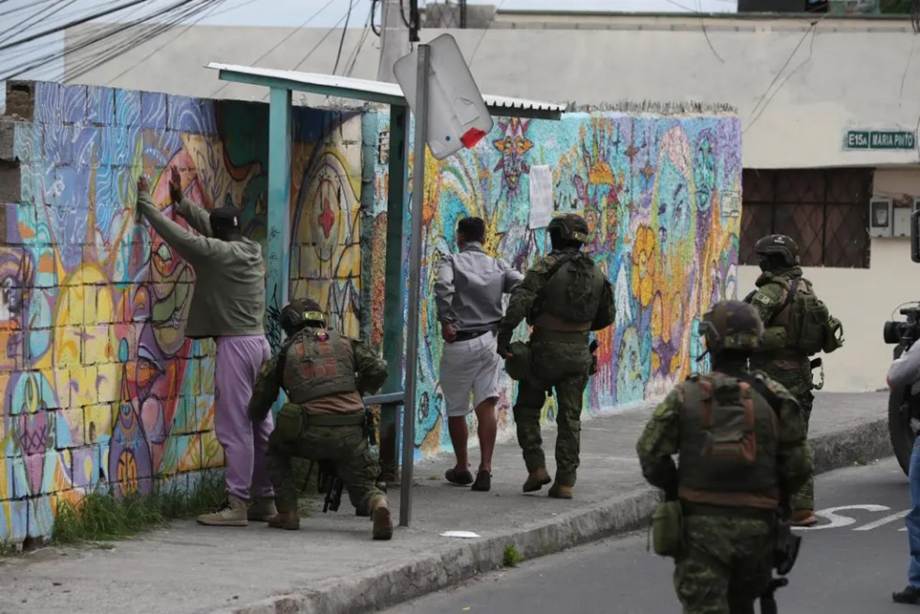
This week, 13,000 troops began moving into Guayas, Manabí, El Oro, and Los Ríos. About 6,000 were assigned to Guayas, which had recorded 1,521 of Ecuador’s 3,485 killings through May. General Mauro Bedoya told EFE the goal was to reduce violent deaths and regain control of the most violent cities. He said authorities did not yet know whether foreign soldiers would arrive, while noting continued United States advice and technology.
That uncertainty makes the decree more troubling. Ecuador has opened a legal door before telling the public who may enter, what they may do, and who will answer when an operation goes wrong.
A Regional Alarm in Uniform
For Latin America, Ecuador revives an old temptation: when civilian institutions are overwhelmed, redefine a criminal crisis as war. Gang members become terrorists. Neighborhoods become operational zones. Police work becomes combat. Courts and legislatures are told to defer to the nation’s survival.
But criminal organizations thrive on institutions they can corrupt, markets they can penetrate, ports they can exploit, and young people they can recruit. Soldiers can hold streets. They cannot, by themselves, repair prosecutors’ offices, protect witnesses, trace money laundering, expand legitimate work, or keep teenagers from becoming disposable gunmen outside an airport.
Sovereignty is not merely the power to invite foreign forces onto national territory. It is the democratic authority to control them. It means Ecuadorian law remains meaningful when state violence harms an Ecuadorian citizen. A government that grants outsiders coercive power while narrowing accountability may defend its borders yet weaken the republic inside them.
The regional stakes are high because emergency government travel is easy. One president cites Ecuador. Another point to El Salvador. A third declares a new internal enemy. Soon, temporary measures harden into a governing style, and human rights are treated as procedural luxuries rather than the reason public security exists.
Ecuador needs help and limits. International cooperation should strengthen courts, investigators, financial intelligence, prisons, ports, and civilian oversight, rather than create protected actors within a permanent battlefield. Noboa must confront organized crime. The question is whether Ecuadorians will emerge as safer citizens or subjects of a war with no legal exit.
Also Read: Chile Courts Capital Again as Investors Eye RED Bill Revival