Haiti Sees World Cup Jersey History and Memory Turned into Contraband Again
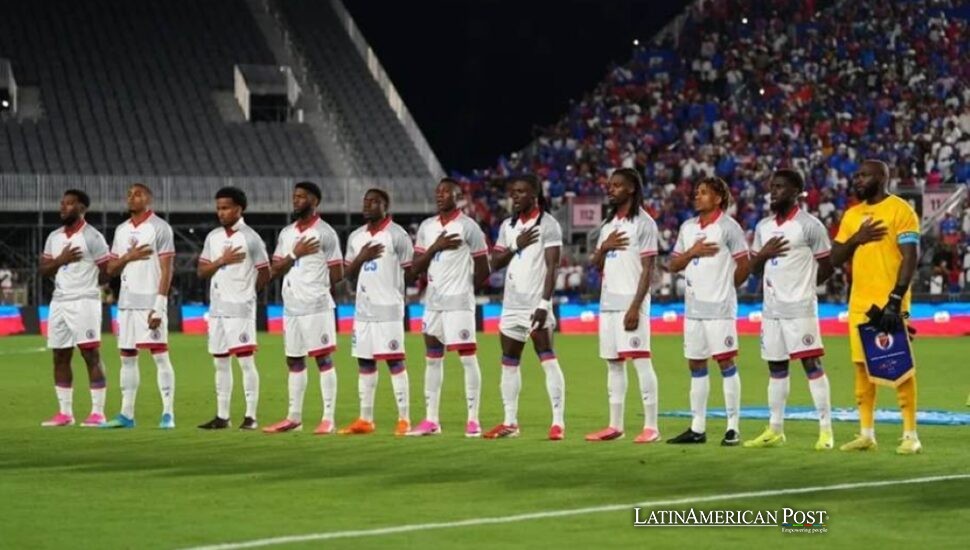
FIFA forced Haiti to remove revolutionary imagery from its 2026 World Cup jerseys, turning a uniform dispute into a struggle over memory, power, and who gets to decide when Latin America and the Caribbean’s history becomes too political for sport.
A Revolution Stitched Too Close
When Haiti walked onto the field against Scotland on June 13, the most provocative thing about its jersey was what could no longer be seen.
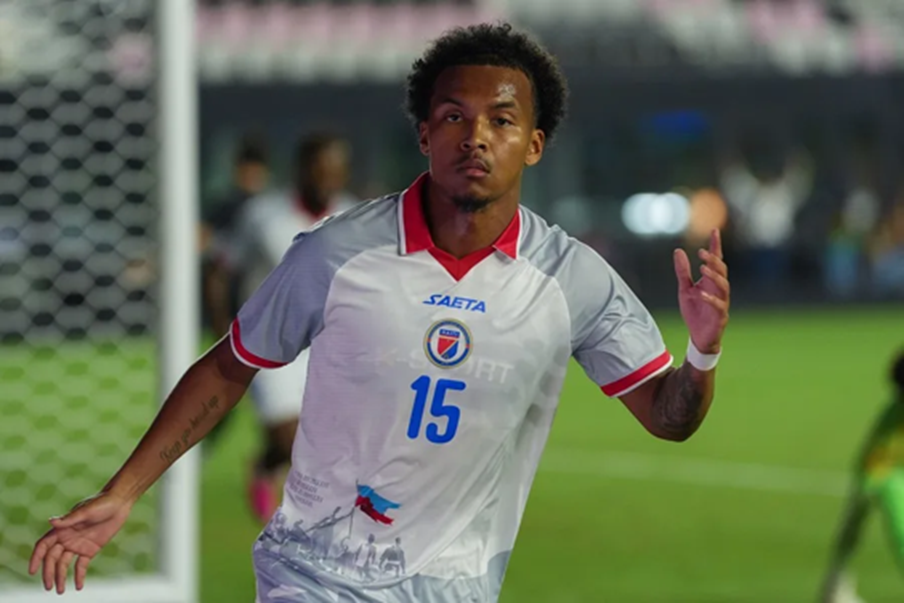
The original blue, white, and red shirts featured silhouettes near the lower-right side, figures inspired by the Battle of Vertières and the Haitian Revolution. Haiti had already worn the design in warm-up matches against New Zealand and Peru. Then, shortly before its first World Cup appearance in 52 years, FIFA concluded that elements of the artwork could be interpreted as political. The team debuted in an altered kit, according to EFE’s reporting.
It was a quiet subtraction. No slogan had been printed across the chest. No current politician appeared beside the crest. The offending image recalled a battle fought on November 18, 1803, when forces led by Jean-Jacques Dessalines defeated the French expedition commanded by Donatien de Rochambeau near Cap-Haïtien. François Capois, remembered as Capois La Mort, reportedly kept advancing on foot after enemy fire killed his horse. France capitulated. Haiti declared independence on January 1, 1804.
That history is hardly decorative. The Haitian Revolution began in 1791 as enslaved people rose against one of the world’s richest plantation colonies. They survived warfare involving France, Britain, and Spain, then defeated Napoleon’s attempt to restore colonial authority and slavery. Haiti became the first independent Black republic and the only modern state created by a successful revolt of enslaved people. France’s defeat also helped make Louisiana strategically useless to Napoleon, contributing to the sale that vastly expanded the United States.
So when FIFA labeled Vertières too political, it did not merely regulate a graphic. It placed Haiti’s founding story in a different category from the histories routinely celebrated by national teams. Every national shirt already carries history.
The decision also landed with an echo. Earlier in 2026, the International Olympic Committee required Haitian-Italian designer Stella Jean to revise Haiti’s uniforms for the Winter Games. Her hand-painted design honored Toussaint Louverture, the formerly enslaved revolutionary leader. Louverture disappeared from the approved version, leaving a riderless horse beneath a bright sky. Twice in one year, Haiti arrived at a global sporting spectacle and was told that the people who made Haiti possible were too political to wear. Haitians recognized it immediately, another outsider deciding which parts of Haiti were safe to display.
Neutrality With a Selective Memory
Sports bodies need equipment rules. Players must be distinguishable. Numbers must be readable. Fabrics cannot create visual hazards. Commercial marks require limits. EFE’s review of banned uniforms includes Mexico’s reflective green details in 2011, Poland’s thermoactive panels before the 2018 World Cup, England’s referee-like gray shirt in 2002, and Cameroon’s sleeveless and one-piece experiments. Those disputes involved specifications that could be inspected, tested, and applied.
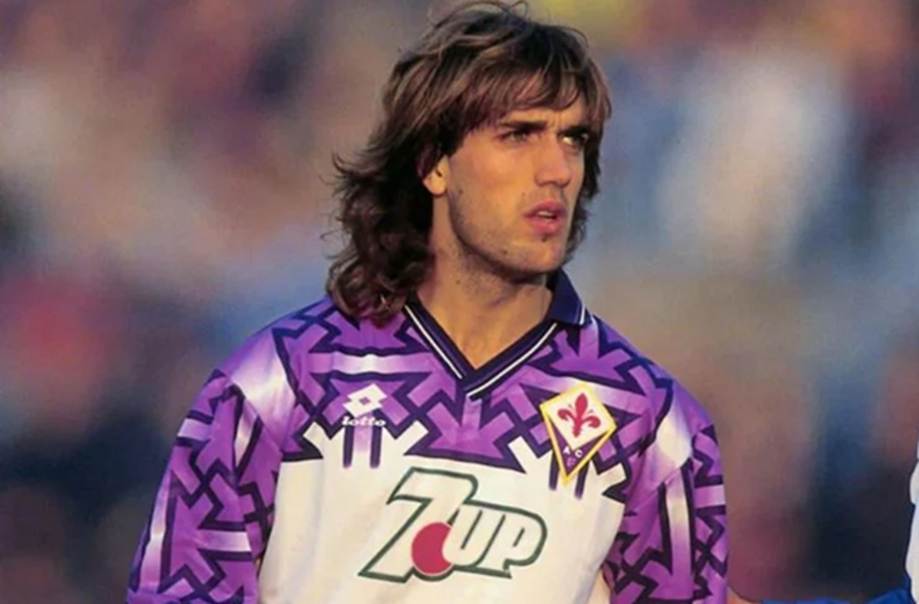
In European football, a couple of cases stand out, each for different reasons. In 1992, a jersey designed by Lotto for ACF Fiorentina was recalled by the club and the manufacturer during the 1992–93 Serie A season. The controversy unfolded in December 1992 when fans and media noticed that the geometric, overlapping purple shapes on the shoulders formed a repeating pattern that resembled Nazi swastikas.
Another jersey that could not be worn in official matches was one released by AFC Ajax in 2021. The black shirt was a tribute to Bob Marley, whose song Three Little Birds has become the unofficial anthem of Ajax supporters. The reason for the ban? The jersey featured a logo depicting the three birds from the song. Despite the restriction, it became an iconic shirt and a highly sought-after collector’s item. Of 13 distinct cases in EFE’s survey, eight involved technical, commercial, or graphic compliance. Five turned on political or social meaning.
The same historical record includes Denmark being blocked from training in a “Human Rights for All” shirt during the 2022 World Cup in Qatar, Ukraine being required to cover a nationalist slogan in 2021, and Norway’s women being denied discreet equality messages in 2023. Those cases show that Haiti was not uniquely targeted. They also expose the weakness of the standard. A sleeve either exists or it does not. Reflective material can be measured. Whether an image is “political” depends on whose history is being viewed, and from where.
Look around the current tournament. France can reference the Statue of Liberty. Mexico can revive Aztec calendar imagery. Colombia can wear yellow butterflies associated with Gabriel García Márquez. Norway can draw on Viking art and runic lettering. Those are treated as heritage, storytelling, and even marketing assets. Haiti’s decisive defeat of a slave empire was treated as advocacy.
The difference is not simply Europe against the Caribbean. FIFA and UEFA have censored European teams, too. The deeper divide lies between histories that global institutions have normalized as culture and histories whose very telling still challenges an old political order. Vikings are safely ancient. An anti-slavery revolution remains accusatory. It raises questions about colonial wealth, racial hierarchy, reparations, and the long punishment Haiti endured for winning its freedom.
Neutrality, then, can become a kind of editing. It leaves the anthem, the national colors, the federation crest, the sponsor ecosystem, and the borders implied by international competition untouched. Yet it removes the historical image that explains why those colors and that nation exist. The result is not a politics-free sport. It is a sport where the most familiar politics pass as scenery.
That imbalance carries special weight in Latin America and the Caribbean. In these regions, national identity was forged through conquest, enslavement, Indigenous resistance, independence wars, foreign occupations, and unfinished arguments about race. Asking teams to present culture without conflict can mean asking them to offer food, rhythm, color, and folklore while checking the struggle that produced them at the stadium gate.
The Absence Travels Home
Haiti’s World Cup return was never going to be only about soccer. The team qualified without playing a single home match because insecurity made that impossible. Its decisive victory in the qualification came on November 18, the anniversary of Vertières. In Massachusetts, where a large Haitian diaspora gathered for the Scotland match, supporters arrived carrying the pressure of immigration uncertainty in the United States and the grief of a country battered by armed groups and political collapse.
For those supporters, the revolution is not a museum panel. Haiti has been more than the disasters through which outsiders often encounter it. Vertières says Haitians were architects of modern freedom, not merely recipients of aid, intervention, or pity. Putting that story on a jersey offered a rare correction on the world’s largest sporting stage.
Its removal sends a wider warning. Latin American federations increasingly use kits to tell national stories because jerseys circulate farther than textbooks. They are worn in stadiums, barbershops, buses, migrant neighborhoods, and family photographs. A governing body that can approve a sanitized version of identity while rejecting the difficult chapter can shape how a country is perceived abroad.
FIFA could draw a clearer line between partisan campaigning and historical commemoration. It could publish detailed reasons for decisions, include historians and regional cultural experts in reviews, and presume that depictions of foundational events are permissible unless they promote hatred or an active political organization. Consistency would protect teams and FIFA alike.
Haiti still took the field in its national colors. The players still carried the crest. Fans still knew what had been removed.
That may be the bitter joke in all this. FIFA succeeded in erasing the silhouettes from the fabric, making millions more curious about Vertières. The revised shirt became an outline around an absence, and the absence spoke. Haiti’s revolution had once defeated an empire. Two centuries later, it proved harder than expected to keep off a jersey.
Also Read: How Mexico Turned a Stadium Wave Into a Guinness World Record