Latin America Quakes Reveal History’s Fault Lines Beneath Today’s Rubble
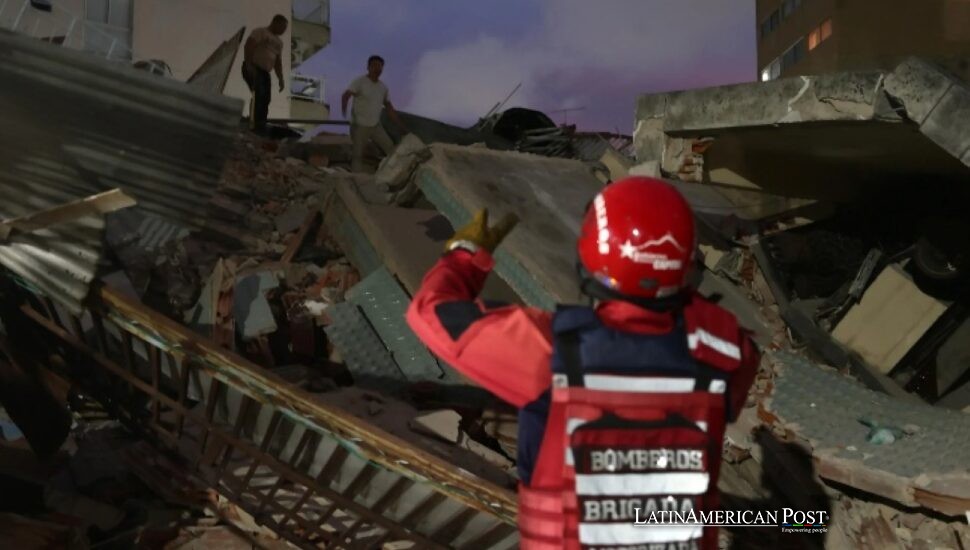
Venezuela’s twin earthquakes reopened Latin America’s long seismic memory, from Haiti to Peru and Chile, showing how tectonic violence becomes catastrophe when poverty, weak buildings, steep mountains, and fragile states meet the old impatience of the earth, again, here, now.
When the Ground Keeps a Ledger
In Caracas, people ran first and counted later. That is how earthquakes rearrange time. One moment, there is dinner light, bus noise, a phone buzzing on a table. The next, stairwells become traps, walls breathe dust, and families learn the oldest emergency sentence in the region: get outside.
The two powerful quakes that struck Venezuela’s northern coast and capital on Wednesday have killed at least 188 people, with rescue teams still combing collapsed buildings. The toll could rise. Until now, Venezuela’s deadliest modern earthquake was the 1967 Caracas event, which killed 240. The new disaster is already close enough to make history feel less like a record book and more like a warning.
Scientists have described the Venezuelan sequence as a rare doublet, a pair of large earthquakes close together in time and space. The first measured magnitude was 7.2. The second, magnitude 7.5, followed seconds later. For people in shaking apartments, the technical term matters less than the sensation: the earth stopped, then started again, as if reconsidering its damage.
Latin America is especially exposed because its beauty sits in collision. A peer-reviewed study in the Bulletin of the Seismological Society of America found high hazard and risk along the northern and western coasts of South America, including Chile, Peru, Ecuador, Colombia, and Venezuela. It emphasized that building to withstand strong shaking can reduce future casualties. In Geophysical Journal International, researchers using GPS and seismic data described the Caribbean, South American, and North Andes plate interaction as a densely populated zone that includes Caracas and major Colombian cities, with about 16 million people living in the broader studied region.
The plates explain the trembling. They do not explain who dies.
Old Catastrophes Still Speak
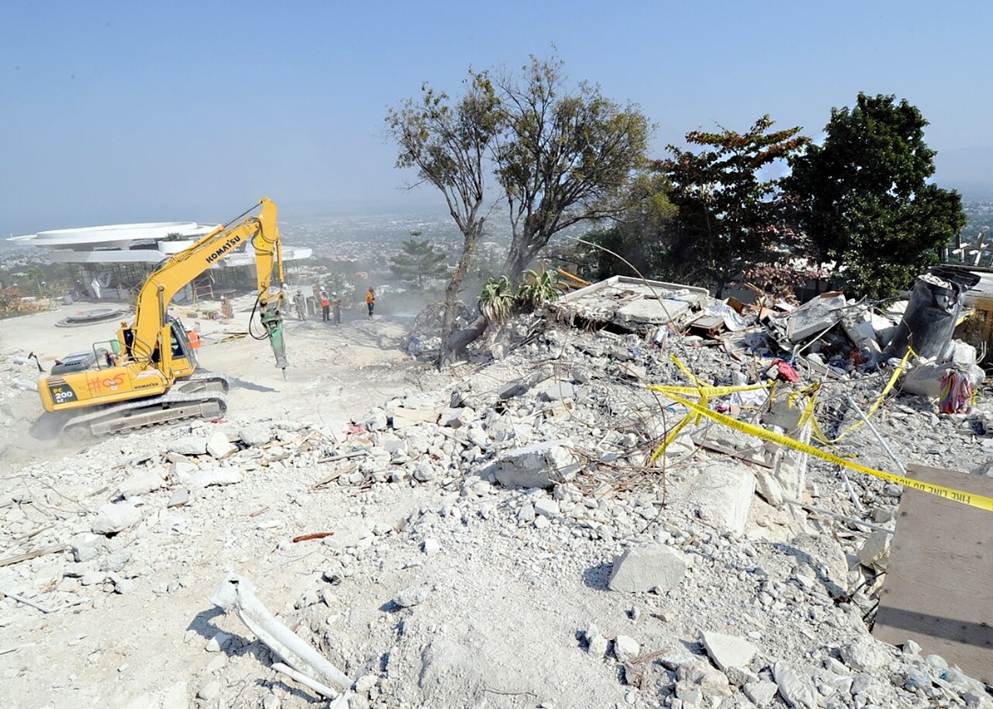
The deadliest Latin American earthquake remains Haiti in 2010, a magnitude 7.0 disaster that killed as many as 316,000 people, according to the government estimate cited in regional earthquake records. Its magnitude was lower than many others on the list, which is exactly the point. Port-au-Prince was dense, poor, and structurally fragile. An Earthquake Spectra overview found that the quake displaced more than a million people, damaged nearly half of all structures in the epicentral area, and reflected historical, structural, lifeline, and socioeconomic vulnerabilities.
Haiti teaches the brutal arithmetic of vulnerability. A 7.0 quake in a prepared, code-enforced city may be a disaster. In a capital where concrete is poorly mixed, hillsides are crowded, and emergency services are thin, it becomes a national rupture. The losses were estimated at nearly $8 billion, roughly 120% of Haiti’s 2009 GDP, meaning the ground not only broke buildings. It broke a year of the national economy and then some.
The 1868 Ecuador-Colombia earthquakes killed an estimated 70,000 people, with about 40,000 deaths in Ecuador and 30,000 in Colombia. The sequence began with a small tremor and culminated in a magnitude 7.7 earthquake before dawn. A government commission later wrote that Ibarra was asleep at 1:15 A.M. and, in less than three seconds, became a burial ground. The phrase still hurts because it captures the private cruelty of night earthquakes. People die in their bedrooms, not in public squares.
Ecuador had already experienced a catastrophe. In 1797, a magnitude 8.3 earthquake, the strongest known to have struck the country, devastated Quito, Riobamba, Latacunga, and Ambato, triggering landslides and leveling buildings within seconds. The Andes make earthquakes more lethal in this way. They shake cities, but also loosen slopes, block roads, bury valleys, and turn rescue into mountaineering.
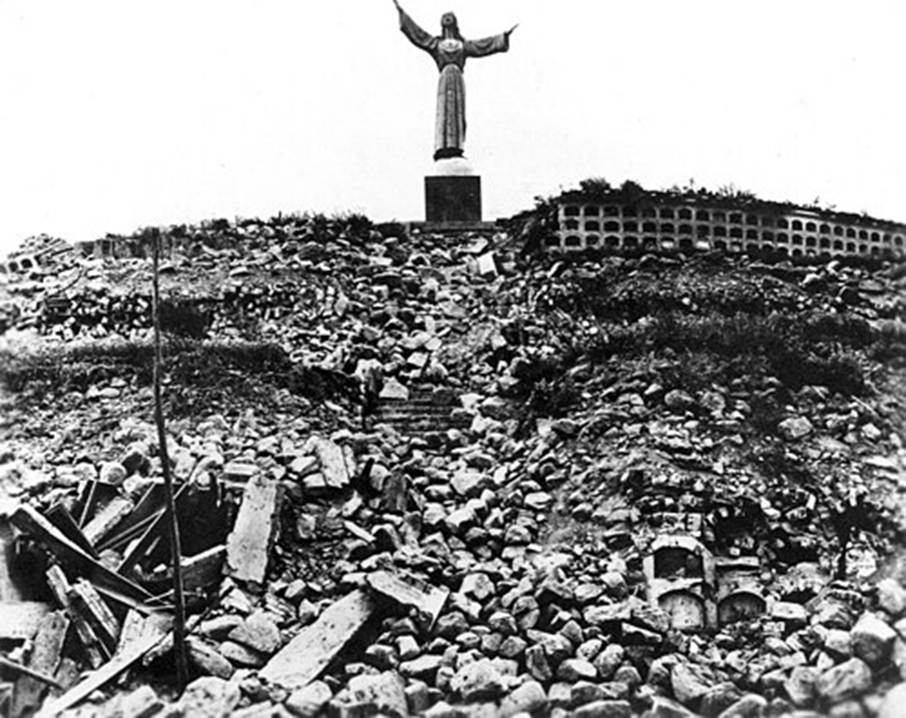
Peru’s 1970 earthquake added ice to the terror. The magnitude 7.9 undersea quake destabilized the north wall of Huascarán, Peru’s tallest mountain, sending a mass of glacial ice and rock racing toward Yungay and Ranrahirca. The slide reached speeds reported up to 208 mph and carried nearly 80 million cubic meters of debris. About 66,794 people died. In Yungay, roughly 19,000 were buried, and only about 2,500 survived. The town became a cemetery with palm trees standing where a plaza used to be.
Chile’s 1939 Chillán earthquake, magnitude 8.3, killed about 30,000 people and exposed the price of weak construction. Seismologist Cinna Lomnitz later pointed to adobe and the near-absence of engineering design against lateral forces. The disaster destroyed Chillán and Concepción and pushed Chile toward its first anti-seismic building code. Chile would later endure the strongest recorded earthquake in history, the 1960 Valdivia magnitude 9.5, with fewer deaths than in Chillán. Codes do not stop earthquakes. They stop walls from becoming executioners.
The 1812 Venezuela earthquake, magnitude 7.7, killed about 26,000 people and destroyed around 90% of Caracas, with thousands more dead in Barquisimeto, Mérida, La Guaira, and San Felipe. It struck during the war against Spain, and royalist authorities framed it as divine punishment against revolutionaries. Disaster was politicized before rescue was modernized.
The 1868 Arica earthquake, magnitude 8.5, killed around 25,000 and generated a tsunami that smashed Peruvian ports and sent waves as far as Hawaii and New Zealand. The 1976 Guatemala earthquake, magnitude 7.5, hit at 3 A.M., killed about 23,000, left nearly 1.2 million homeless, and destroyed about two-fifths of the country’s hospitals. Adobe houses collapsed across a vast damage zone. Aftershocks killed too, as they often do, by finishing buildings already wounded.
Two older disasters close the grim ledger. In 1797, another Venezuelan quake destroyed Cumaná and the surrounding area, with about 16,000 deaths. Alexander von Humboldt documented accounts of underground noises, sulfur smells, and flames before the shocks, a reminder that early science often began as frightened testimony. In 1861, Mendoza, Argentina, was destroyed near midnight. An estimated 14,000 died, and gas lamps fed fires that burned through the rubble for days.
Why the Region Breaks So Hard
The data refuses a simple lesson. Magnitude does not rank with mortality. Haiti’s magnitude 7.0 was deadlier than Chile’s magnitude 8.3 in 1939 and far deadlier than many stronger events elsewhere. Peru’s 1970 quake was catastrophic not only because the seabed moved, but also because a mountain collapsed. Guatemala’s death toll was tied to hour, housing, and hospital fragility. Mendoza’s condition was worsened by fire. Arica’s by water. Venezuela’s 1812 disaster was caused by war, religion, and a city unready for its own geology.
Latin America is susceptible because it is both tectonically active and socially uneven. The Nazca Plate dives beneath South America along the Pacific, building the Andes and producing megathrust earthquakes. The Caribbean and South American plates grind across northern South America, creating strike-slip faults capable of shallow, damaging rupture. Central America sits near the Cocos Plate and volcanic arcs. The geology is active, layered, and restless.
But susceptibility is also political. The region urbanized fast, often before building inspection, land planning, and public services could keep up. Informal settlements climbed hillsides. Rural families migrated to capitals where risk was cheaper than rent. Colonial centers preserved beautiful masonry not designed for modern seismic loads. Hospitals and schools, supposedly shelters of last resort, often became casualties themselves.
Academic disaster studies have long warned that “natural disaster” is an incomplete phrase. The hazard is natural. The disaster is produced when exposure meets vulnerability. That distinction matters in Latin America because fatalism is convenient. It lets governments mourn without enforcing codes, accept aid without funding prevention, and rebuild in the same dangerous places under the sentimental banner of resilience.
Venezuela’s new quake, therefore, belongs to a regional story older than the republic. It asks whether Caracas, La Guaira, and the rest of the shaken north will be rebuilt as memory or as prevention. It asks whether Latin America will keep measuring earthquake readiness by the bravery of neighbors digging by hand, or by the quieter work done years before the ground moves.
The continent already knows how to grieve. Haiti taught it. Yungay taught it. Chillán, Ibarra, Guatemala City, Arica, Mendoza, and Caracas taught it. The question now is whether Latin America can learn to prepare with the same intensity with which it mourns.
Also Read: Malvinas Return to the OAS Table Without Moving an Inch