Costa Rica’s Crime War Meets a Judiciary Ready to Resist
President Laura Fernández promised Costa Rica order through force, yet her confrontation with judges may weaken the institutions needed to defeat cocaine networks. With homicides elevated and convictions scarce, the country faces a dangerous choice between urgency and democratic endurance.
The Peaceful Exception Starts to Crack
For generations, Costa Rica offered the region a beautiful exception. No standing army. Ballots instead of barracks. Tourists arrived for cloud forests and beaches while neighboring countries carried the scars of civil war, military rule, and gang control.
That image was never complete, but it organized national pride. Now, where gunfire is less surprising, and families measure danger by the hour, the promise feels thinner.
Costa Rica recorded 905 homicides in 2023, the highest in its history, making families feel vulnerable and worried about their safety.
Since April 2023, about 45 percent of Costa Ricans surveyed by the University of Costa Rica have named insecurity as the nation’s main problem. Fear has become a political identity, creating fertile ground for President Laura Fernández’s promise of an iron fist.
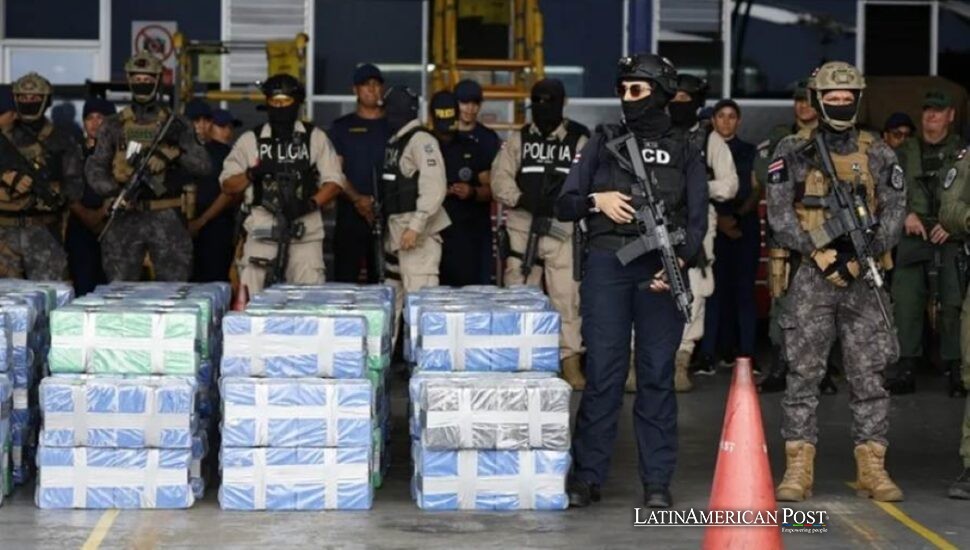
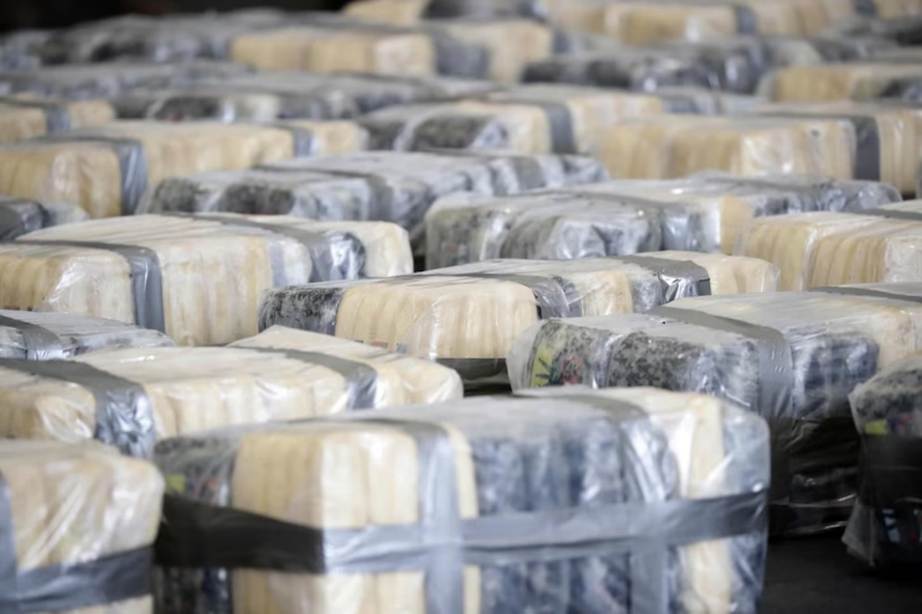
Her diagnosis begins with cocaine. Costa Rica’s ports, remote coasts, highways, and export economy have become infrastructure for trade moving from Colombia toward the United States and Europe. At Moín, traffickers hide cocaine among products such as frozen yucca. Along the Pacific coast, shipments arrive near Osa and Golfito before moving inland or northward.
The country today is no longer merely a bridge. Local groups, including the South Caribbean Cartel, allegedly work with Colombia’s Clan del Golfo and Mexico’s Sinaloa Cartel, illustrating the deep entrenchment of transnational organized crime. The Judicial Investigation Agency attributes about 70 percent of homicides to trafficking disputes, emphasizing the international dimension of violence.
An Iron Fist With Weak Fingers
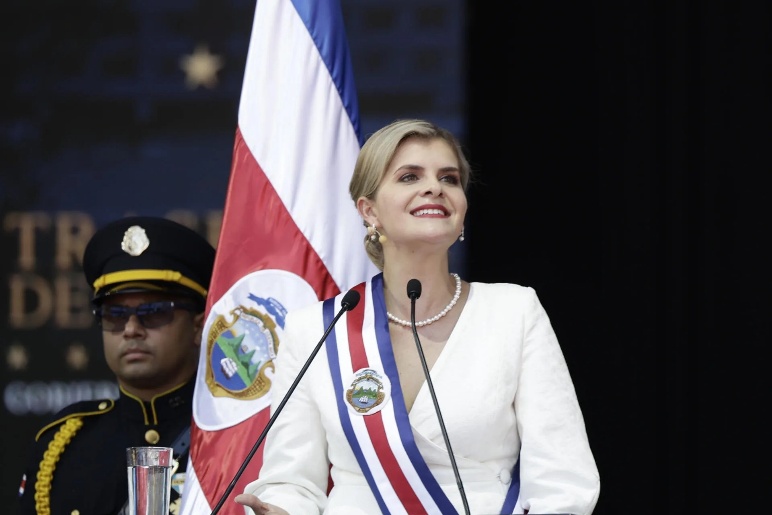
Fernández, only two months into office, claims courts block needed policies, risking policymakers’ trust in judicial independence and stability.
Judicial officials have challenged her to produce evidence. None of those who were asked to resign has left.
The confrontation is especially reckless while planned 2026 and 2027 budget cuts threaten the prosecutors, investigators, forensic services, and courts expected to turn arrests into convictions. Security Minister Gerald Campos says only 38 percent of homicides end in conviction. That figure reveals a system failing after the police tape goes up.
The government frames the problem as softness. Yet Costa Rica’s prison population has grown 36 percent since 2020. Its incarceration rate reached 366 people per 100,000 inhabitants in 2024, ranking 22nd worldwide. A country imprisoning at that scale cannot pretend the only missing ingredient is more cells.
Fernández’s proposed State of exception and a 5,000-person megaprison borrow from Salvadoran President Nayib Bukele, whose government jailed around 90,000 people while claiming to reduce violence. While the appeal is clear, these policies raise questions about their long-term effectiveness and respect for due process, especially given Costa Rica’s tradition of civilian-led security efforts.
Still, the comparison deceives. El Salvador’s model concentrates power and restricts guarantees. Costa Rica faces trafficking through ports, containers, businesses, customs systems, and professional networks. Sweeping up young men in poor districts may fill cells while financiers, brokers, lawyers, and compromised officials keep moving money.
The State Cannot Fight Itself
The deeper warning comes from the legal economy. Costa Rica’s State of the Nation report found criminal groups investing illicit profits in small businesses. A storefront can become a laundering mechanism, an employer, a source of favors, and a local authority. Cartels terrorize communities, but also provide cash where the formal State feels distant.
The 2025 reform permitting the extradition of Costa Ricans for drug trafficking and terrorism acknowledged how far infiltration had traveled. Among those facing possible transfer to the United States is Celso Gamboa, a former security minister and magistrate. The symbolism is devastating: the suspected network may know the corridors of power.
That makes accountability essential, but it does not validate an executive campaign against an entire judiciary. If Fernández has proof of corruption, she should place it before competent investigators and the public. Without proof, calling courts rotten while cutting their resources looks less like reform than political capture.
Evelyn Villarreal, coordinator of the State of Justice report, put the strategic failure plainly: facing an enemy with nearly limitless resources, fighting among state institutions leaves the country unprepared. Traffickers benefit from every delayed warrant, frozen budget, partisan appointment, and public feud.
Costa Rica abolished its army in 1948 and invested its political imagination in civilian institutions. That history does not require passivity. It requires remembering that democratic restraint is part of the nation’s security architecture, not an obstacle to it.
The choice is between a coordinated state that follows money, protects witnesses, and secures ports, or a fragmented system that fails citizens.
Costa Rica’s old exceptionalism will not survive on nostalgia. It may survive through evidence, competence, and power checking. In a region where fear repeatedly opens doors to authoritarian shortcuts, that would be more than national self-defense. It would be courage.
Also Read: Guatemala Still Searches for Cristina as Femicide’s Silence Grows Louder