Brazilian Icon Pelé’s World Cup Jersey Scores Record Auction Millions
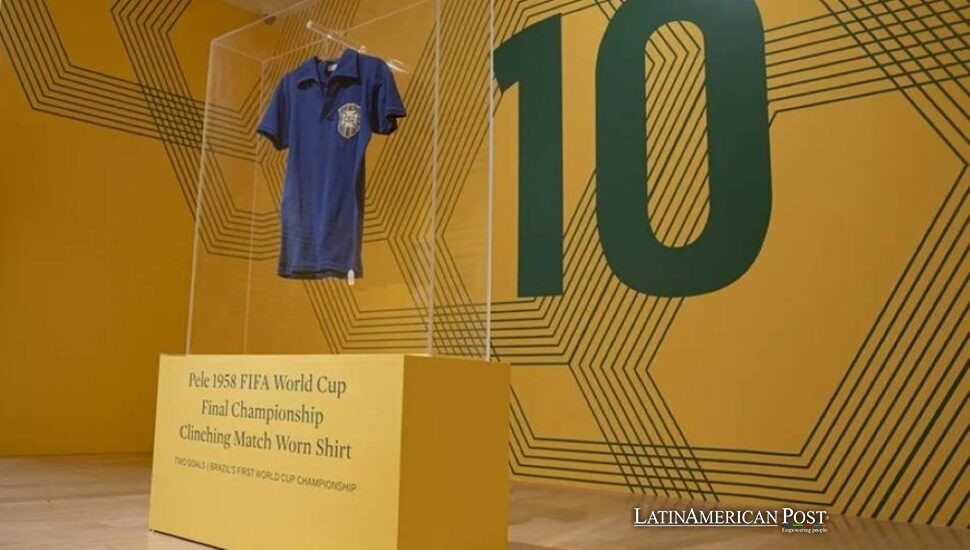
A blue number 10 jersey worn by Pelé at seventeen has sold for $4.9 million, turning Brazil’s first World Cup triumph into private treasure and revealing how football’s emotional inheritance is priced, sorted and exported through the global memorabilia market.
The Shirt That Made a King
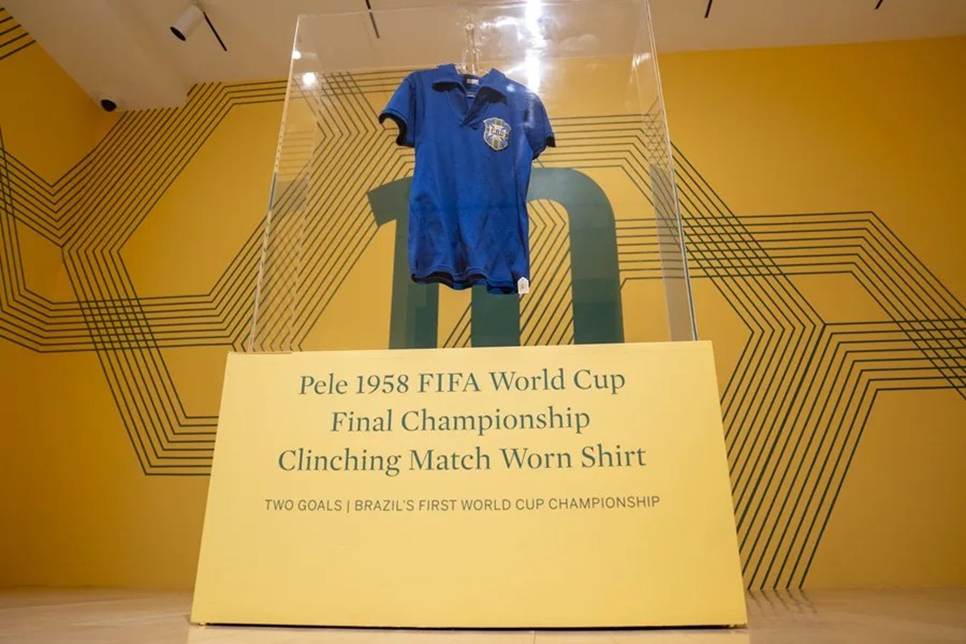
In photographs from Sotheby’s New York sale, the garment looks almost plain: blue cloth, short sleeves, a white 10. Yet Pelé wore it in the 1958 World Cup final, scoring twice against Sweden and helping deliver Brazil’s first title at last.
The jersey sold Thursday for $4.9 million, making it the most expensive object from Pelé’s career, reflecting how scarcity and story drive value.
Pelé was seventeen in Stockholm. He arrived with a knee injury and missed Brazil’s first two matches, then became the youngest scorer in World Cup history. In the final, he lifted the ball over a defender and volleyed it home, a goal surviving through grainy film and fading witnesses.
After Brazil’s 5-2 victory, Pelé’s blue shirt absorbed that moment, reminding us that cultural memory extends beyond fabric into collective identity.
A Record That Missed Its Mark
Sotheby’s called the auction “The Beautiful Game,” but the bidding produced a less romantic lesson. Collectors did not reward every old object simply because it carried a famous face.
A 1958 Pelé trading card sold for $108,000, about 28 percent below its minimum estimate of $150,000. Many historic cards went for less than expected, with several failing to reach even $1,000. The market was not rejecting football history. It was sorting it harshly.
The shirt was worn in a specific final, on a specific body, at the instant Brazil became world champions, making it a tangible link to that historic moment. A card represents Pelé, but the jersey’s worn status by Pelé itself can be worth nearly the entire price for collectors valuing provenance and context.
The second-highest sale was Diego Maradona’s captain’s armband from the 1986 World Cup, which brought $512,000. A Lionel Messi shirt from Barcelona’s 2017 Champions League campaign sold for $217,600, while other Messi jerseys topped $100,000. Pelé’s shirt fetched almost ten times the Maradona armband and more than twenty-two times the leading Messi jersey.
Those gaps are not a clean ranking of greatness. Auction prices measure scarcity, provenance, timing, and narrative concentration. Maradona’s armband evokes the tournament of the “Hand of God.” Messi’s shirts belong to a long, exhaustively documented club career. Pelé’s blue number 10 points to a national origin story compressed into ninety minutes.
Brazil’s Glory Becomes Global Property
For Brazilians, 1958 was not merely a championship. It was a repair.
Eight years earlier, Brazil had lost the World Cup final to Uruguay at the Maracanã, a defeat remembered as a national wound. The victory in Sweden offered another image of the country: inventive, young, Black, joyful, and capable of defeating Europe on European ground. Pelé stood at its center.
That image carried contradictions. Brazil’s celebration of a Black teenage genius coexisted with durable racial and economic inequality. The country often embraced football as proof of harmonious mixture while many Black Brazilians remained shut out of wealth and power. Pelé’s ascent inspired millions, but it did not dissolve the structures surrounding them.
He knew poverty before celebrity. In Bauru, he worked serving tea and practiced with improvised balls made from fruit or socks stuffed with newspaper. By fifteen, he was playing for Santos. By sixteen, he represented Brazil. By seventeen, he had become a global symbol whose commercial value governments and corporations quickly understood.
In 1961, President Jânio Quadros’s government declared Pelé an official national treasure, a maneuver intended to prevent foreign clubs from taking him abroad. The state treated his talent as patrimony. The Sotheby’s sale completes a strange circle: what Brazil once tried to keep becomes a luxury asset in New York, available to whoever can pay the most.
What the Buyer Takes Home
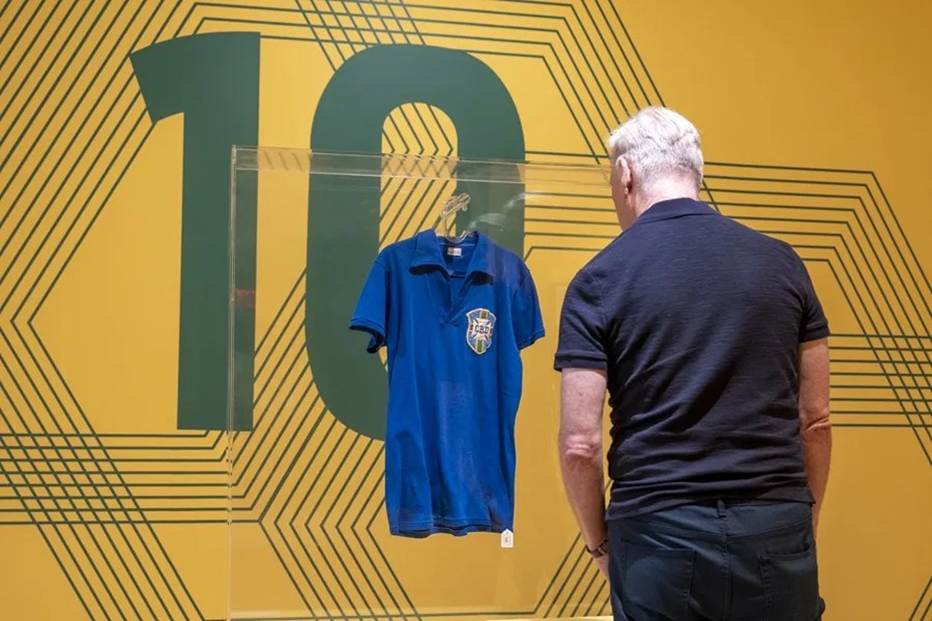
The buyer’s identity was not disclosed in the notes regarding the sale. That absence creates its own tension. A shirt woven into Brazil’s collective memory may now disappear into a private collection, visible only when its owner chooses.
Museums also remove objects from ordinary life, but they promise public access and interpretation. Private collecting follows another logic. It converts cultural intimacy into exclusivity. The higher the price, the fewer people who can stand close to the artifact without permission.
Still, the sale cannot privatize the final itself. Pelé’s two goals remain in broadcasts, family stories, street murals and the inherited confidence of Brazilian football. The shirt may be locked away. The memory is not.
Its $4.9 million price is therefore both enormous and inadequate. It captures the appetite for authenticated relics, yet cannot measure what Pelé meant to a country emerging onto the world stage through the feet of a poor Black teenager.
The winning bidder purchased blue cloth, a number, and impeccable provenance. Brazil kept the harder thing to sell: the instant a seventeen-year-old looked at the world’s grandest match and played as though the future already belonged to him.
Also Read: Challenges of branching out into Texas as a Mexican entrepreneur