Chaco War Ghosts Teach Bolivia and Paraguay Peace Still Pays
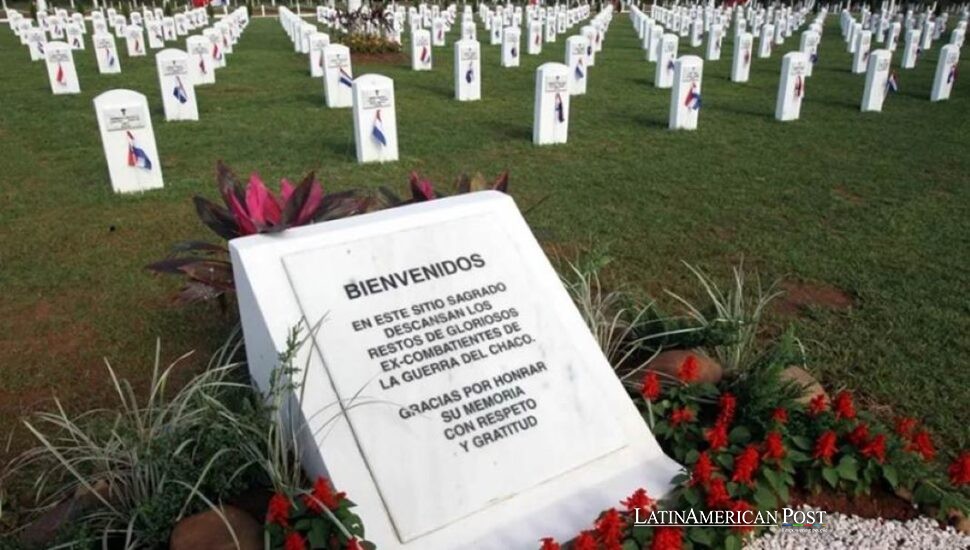
Bolivia marked 91 years since the Chaco War’s end by honoring the dead of both nations. Still, the ceremony also reopened Latin America’s old questions about oil, borders, sovereignty, and whether peace can outlast the industries that once made war profitable.
A Salute Over Old Wounds
The cadets marched in La Paz with the polished rhythm of a country trying to remember without reopening the grave. On Sunday, Bolivia’s Armed Forces honored the dead of the Chaco War, the brutal 1932 to 1935 conflict with Paraguay, and the government chose a language rarely available to nations that once bled so deeply: respect, cooperation, friendship.
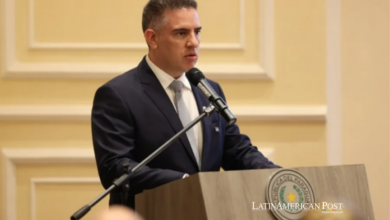
“Bolivia and Paraguay have shown that it is possible to transform a history marked by confrontation into a relationship based on mutual respect, cooperation, and friendship,” Defense Minister Ernesto Justiniano said in a message read by Gen. Víctor Hugo Balderrama, commander in chief of the Armed Forces, according to EFE.
Justiniano, who took office on June 3 after the resignation of Marcelo Salinas, did not attend because of what the military described as a crowded agenda. Still, his message carried the ceremonial weight of the day. Ninety-one years after the guns fell silent, he said, the war’s greatest lesson is that “peace will always be more valuable than conflict.” That understanding is the safest path toward prosperity, stability, and development.
It was the kind of sentence often heard at memorials. Yet in Bolivia and Paraguay, it lands differently. The Chaco War was not only a border war. It was a war of thirst, mud, malaria, dust, petroleum dreams, national humiliation, and foreign interests. Historians estimate that about 50,000 Bolivians and 40,000 Paraguayans died, making it South America’s largest war of the twentieth century. That number is not just military history. It is demographic memory. It is the absence of grandfathers, the silence in rural households, the old photograph in a drawer.
The war ended after the Peace Protocol was signed in Buenos Aires on June 12, 1935. The cease-fire came two days later. Paraguay eventually kept roughly 75 percent of the disputed Chaco Boreal. At the same time, Bolivia retained the rest and gained long-sought access to the Paraguay River. The final territorial agreement would not be signed until 2009, when Presidents Evo Morales and Fernando Lugo closed the legal chapter in Buenos Aires, 74 years after the fighting stopped.
The Desert That Swallowed Nations
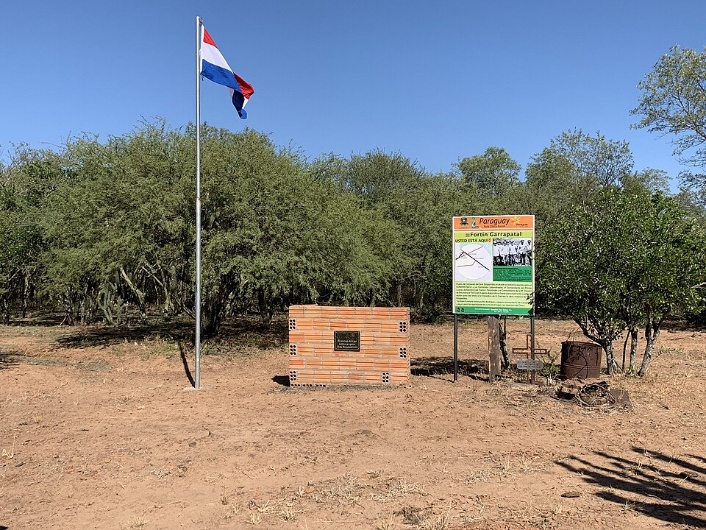
The Gran Chaco was never empty, though governments liked to describe it that way. Indigenous peoples, forests, rivers, and heat existed long before national borders. But to the young republics of Bolivia and Paraguay, the Chaco Boreal became a map-shaped obsession: about 600,000 square kilometers north of the Pilcomayo River, sparsely explored by state officials and imagined as destiny.
For Bolivia, still scarred by the loss of its Pacific coastline to Chile in the War of the Pacific, the Chaco seemed to offer another route outward. The rivers Pilcomayo and Paraguay suggested commercial redemption, a way to breathe through the Atlantic. For Paraguay, already devastated in the nineteenth century by the War of the Triple Alliance, the Chaco was not an abstraction. It represented more than half of its territory and served as a buffer against further national shrinkage.
Then came the deeper smell beneath the dust: oil. The historical record points to Standard Oil’s 1920 concessions in Bolivia and the broader rivalry with British-linked interests around the Río de la Plata. Tin, antimony, and foreign finance also formed part of the backdrop. Latin America knows this pattern intimately. A resource is discovered or imagined, maps harden, armies modernize, foreign companies whisper, and local peasants are sent to die for promises they will never own.
Bolivia entered the war with a military shaped in part by German influence, including the mission of Hans Kundt, who had trained officers and later returned to command. Paraguay placed its hopes in José Félix Estigarribia, who understood the terrain and the importance of offensive movement in a place where water could matter more than bullets. The capture of Boquerón in September 1932, the fall of Fortín Arce, the disastrous Bolivian defeat at Campo Vía in December 1933, and the later Paraguayan victories made the Chaco a classroom in logistics. Men died not only from enemy fire, but from heat, exhaustion, and thirst.
That is why the commemoration’s language of peace should not be dismissed as routine statecraft. In the Chaco, the fantasy of territorial glory collided with the body’s simplest need. Whoever controlled wells often controlled life. The war stripped nationalism down to its most painful question: how much human suffering can a country justify in the name of a border?
Peace With a Memory
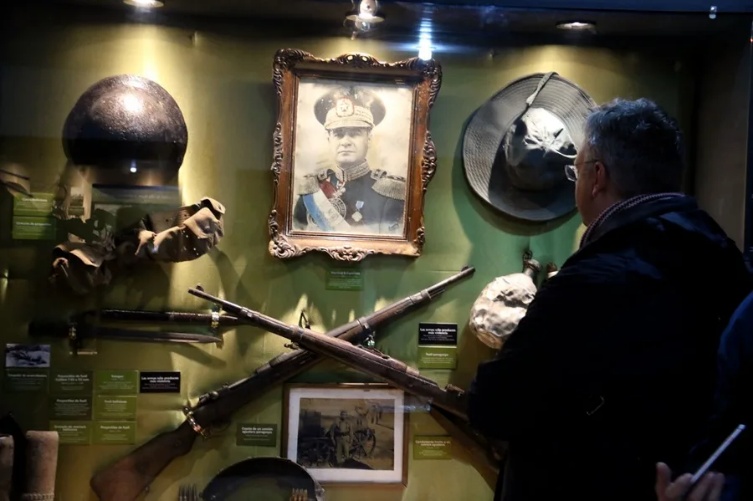
Gen. Balderrama said that every June 14, Bolivia’s Armed Forces remember the moment in 1935 when “the roar of the cannons gave way to the silence of peace,” according to EFE. He also said the war united Bolivians in defense of the homeland and left deep lessons about sovereignty, national unity, and peace as one of the most precious goods a nation can achieve.
That phrase, national unity, deserves care. The Chaco War did unite Bolivia in grief, but it also exposed inequalities inside the nation. Indigenous and rural soldiers fought in punishing conditions for a state that often denied them full citizenship. In Paraguay, too, military sacrifice became central to national identity, reinforcing a story of endurance by a country that had already survived catastrophe. Both nations converted loss into patriotism because they had to. Otherwise, the dead would have been unbearable.
For Latin America today, the Chaco anniversary is not only about Bolivia and Paraguay. It is a warning for a region again surrounded by extractive temptation. Lithium in Bolivia and Argentina, oil in Guyana and Venezuela, copper in Chile and Peru, soy and cattle in the Amazon and Chaco regions: the old equation remains alive. Land, resources, and foreign capital can still overwhelm democratic debate. The difference is that modern conflict may not always look like trenches and forts. It may appear as environmental destruction, militarized borders, criminal economies, Indigenous displacement, or diplomatic breakdown.
Justiniano’s message that present challenges require “unity and not division,” as reported by EFE, therefore carries a regional charge. The Chaco War shows that peace is not sentimental. It is infrastructure. It is diplomacy, memory, trade, shared borders, military restraint, and the humility to know that maps can become cemeteries.
Bolivia and Paraguay have turned a battlefield into a relationship. That achievement should not be romanticized, because it was bought at an appalling price. But it should be studied. In a continent often told that its history is only instability, the Chaco offers a harder truth: Latin America has known war, learned from it, and, sometimes, built peace where foreign interests and wounded pride once pushed young men toward death.
The cadets marched, the speeches ended, and the old war remained where it always lives, half in the archive and half in the family. Ninety-one years later, the cannons are silent. The question is whether the region can keep hearing what that silence costs.
Also Read: Latin America and the Caribbean Face HIV’s Comeback Warning Lights