Latin American Fans Chase World Cup Dreams Past ICE Shadows
As Los Angeles hosts World Cup matches, undocumented Latin American fans are weighing soccer joy against deportation fear, exposing how U.S. immigration politics can turn a global festival into another border inside the city for families who built it.
The Stadium Dream That Shrunk
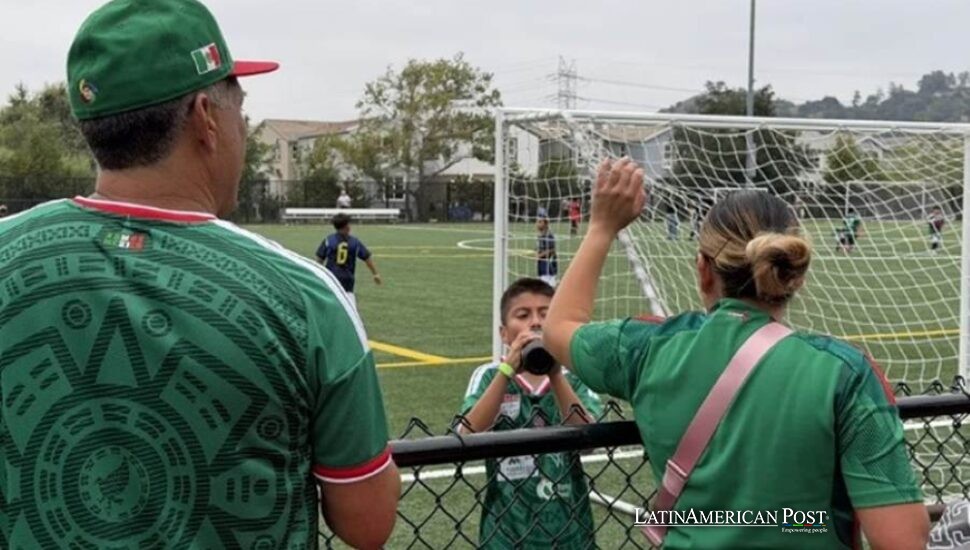
José had already done the math in his head a hundred times. Two tickets, maybe not for Mexico, maybe not even for a glamour match, but enough to walk through the gates with his 10-year-old son and feel the thunder that only a World Cup crowd can make. For a Mexican immigrant who has lived in Los Angeles for more than 25 years, that was the dream: not luxury, not celebrity, just ninety minutes inside history.
Now he says he will watch from home.
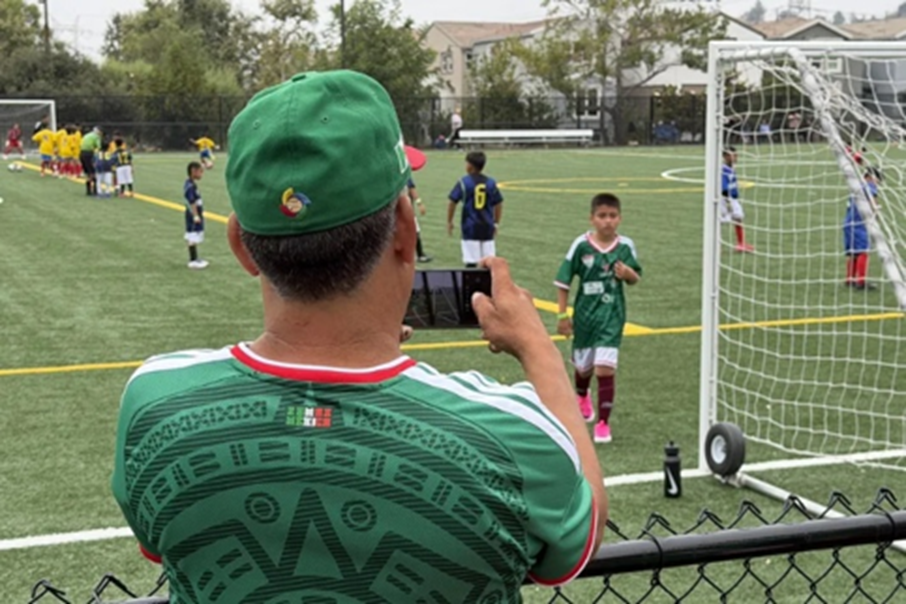
The 46-year-old, who identified himself only by his first name for fear of being detained and deported by immigration authorities, told EFE he has loved soccer for as long as he can remember. He wears the Mexican national team jersey whenever he can. One of the great gifts he once gave himself was attending a match in Los Angeles, Mexico, the city where he has spent more than half his life. “Going to the stadium is an emotion that has no comparison,” he told EFE.
That memory is now tangled with dread. José began saving years ago, hoping to buy at least two World Cup tickets, one for himself and one for his son. But the possibility of Immigration and Customs Enforcement agents near stadiums has pulled him back from the fantasy. “I know they are not going to ask all the fans for papers, but I am sure they will go after those who have brown skin like mine, and I do not want to be deported,” he told EFE.
It is a quiet sentence, but it lands hard. The World Cup sells itself as belonging to everyone. For José, it now has an invisible admissions policy, one written not on FIFA letterhead but on skin, accent, fear, and immigration status.
A World Cup Watched From Home
José will follow the games from his house, alongside his son and friends. He hopes Mexico finishes first in its group because, if the team advances second, its fourth match would be in Los Angeles. “That would make me sadder, having them here and not even being able to go to the team concentration,” he told EFE.
That is the cruel geometry of this tournament for many Latin American immigrants in the United States. The closer the World Cup gets, the farther away it feels. Los Angeles is not just another host city. It is a Mexican, Central American, South American, and Caribbean city by culture, labor, and memory. The tacos, the flags, the Sunday leagues, the Spanish-language broadcasts, and the remittance economies have made soccer part of its civic bloodstream. Yet some of the people who made that atmosphere marketable now fear being treated as suspects in it.
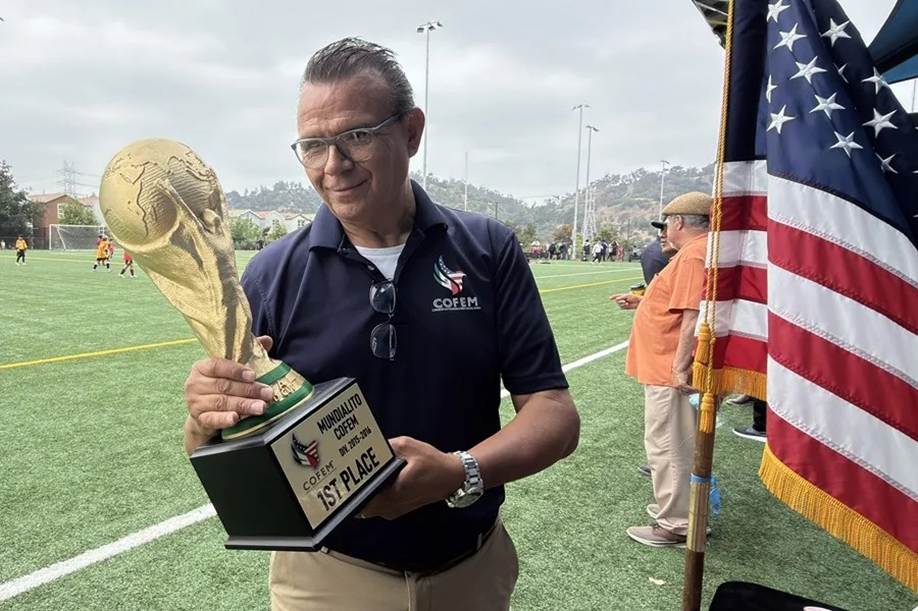
Francisco Moreno, spokesperson for the Council of Mexican Federations in North America, or COFEM, said immigrant advocates are advising caution. “We are recommending extreme precautions, especially around the stadiums,” he told EFE.
The concern is not isolated paranoia. In April, more than 120 organizations led by the American Civil Liberties Union warned that, because of the World Cup, fans, players, journalists, and visitors could face “the risk of serious rights violations” as President Donald Trump’s administration intensifies its immigration agenda. Jamil Dakwar, director of the ACLU’s human rights program, criticized FIFA for relying on human rights rhetoric while tightening links with the White House. “It is time for FIFA to use its influence to push for meaningful policy changes and binding guarantees,” Dakwar said, according to EFE, so people can feel safe traveling and enjoying matches.
So far, immigrant advocates say, those appeals have not produced the guarantees they want. Homeland Security Secretary Markwayne Mullin has not ruled out operations against people suspected of criminal activity, a premise similar to the one used in raids in large Democratic cities such as Los Angeles, where thousands have been detained.
The data behind the anxiety is blunt. The United States will host 78 World Cup matches in eleven stadiums, most of them in cities with large immigrant and Latin American-origin populations. That means the tournament’s emotional core and its enforcement risk overlap. The same communities that fill fan zones, buy jerseys, host relatives, staff restaurants, clean hotels, drive rideshares, and turn matches into street festivals may also be the communities moving through public space with the most caution.
This is where the World Cup stops being only a sports story. It becomes a Latin American migration story.
For decades, the United States has consumed Latin American culture while criminalizing many Latin American bodies. Salsa at the campaign rally, tacos on the food-tour map, mariachi at civic events, soccer flags in marketing campaigns. But the worker, the father, the undocumented fan in the jersey, the woman selling food outside the stadium, they remain conditional. Welcome to the atmosphere. Questioned as people.
Red Cards for Fear
Community groups are trying to rescue the tournament from that contradiction. COFEM organized a children’s championship in Los Angeles with teams representing 16 qualified countries. Moreno described it as an example of coexistence, telling EFE, “We can put on the jersey for one another.”
The Coalition for Humane Immigrant Rights, or CHIRLA, has launched “Show Hate the Card,” a campaign supported by the city of Los Angeles. It uses red and yellow cards, borrowed from soccer, to teach communities how to identify and report hate incidents. The symbolism is simple but sharp. If soccer has rules against dangerous play, why should public life tolerate racism, harassment, or intimidation?
The campaign also understands something governments often miss. Fear is not abstract. It changes routes, cancels plans, empties seats, and rewrites childhood memories. José’s son may still watch Mexico play, still cheer, still see his father smile. But he will also learn that joy has limits when a family lacks papers. He will learn that a stadium across town can feel like another country.
For Latin America, this matters beyond Los Angeles. The region has exported workers, athletes, songs, foods, and dreams into the United States for generations. Its migrants sustain economies on both sides of the border, through labor in the north and remittances sent south. But mega-events like the World Cup reveal the imbalance in that relationship. Latin American passion is profitable. Latin American precarity is managed.
José’s living room will become his stadium. There will be friends, perhaps food, perhaps the green jersey again. But something will be missing, and it is not only a ticket. It is the right to belong openly in a city he has called home for a quarter century.
The World Cup will arrive with lights, sponsors, and anthem ceremonies. It will also arrive with men like José looking at the screen instead of the field, close enough to hear the celebration from afar, but careful enough to survive it.
Also Read: How Brazilian Tostão Turned World Cup Glory Into a Second Calling