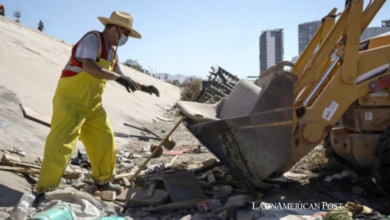
Mexico Sweeps Subway Sellers Away as World Cup Fever Arrives
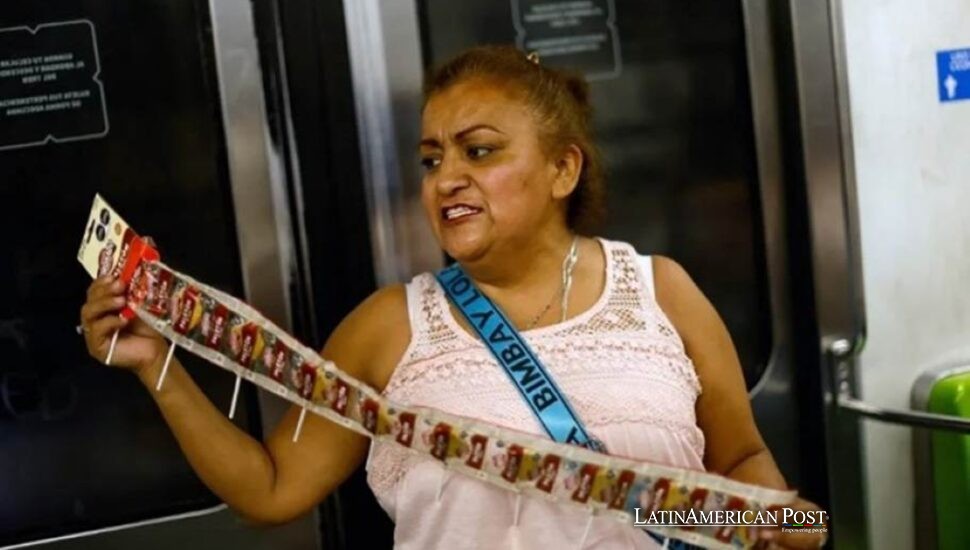
As Mexico City prepares for the World Cup, women selling candy and beauty goods in the Metro say police raids, camera tracking, and steep fines are turning informal work into a public spectacle of poverty, gender, and power underground today.
A Crackdown Beneath the Celebration
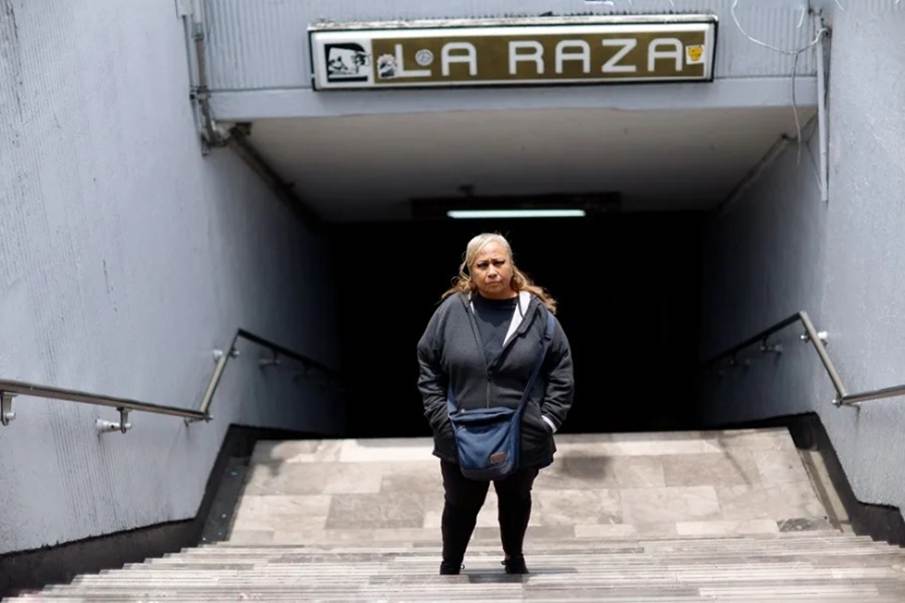
Before Patricia Martínez steps into a Mexico City Metro car, she looks up, not at the ads, not at the route map, but at the cameras. After four decades of selling candy and beauty accessories along the capital’s 226-kilometer subway network, caution has become part of her merchandise. So has solidarity. When Norma Rivera Barrientos worries about police, Martínez answers like a sister on a battlefield: “Don’t worry, I’ll take care of you,” she told EFE.
That sentence carries the weight of a city preparing to welcome the world while pushing some of its poorest workers out of sight. Martínez, leader of the civil association Leonas en Manada, said in an interview with EFE that during the World Cup opening week, “the operation got really hard” against street vendors, especially on the Metro line that leads to Estadio Ciudad de México.
The women call themselves vagoneras, vendors who sell from car to car in one of the hemisphere’s busiest public transit systems. Official figures place daily Metro ridership at around 4.5 million passengers, a number that helps explain both the opportunity and the conflict. The trains are not just transportation. They are a marketplace, a refuge, a theater, a shelter, and, increasingly, a zone of surveillance.
Martínez says she and her colleagues will not stop working. “Many of us have to feed our children,” she told EFE. It is not defiance in the abstract. It is grocery money, school supplies, and rent in neighborhoods that have been pushed to the edge by decades of uneven development.
Norma’s life fits the story Latin America knows too well. She is nearly 56, from Nezahualcóyotl, and speaks of poverty, violent partners, and the abandonment of women by men and institutions alike. “We are not here because we want to be,” she told EFE. “All of us here share the same story: we are women from the periphery, abandoned by the system and by the Mexican macho who avoids his responsibilities and beats us.”
The Price of Looking, Orderly
The phrase that follows these women through the tunnels is “limpieza social”-social cleansing. It is an accusation with a long memory in Latin America. From Olympic host cities to tourist corridors, governments have often promised order by removing the poor from the frame. In Mexico City, the women say the World Cup has given old enforcement a new urgency.
Norma is stopped while selling. Police shout that they have her “paneada,” meaning captured by surveillance cameras. Without proof, according to the account given to EFE, she is taken to a civic court. For Martínez, who immediately calls the legal team at Leonas en Manada, this is routine. “This is our day-to-day,” she said.
The numbers are small until they are not. A fine of 500 pesos, about $29, may seem modest to visitors spending freely in a World Cup city. For a woman living day to day on informal sales, it can wipe out money for food, medicine, or transport. Detention of up to 20 hours at the administrative sanctions center known as El Torito is more than a penalty. It is a lost workday, a warning, and a humiliation.
This is the contradiction at the heart of the crackdown. The same city that depends on informal labor to function treats informality as contamination when cameras turn international. Vendors are visible enough to be punished but not protected enough to be regularized. Their work is tolerated in practice, criminalized in policy, and erased in moments of spectacle.
In early 2026, the Mexico City government announced plans to remove more than 4,500 street vendors from the Historic Center, saying it wanted to “free the streets” from informal commerce ahead of the World Cup. That strategy, according to the vendors, has reached the Metro, too. The stated goal is order. The human effect is displacement.
For Latin America, this is not a side story. It is the story. Informality is not a marginal defect in the region’s economies. It is one of their operating systems. Millions survive through self-employment, street vending, domestic labor, delivery work, market stalls, and transit sales because formal economies have failed to absorb them. When governments crack down without offering credible alternatives, they are not solving informality. They are policing survival.
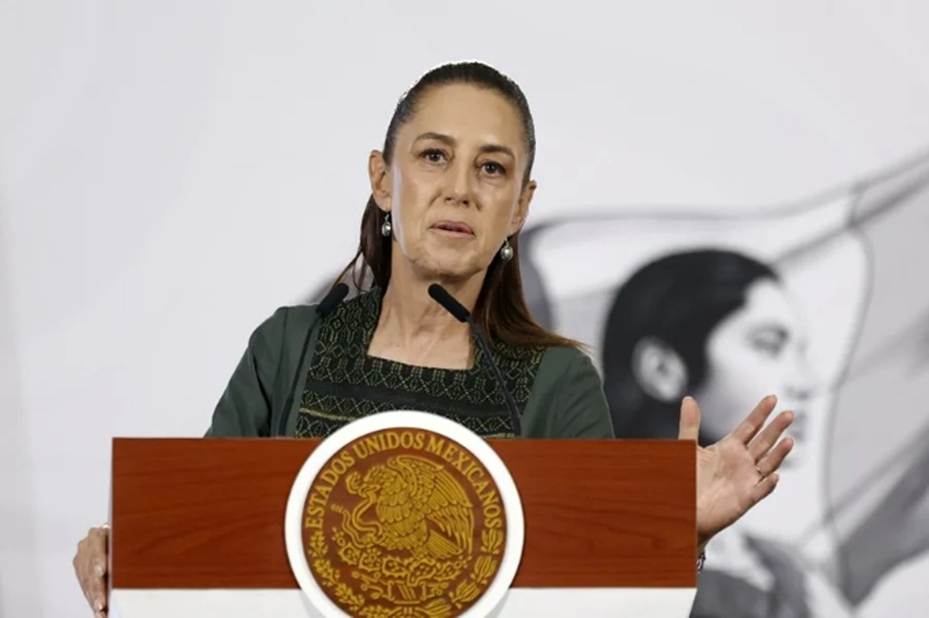
Mexico’s ruling political project has built much of its moral language around transformation, the poor, and those historically excluded. That is why Martínez finds the operation so bitter. She told EFE it is contradictory that a “government of transformation,” referring to President Claudia Sheinbaum’s administration, which “supposedly supports the poorest and most vulnerable,” would attack street vendors, among the country’s “most wounded” labor groups.
Women Who Refuse to Disappear
What makes the vagoneras’ case especially revealing is its gendered dimension. These are not faceless vendors blocking a corridor. They are often mothers, older women, survivors of domestic violence, and residents of peripheral municipalities where formal jobs are scarce, and commutes are punishing. The Metro gives them access to customers without needing a storefront, rent, or male permission. That independence, fragile as it is, becomes threatening when urban order is defined from above.
Leonas en Manada, created in 2021, emerged to defend vagoneras from police abuses and from informal commerce networks that can also exploit them. It’s work points toward a more serious policy question. If the state can identify women through cameras, detain them, fine them, and remove them, it can also register them, protect them, create rules, provide permits, and reduce abuse. Surveillance without rights is not modernization. It is an old exclusion with better technology.
Norma is released after about three hours. Martínez says the legal defense worked. “They already let her go,” she told EFE. Later that night, Norma is back in the Metro, still working a day far longer than the legal eight-hour standard associated with dignified employment.
“There was no evidence to accuse me and charge me a fine, and the lawyer asked them to let me go,” she told EFE. She described the camera-based “paneo” as a new fashion against the vendors, one that has hardened in the context of the World Cup.
That final image is hard to shake. A woman was detained, released, and returned to the trains the same night because life did not pause for the civic court. The city wants a clean stage for the world. The vagoneras are reminding it that beneath the stadium lights is another Mexico, one that sells candy between stops, watches the cameras, raises children, survives men, survives police, and refuses to disappear.
Also Read: Mexico City Club Charges Americans More as Nomad Backlash Burns